




Gilded Brass Bracket Clock
These gilded brass bracket clocks bring exceptional timekeeping, ornate metalwork and centuries of craftsmanship directly to your mantelpiece.
Gilded Brass Bracket Clock
A gilded brass bracket clock brings historic timekeeping and striking metalwork into a room, serving as both a functional timepiece and a sculptural centrepiece. When you search for a gilded brass bracket clock, you encounter pieces spanning from the seventeenth century through the Victorian era.
You are most likely to meet nineteenth-century French and English examples on this page, often featuring four glass sides or intricate gilt bronze mounts. Makers such as Henry Jones, A.D. Mougin, and Baetens represent the calibre of work historically produced in these styles.
Materials and Construction
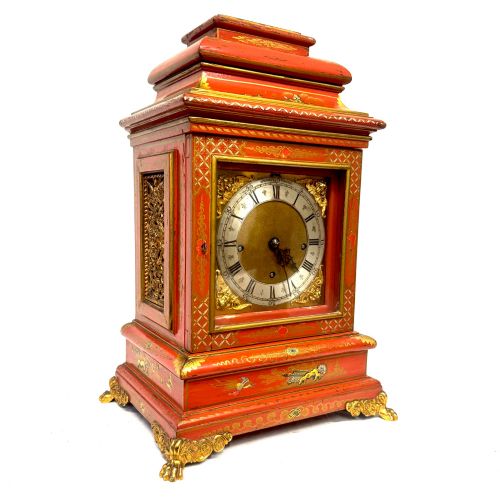
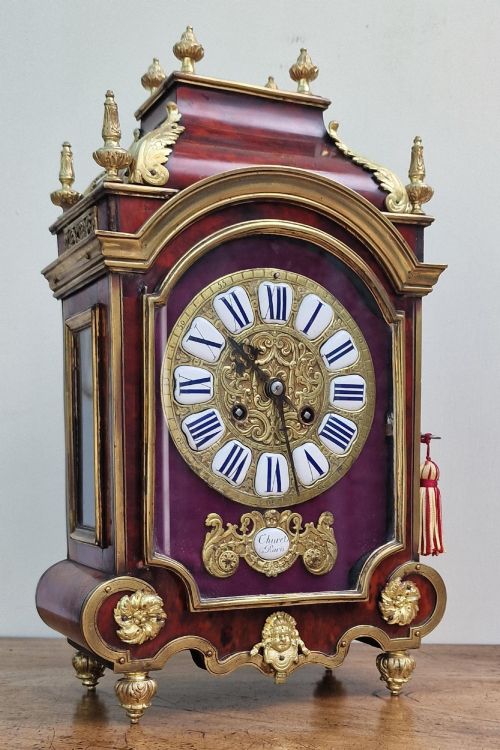
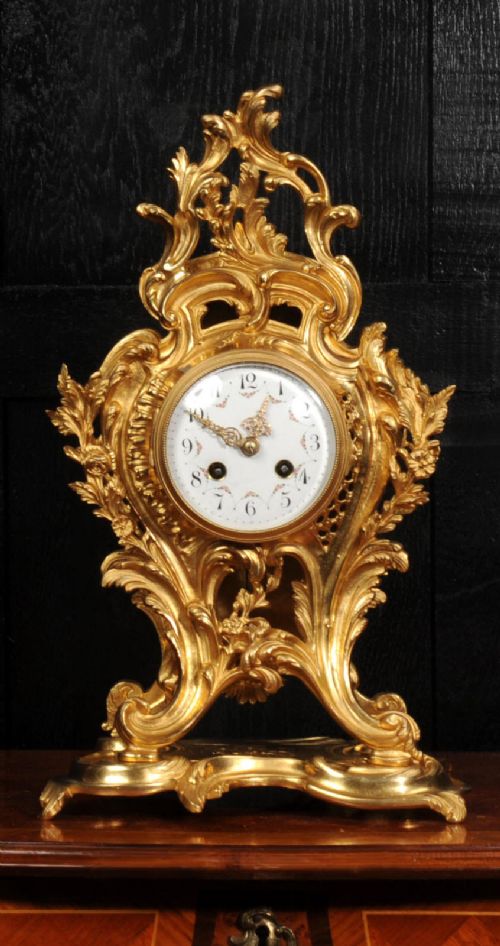
The foundation of these clocks relies on substantial brass and bronze cast components, heavily gilded or finished with ormolu to achieve a brilliant metallic lustre. Cabinetmakers often paired these metal elements with ebonised wood, satinwood, tortoiseshell, and red lacquer for striking visual contrast.
Clockmakers utilised complex mechanical systems including single and chain fusee movements, musical mechanisms, and ting-tang strikes to ensure precise timekeeping. Dials frequently incorporated enamel elements and engine-turned detailing, protected beneath bevelled glass panels.
Gilded Brass Bracket Clock Retail Price Guide 2026
Typical asking prices for gilded brass bracket clock among the pieces listed under this phrase on Sellingantiques today, from the lower quarter to the upper quarter. They describe what is for sale here now, not the wider market.
Some gilded bracket clocks feature cherubs actively reaching for birds in trees, ensuring your timepiece comes with its own miniature bronze wildlife drama.
Assessing Quality and Execution
The distinction between standard production and exceptional quality lies in the crispness of the gilt bronze chasing and the fidelity of the cast ornamentation. Finer examples display deeply carved figures, immaculate tortoiseshell inlay, and intricate engraving on the gilded dials that demonstrate superior hand skills.
Movement sophistication also dictates value, with delicate chain fusee systems and musical or ting-tang striking trains representing higher levels of horological achievement. The integration between the clock case and its matching wall bracket or supporting base further indicates the original ambition of the piece.
Thuret Paris·Henry Jones·A.D. Mougin·Hay London·Baetens London·Henri Dasson
The Gilded Brass Bracket Clock Glossary
- Bracket clock
- A portable clock originally designed to sit on a wall bracket to improve its acoustic resonance and visibility. Many later examples sat directly on mantelpieces or tables.
- Fusee
- A conical pulley used in spring-driven clocks to equalise the diminishing power of the mainspring as it unwinds. This mechanism ensures consistent torque and more accurate timekeeping.
- Ormolu
- Finely ground high-carat gold applied to a bronze base using a mercury amalgamation technique, common in French decorative arts. This finish yields a deep, enduring metallic brilliance.
- Boulle work
- A method of marquetry utilising brass and tortoiseshell inlaid in contrasting patterns, popularised in seventeenth-century France. The technique creates a shimmering, highly textured surface.
- Ting-tang
- A striking mechanism that sounds two different notes on quarters or half-hours before the main hour strike. It provides an audible signal distinctive to better quality movements.
Gilded Brass Bracket Clock: Frequently Asked Questions
What is a bracket clock?
A bracket clock is a portable spring-driven timepiece historically designed to rest upon a matching wall bracket to project sound and light into a room. Over time, the term evolved to describe mantel and table clocks of similar architectural proportions.
These pieces typically feature heavy brass or gilt bronze frames, glazed panels, and complex mechanical movements designed to sit prominently in a hallway, library, or drawing room.
How do fusee movements work?
A fusee movement uses a conical grooved pulley connected to the mainspring by a fine gut line or chain. As the spring unwinds, the leverage changes to maintain even tension on the gear train.
This clever mechanical arrangement prevents the clock from losing speed as the power diminishes, resulting in much more reliable daily timekeeping.
Where should I place my clock?
These clocks require a stable, level surface away from direct sunlight, excessive moisture, and temperature fluctuations that might affect the delicate interior oils. Placing them on a sturdy mantelpiece or a dedicated wall bracket ensures optimal performance.
Because many examples feature glass sides or intricate gilt bronze mounts, positioning them where they catch natural light allows the fine chasing and enamelled dials to be fully appreciated.
How do I identify French and English styles?
French clocks from this selection often lean towards ornate ormolu, Rococo curves, tortoiseshell Boulle work, and architectural Louis XIV forms. English pieces tend to favour architectural wood cases, satinwood finishes, and robust chain fusee movements.
Examining the dial signature, the style of the cast bronze mounts, and the mechanical layout inside the case generally reveals the regional origin of the piece.