







Gilded Bracket Clock
These gilded bracket clock pieces combine heavy metal mounts and traditional mechanical movements, bringing period presence and reliable timekeeping to any mantel or table.
Gilded Bracket Clock
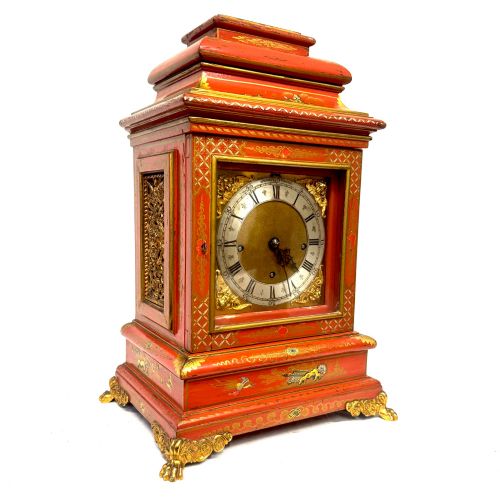
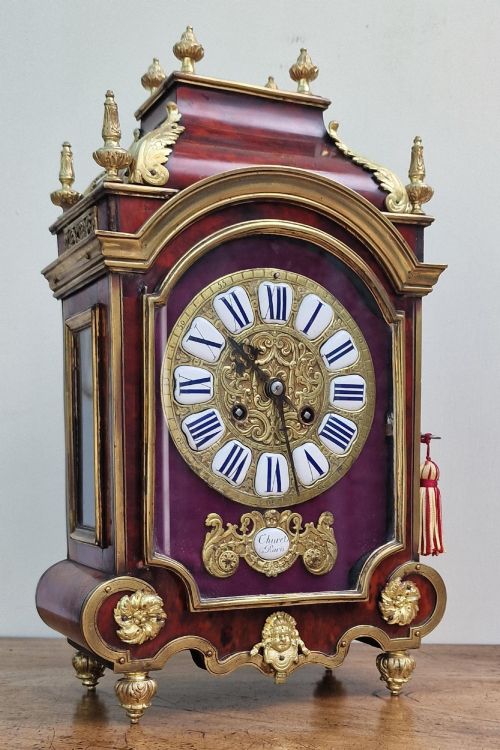
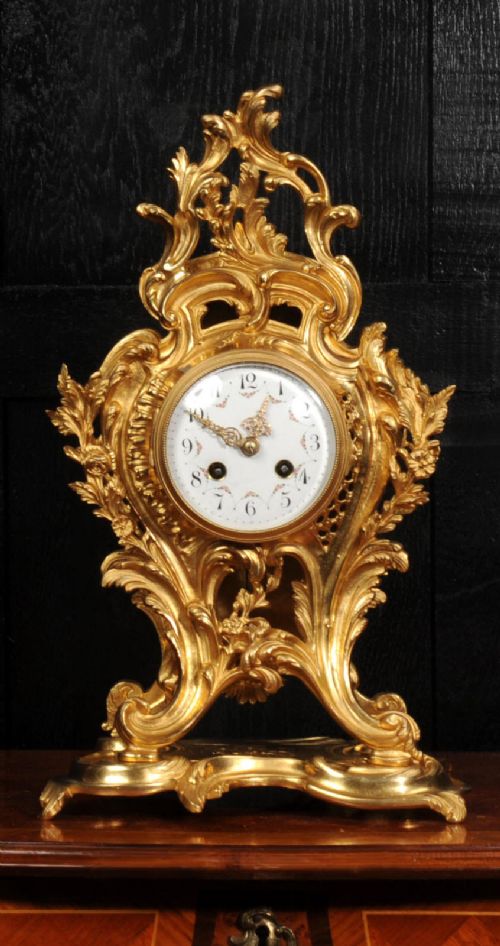
A gilded bracket clock sits upon furniture or hangs from a wall bracket, displaying polished metal work and glass panels that reveal the interior mechanics. When you search for a gilded bracket clock, you encounter heavy ormolu, gilt bronze, and solid brass constructions paired with white enamel dials.
The pieces on this page span the seventeenth century through the Victorian era, drawing heavily on French Rococo, Louis XIV, and Victorian design idioms. French makers dominate the selection, alongside English workshops producing fusee movements and satinwood or ebonised wood cases.
Mantel clocks and four-glass bracket clocks form the core of the available types, often incorporating tortoiseshell, Boulle work, or champlevé enamel into their decorative housings. These items function as sculptural table ornaments as much as timepieces, designed to draw the eye in a principal room.
How they were made
Casings combine ebonised wood, satinwood, and tortoiseshell with cast metal mounts in ormolu and gilt bronze, creating strong contrasts between dark surfaces and bright metal. Glass panels protect the delicate inner mechanisms while offering unobstructed views of the oscillating pendulum and brass gear trains.
Dials frequently utilise white enamel with painted numerals, complemented by engine-turned gilded brass details and ornate pierced hands. Movements rely on chain fusee mechanisms or traditional pendulum setups built to precise tolerances by skilled horologists.
Gilded Bracket Clock Retail Price Guide 2026
Typical asking prices for gilded bracket clock among the pieces listed under this phrase on Sellingantiques today, from the lower quarter to the upper quarter. They describe what is for sale here now, not the wider market.
What varies in quality
The crispness of the cast bronze or ormolu mounts separates standard production from superior examples, as finer pieces display deep hand-chasing rather than soft, uniform casting lines. The complexity of the wooden carcass, whether employing genuine tortoiseshell Boulle marquetry or simple ebonised finishes, dictates the tier of the piece.
Movement sophistication also defines the hierarchy, ranging from standard platform escapements to intricate fusee configurations with striking mechanisms. Complete integration between the dial, hands, and casework indicates a unified workshop production of high status.
Thuret·Henry Jones·Le Roy and Fils·A.D. Mougin·Hay London·Baetens London·Henri Dasson
The Gilded Bracket Clock Glossary
- Ormolu
- Gilded bronze produced by applying a mercury and gold amalgam to a cast bronze base and firing it to drive off the mercury. This technique creates a durable, warm golden finish characteristic of French decorative arts.
- Fusee
- A conical pulley used in clock movements to equalise the declining power of the mainspring as it unwinds. It ensures consistent torque is delivered to the gear train for accurate timekeeping.
- Boulle
- A form of marquetry developed in France that uses tortoiseshell and brass inlaid together in elaborate patterns. It adorns luxury furniture and clock cases from the seventeenth century onwards.
- Champlevé
- An enamelling technique where troughs or cells are hollowed out of a metal surface and filled with vitreous enamel powder before firing. The resulting coloured patterns sit flush with the surrounding metal borders.
Gilded Bracket Clock: Frequently Asked Questions
Where should a gilded bracket clock be placed?
These clocks suit prominent flat surfaces such as mantelpieces, heavy sideboards, or dedicated wooden wall brackets designed to bear their weight. Their glass sides and gilded mounts require placement away from heavy foot traffic to prevent accidental knocks.
Positioning them at eye level allows the engraved dials and visible internal mechanics to be appreciated fully from a seated position in a room.
How do I wind a mechanical antique clock?
Winding requires inserting the appropriate key into the dial holes and turning gently until resistance indicates the mainspring is fully tensioned. Care must be taken not to overwind the mechanism, which can damage the internal springs.
Consulting the specific movement type helps determine whether the clock requires weekly or daily winding to maintain accurate time.
How do French and English clocks differ?
French examples often lean towards ornate Rococo or Louis XIV styling, featuring heavy gilt bronze, ormolu, and elaborate tortoiseshell Boulle marquetry. Their visual impact relies on sculptural mounts and decorative brass details.
English pieces frequently emphasise mechanical precision through fusee movements housed in sober ebonised wood or satinwood cases with clean architectural lines.
How can I tell the period of a clock?
Dating relies on stylistic clues within the case design, such as the curved asymmetry of Rococo revival pieces versus the straight geometry of earlier seventeenth-century styles. The materials used, including the presence of champlevé enamel or specific wood veneers, also point to particular manufacturing decades.
Signatures on the dial or movement backplate often provide a direct link to known makers and active working periods.