


Gilded Blue China
Gilded blue china brings together cobalt glazes and gold leaf on porcelain, offering table services, cabinet plates and vases from the Georgian, Regency and Victorian eras.
Gilded Blue China
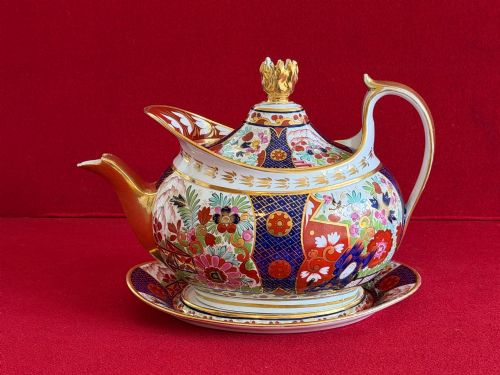
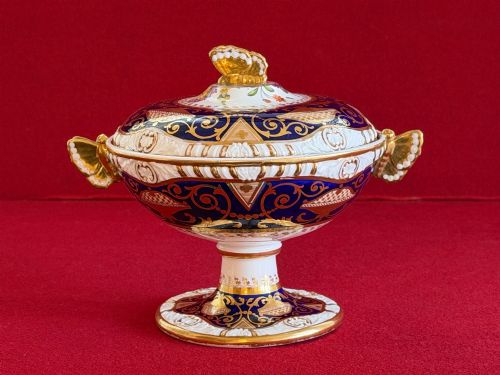
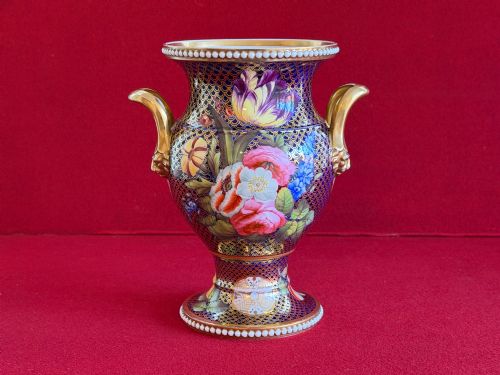
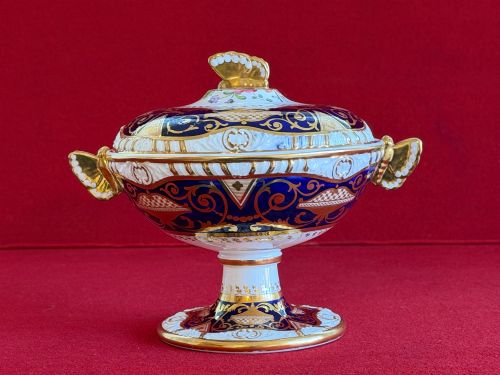
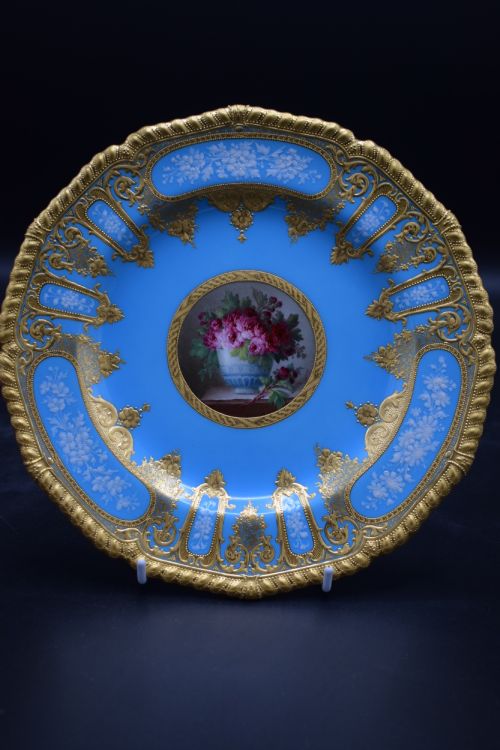
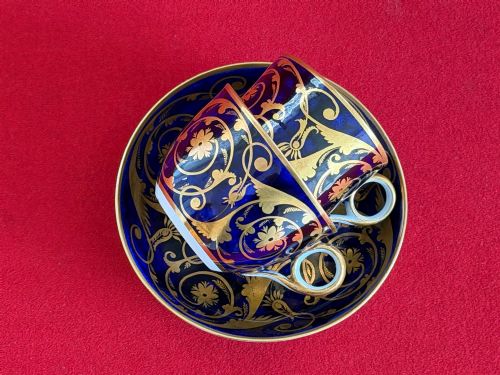
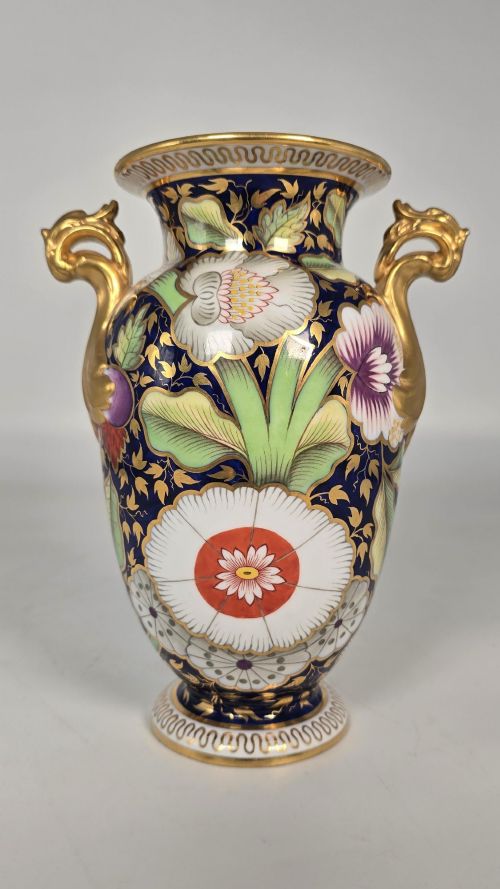
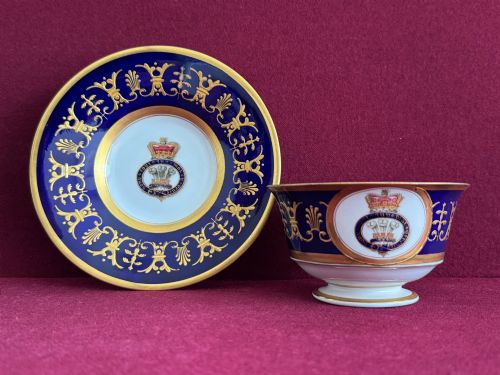
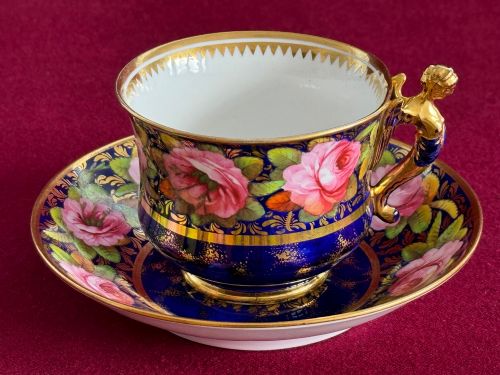
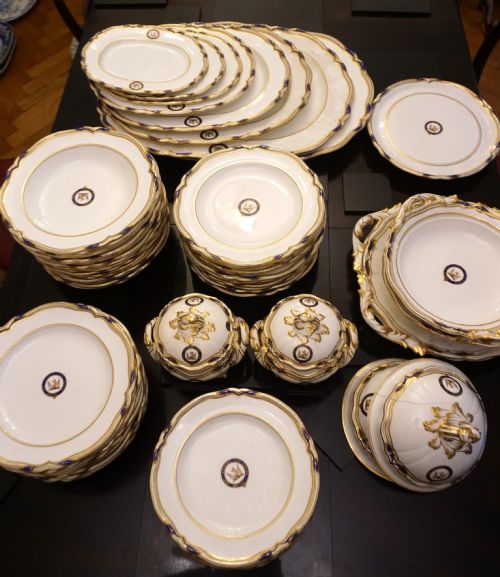
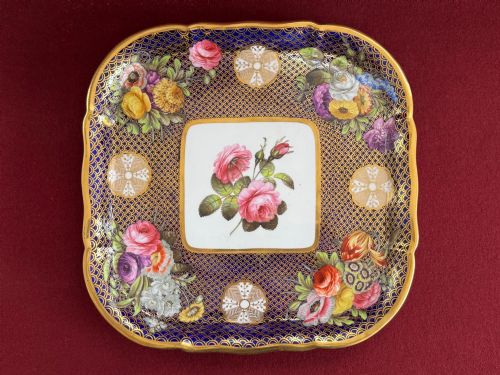
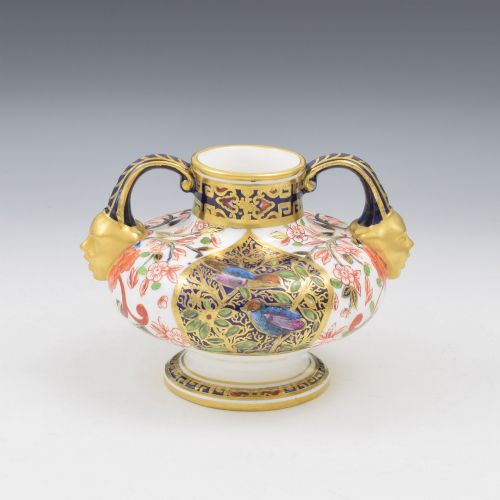
Gilded blue china encompasses porcelain objects decorated with cobalt blue backgrounds or painted details enriched with gold leaf, gilt, and enamel. Pieces range from extensive Staffordshire dinner services and Royal Crown Derby dessert sets to individual cabinet plates, teacups, saucers, and twin-handled vases.
The selection on this page draws heavily from early nineteenth century English factories such as Spode, Royal Crown Derby, and Worcester, alongside later Victorian and Edwardian examples. Forms vary from practical inkstands and tea trios to decorative urns and portrait plates in French styles.
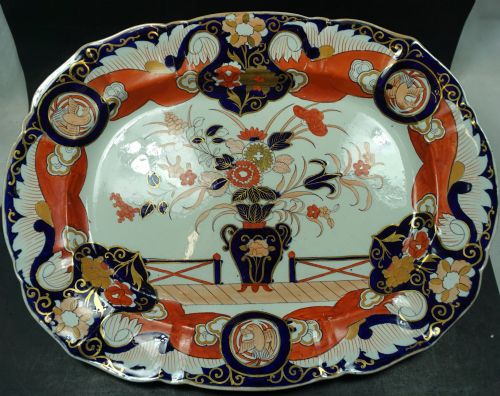
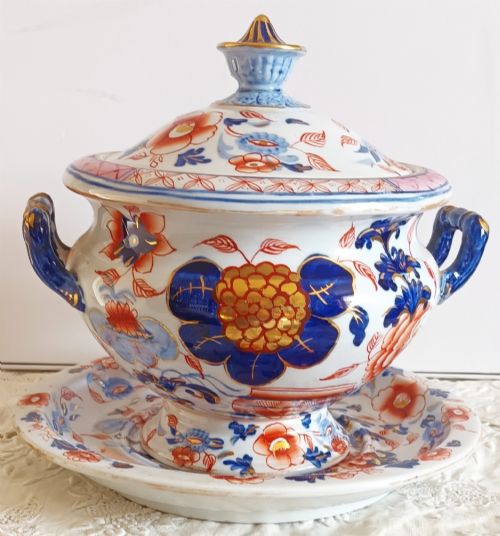
Imari patterns with deep blue and iron red underglazes heavily contribute to the selection, often highlighted with heavy gold gilding. Buyers also encounter painted fruit cabinet plates by named artists and transfer-printed or hand-painted tablewares designed for display or formal dining.
Materials and production methods
Makers utilised fine porcelain, bone china, and ironstone as the ceramic base, applying cobalt blue oxides under the glaze to achieve deep, rich background tones. Gold leaf and liquid gold gilt were then hand-painted or applied over the fired glaze and subjected to a secondary low-temperature kiln firing to bond the metal to the ceramic surface.
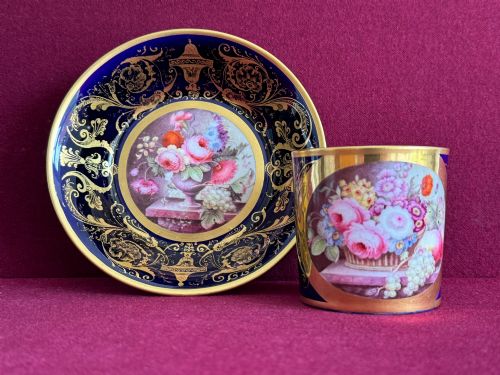
Enamel colours including iron red and green frequently complemented the blue and gold palette, particularly in Imari style wares. Skilled artisans hand-painted botanical studies, portraits, and exotic birds, whilst others utilised intricate transfer-printing techniques before finishing the details by hand.
Gilded Blue China Retail Price Guide 2026
Typical asking prices for gilded blue china among the pieces listed under this phrase on Sellingantiques today, from the lower quarter to the upper quarter. They describe what is for sale here now, not the wider market.
Listings span the nineteenth and early twentieth centuries, featuring porcelain forms ranging from miniature twin-handled vases to extensive seventy-one piece Staffordshire dinner services.
Evaluating quality and execution
Quality rests upon the crispness of the underglaze cobalt painting, the purity of the white porcelain body, and the thickness and burnishing of the gold leaf. Superior pieces display hand-painted artistry by known decorators rather than standard transfer prints, with precise brushwork and well-defined gilding that has survived intact.
The weight, translucency of the porcelain, and complexity of the moulded forms also distinguish finer examples from standard production wares. Matching sets with uniform factory marks and consistent pattern numbers demonstrate greater care in original manufacturing and subsequent preservation.
Spode·Royal Crown Derby·Royal Worcester·H and R Daniel·Newhall
The Gilded Blue China Glossary
- Cobalt blue
- A deep blue mineral pigment applied under the glaze to withstand high kiln temperatures without fading. It forms the dark foundational background seen on many cabinet plates and vases.
- Gilding
- The application of gold leaf or gold paste onto the fired ceramic surface. This technique adds metallic highlights to rims, handles, and painted motifs.
- Imari
- A decorative style originating in Japan and adopted by European factories, featuring cobalt blue, iron red, and heavy gold. Traditional English versions often incorporate intricate panel designs.
- Bone china
- A type of soft-paste porcelain containing animal bone ash, developed in England to create a stronger, whiter body. It allowed makers to produce thinner walls and more delicate forms.
- Coffee can
- A small, cylindrical porcelain cup without a handle, popular during the Regency period for serving strong coffee. They frequently matched saucers and sugar bowls in larger tea services.
Gilded Blue China: Frequently Asked Questions
How do I date these porcelain pieces?
Dating relies on factory pattern numbers, impressed or painted maker marks, and stylistic clues such as Regency shapes or Victorian palette choices. Comparing the specific mark against factory registers often narrows production to a particular decade.
Changes in ceramic bodies, from early soft-paste porcelain to later bone china and ironstone, also help establish the era of manufacture.
Can I use these antique tea services?
While many tea cups, saucers, and dinner services were made for functional use, age and delicate gilding make modern hand washing essential. Harsh detergents and dishwashers will wear away the gold leaf and enamel decorations over time.
Displaying cabinet plates on stands or using dinner services for special occasions preserves the fragile overglaze painting for the future.
What does Imari mean on these items?
Imari refers to a distinct decorative scheme dominated by cobalt blue, iron red, and extensive gold gilding. English factories adapted this aesthetic during the Georgian and Victorian periods, producing popular patterns like the Witches Imari.
These pieces combine rich blue underglaze painting with vibrant overglaze enamel colours and metallic gold highlights.
Why is some gilding worn?
Overglaze gold leaf rests on top of the fired glaze rather than sinking into the ceramic body, making it susceptible to friction from stacking, washing, and handling over the centuries. Heavy use during the nineteenth and twentieth centuries naturally leaves light rubbing on rims and handles.
Untouched gilding indicates a piece spent much of its life protected in a cabinet rather than active service on a dining table.