




Gilded Black Box
A gilded black box brings together dark lacquer and bright gold leaf in forms designed to hold tea, stationery, or jewellery.
Gilded Black Box
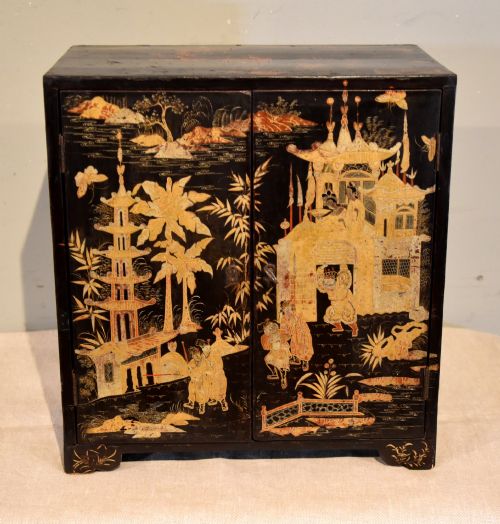
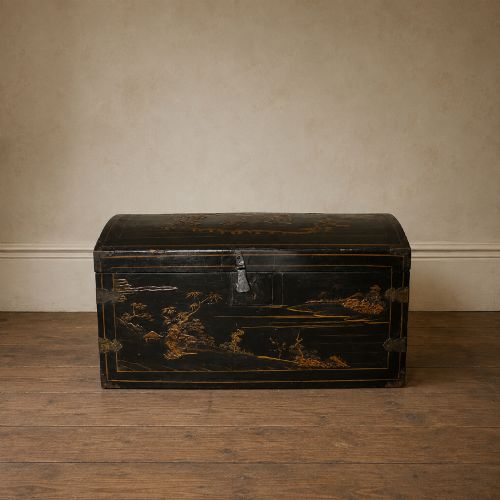
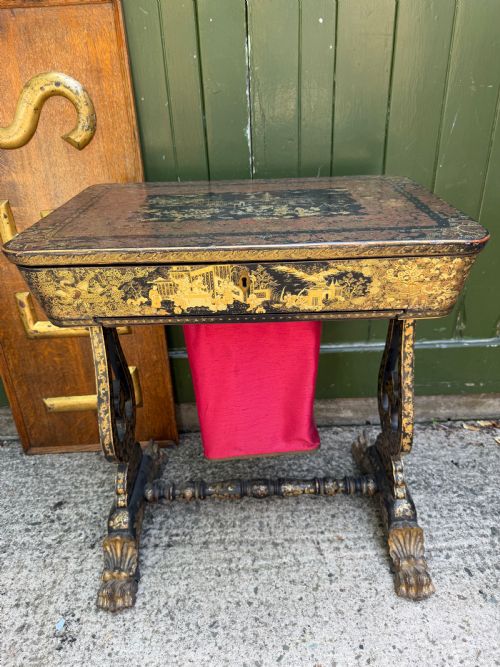
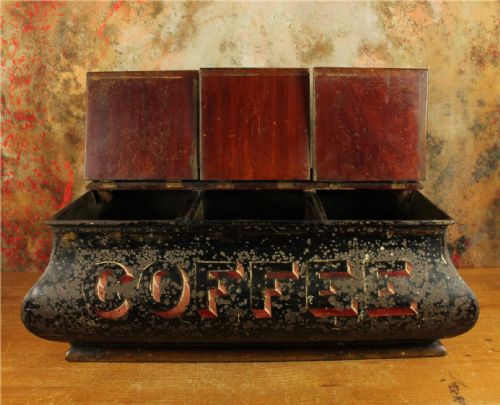
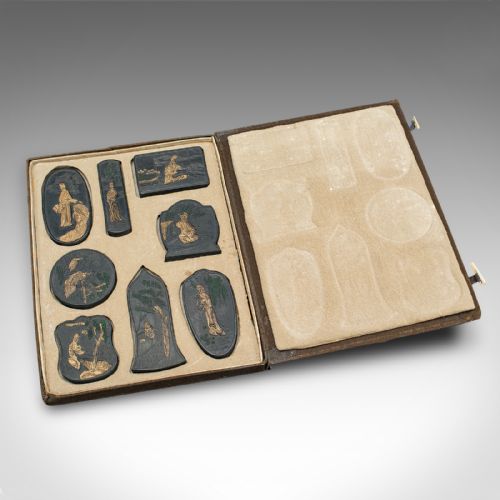
When a buyer looks for a gilded black box, they encounter containers produced across the eighteenth, nineteenth, and early twentieth centuries in England, China, Japan, and India. These pieces take the form of tea caddies, jewellery boxes, stationery cabinets, blanket boxes, and work tables.
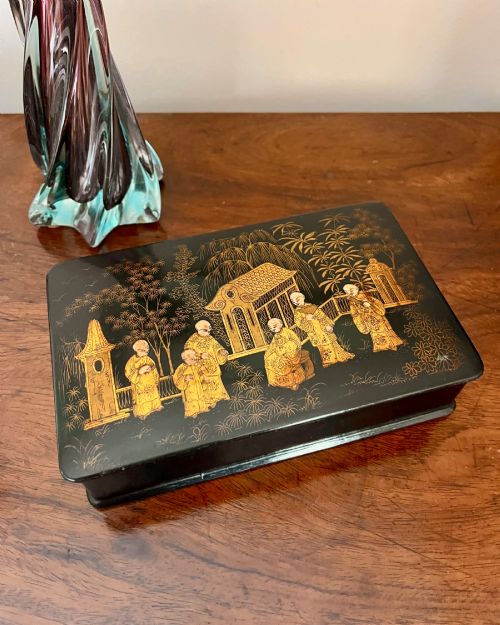
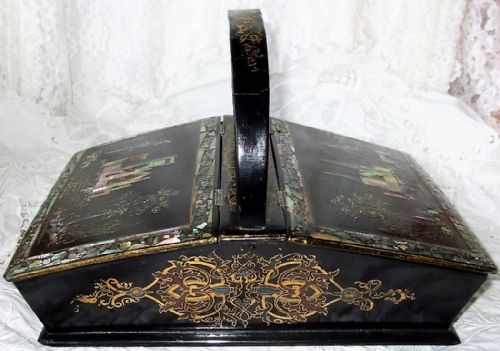
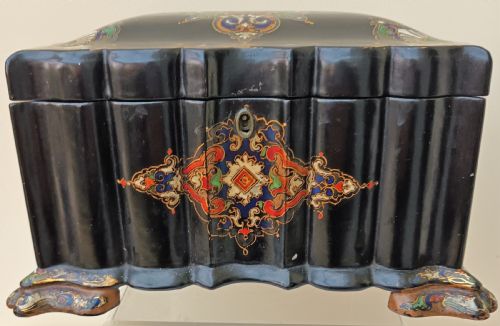
The version most frequently met on this page is the nineteenth-century Victorian papier-mâché or wooden box, heavily decorated with gilt and lacquer. Alongside these English interpretations, Chinese export pieces and Japanese Meiji period examples appear regularly, showing intricate gilt decoration on dark surfaces.
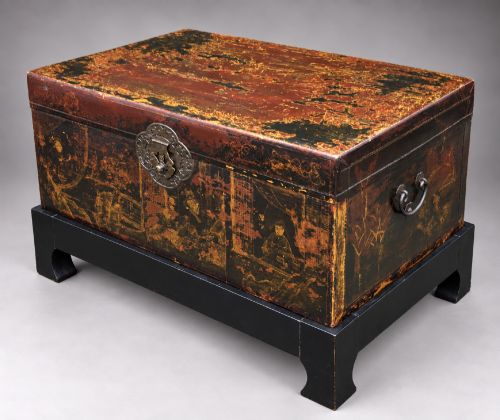
Objects range from small table cabinets and needlework caskets to large trunks and blanket boxes on stands. Each piece serves a domestic function, designed to store valuable items while adding decorative presence to a room.
How they were made
Maker's workshops built these pieces primarily from wood, papier-mâché, and metal toleware, applying layers of dark lacquer to form a smooth ground. Papier-mâché components provided a stable base for detailed surface ornamentation, particularly in English Victorian production.
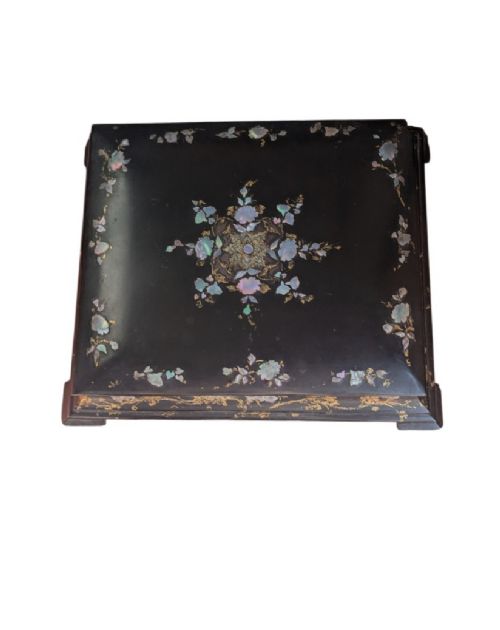
Gold leaf and paint were applied by hand to create the gilt decoration, often depicting Chinese export scenes, Chinoiserie landscapes, or geometric motifs. Brass hardware, mother-of-pearl inlay, and crystal inserts completed the interiors and fastenings of boxes intended for tea or jewellery.
Gilded Black Box Retail Price Guide 2026
Typical asking prices for gilded black box among the pieces listed under this phrase on Sellingantiques today, from the lower quarter to the upper quarter. They describe what is for sale here now, not the wider market.
Several boxes disguise themselves as stacks of fake leather-bound books, ready to hide secrets on a nineteenth-century library shelf.
What varies in quality
Quality rests upon the crispness of the gilt work and the depth of the lacquer finish. Superior examples display finely rendered gold leaf details that retain their brilliance without excessive rubbing.
The structural integrity of the papier-mâché or wood carcass determines longevity, with better pieces maintaining flat lids and tightly joined corners despite age. Interior fittings, such as fitted trays and original compartments, elevate the standing of the box.
The Gilded Black Box Glossary
- Lacquer
- A durable resin finish applied in multiple coats to wood or papier-mâché to produce a hard, glossy surface. It forms the dark background characteristic of these pieces.
- Chinoiserie
- European artistic interpretation of Chinese and East Asian decorative styles, popular in furniture and box design. This style often employs gold motifs on black grounds.
- Papier-mâché
- A composite material made from paper pulp or layers of paper bound with glue, pressed and dried into sturdy forms. It was widely utilised in Victorian England for decorative boxes.
- Toleware
- Painted or lacquered metalware, commonly tin, shaped into domestic articles and boxes. It offers a robust alternative to wood and paper-based containers.
- Gilt
- Gold leaf or gold paint applied to the surface of an object to create highlighted decoration. It provides contrast against the dark lacquer body.
Gilded Black Box: Frequently Asked Questions
What were tea caddies used for?
Tea caddies served to store precious tea leaves safely under lock and key in the formal rooms of the house. Tea was an expensive commodity, making these secure boxes essential domestic items.
Inside, they typically featured divided compartments with fitted lids to keep different tea varieties separated. Many included small mixing bowls made of glass or crystal.
How do I care for lacquer boxes?
Lacquer surfaces require gentle handling to prevent scratching and cracking over time. Keep them away from direct sunlight and sources of extreme heat.
Dust the exterior softly with a dry microfibre cloth. Avoid chemical polishes or water, as moisture damages aged lacquer and lifts gold leaf.
What is Chinese export lacquer?
Chinese export lacquer refers to decorative items manufactured in China specifically for Western markets during the eighteenth and nineteenth centuries. These pieces blended traditional Asian techniques with European functional forms like work tables and tea chests.
They often feature elaborate gilt scenes depicting figures, landscapes, and pavilions. The style heavily influenced domestic English cabinet making.
How do I date a papier-mâché box?
Dating relies on examining the construction materials, hinge types, and decorative styles employed on the piece. Victorian examples from the mid-nineteenth century frequently incorporate mother-of-pearl inlay alongside gilt decoration.
Papier-mâché production peaked during this period, replacing heavier wood for portable desk boxes and needlework caskets. Maker marks or stamps inside the compartments can also help narrow the timeline.