



German Porcelain Table Lights
These german porcelain table lights bring figurative charm and period illumination to a room, uniting glazed ceramic work with functional lighting.
German Porcelain Table Lights
German porcelain table lights combine sculpted ceramic figures and bases with lighting mechanisms, spanning table lamps, oil lamps, and candelabra. These decorative pieces emerge primarily from the nineteenth century into the early twentieth century, reflecting eras that favoured ornate domestic ornamentation.
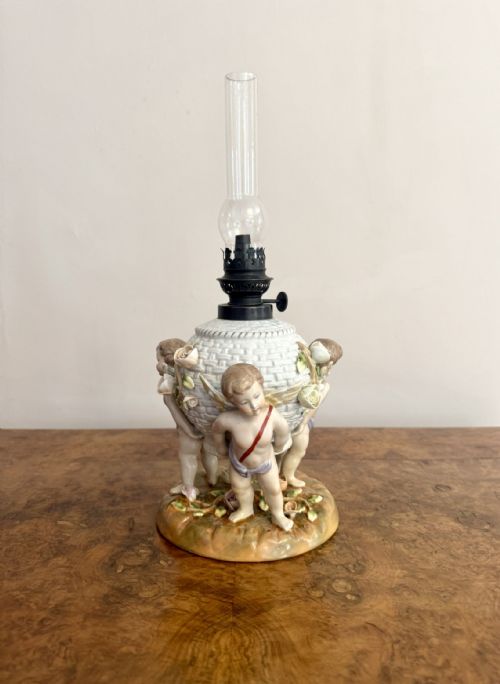
The selections available here showcase distinct decorative movements, moving through Victorian Rococo Revival whimsy and Victorian novelty subjects towards cleaner Art Deco lines. Collectors encounter figural compositions featuring animals, birds, cherubs, and human characters integrated directly into the body of the light.
Makers and factories such as Sitzendorf, Meissen, Dresden, Karl Ens, and Ernst Bohne & Sohn dominate the pieces seen on this page. Buyers are most likely to meet figural oil lamps and candelabra adorned with detailed porcelain modelling and hand-painted touches.
Materials and construction
Makers shaped these lights from fired porcelain, often incorporating hand-painted enamel details alongside applied decorative elements. Metal components such as brass, gilt, and gold leaf provide structural support and mountings for the ceramic bodies and burners.
Many items integrate glass elements and fabric or silk components, particularly in the shades and fittings associated with later lamp conversions. The modelling ranges from pierced structural vases to complex multi-figure candelabra requiring specialist kiln firing.
German Porcelain Table Lights Retail Price Guide 2026
Typical asking prices for german porcelain table lights among the pieces listed under this phrase on Sellingantiques today, from the lower quarter to the upper quarter. They describe what is for sale here now, not the wider market.
Object types include table lamps, oil lamps, and multi-arm candelabra in Victorian, Rococo Revival, and Art Deco styles.
Distinctions in craftsmanship
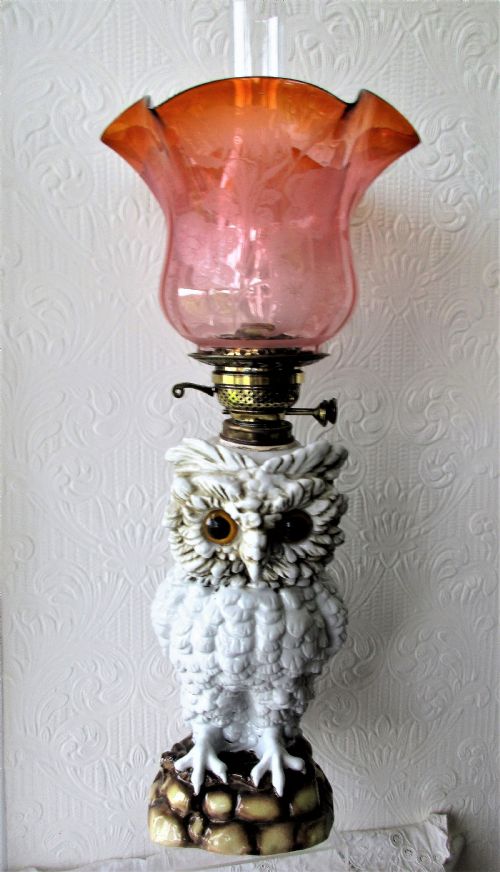
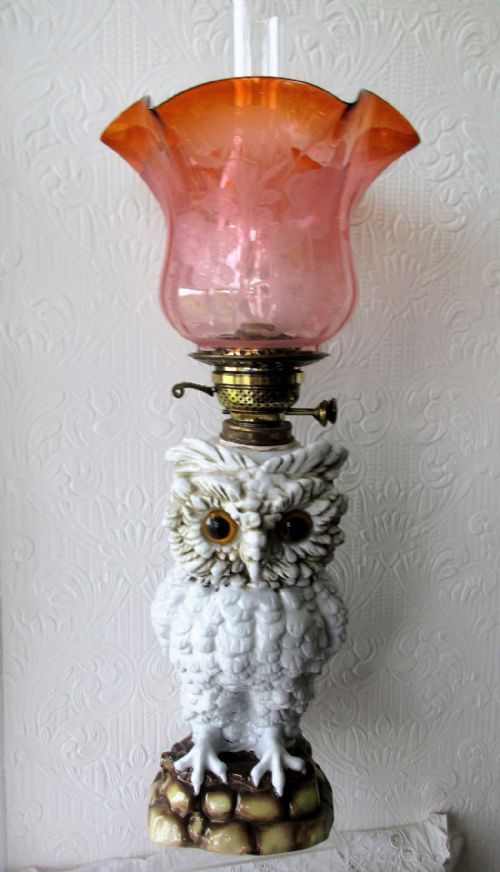
The fineness of the sculptural modelling separates standard production from superior pieces, particularly in the hand-painted facial expressions and delicate plumage of animal subjects like owls and spitz dogs. Crisp detail in the moulded porcelain petals, cherubic limbs, and rococo scrollwork indicates superior workshop output.
The integration of the porcelain body with metal mounts and electrical or oil mechanisms dictates the overall structural integrity. Well-preserved original gilding and undamaged painted enamels elevate the desirability of a piece.
Sitzendorf·Karl Ens·Anton Buschelberger·Meissen·Ernst Bohne & Sohn
The German Porcelain Table Lights Glossary
- Porcelain
- A hard, white ceramic material fired at high temperatures, forming the vitreous body of these lights. It accepts detailed moulding and fine enamel painting exceptionally well.
- Candelabra
- A branched candlestick holder designed to hold multiple candles, sometimes adapted or produced as combined lighting fixtures. They feature prominently in nineteenth-century decorative schemes.
- Rococo Revival
- A nineteenth-century design style emulating the asymmetric scrolls, shell motifs, and exuberant curves of the eighteenth-century French rococo movement. This aesthetic defines many Victorian German porcelain figures.
- Enamel
- Opaque vitreous material fused to the porcelain surface through firing, used to add permanent colour to details and clothing. It provides the vibrant palette seen on figural lamps.
- Gilt
- A thin layer of gold applied to metal mounts or porcelain highlights to give a luxurious golden finish. It complements the bright white ceramic bodies.
German Porcelain Table Lights: Frequently Asked Questions
What periods do these lights come from?
The pieces span the nineteenth century, with specific examples dated around 1880, 1890, 1900, and into the Art Deco period of 1920. Victorian and Rococo Revival influences predominate.
Production methods during these decades relied heavily on traditional hand-modelling and painted decoration within established German porcelain manufactories.
Are these items converted oil lamps?
Several pieces originate as oil lamps or figural candelabra that have subsequently received modern electrical wiring for domestic use. Others were produced purely as decorative candelabra or vase-form lamps.
Collectors often appreciate the retention of original burners and reservoirs alongside newer functional wiring.
How do I identify different German factories?
Attribution relies on stylistic traits, figural subjects, and underlying porcelain characteristics associated with houses like Sitzendorf, Meissen, and Dresden. Animal figures, such as owls and dogs, frequently point to specific workshop outputs.
Factory marks hidden beneath the glaze or base provide the definitive confirmation of origin.
Where should I place a figural lamp?
These decorative lights suit side tables, mantelpieces, or designated display surfaces where their detailed modelling can be viewed closely. Their strong sculptural presence makes them focal points in a room.
Placement should account for the delicate nature of the porcelain and the surrounding lighting requirements.