


German Porcelain Putto
These german porcelain putto figures, lamps, and centrepieces bring lively figural charm and elaborate Rococo styling to interiors.
German Porcelain Putto
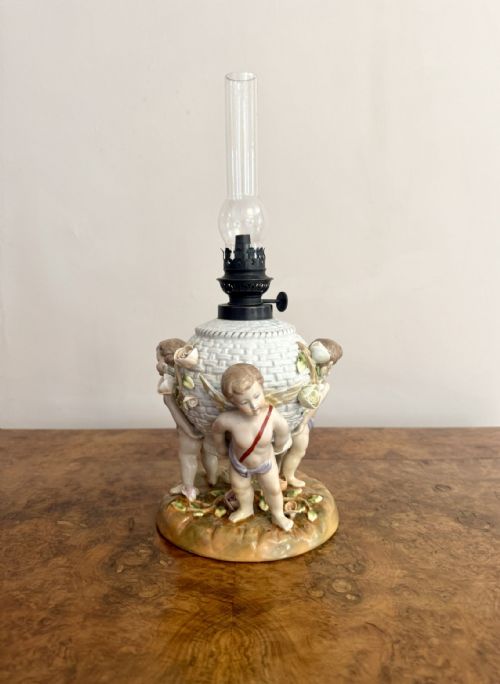
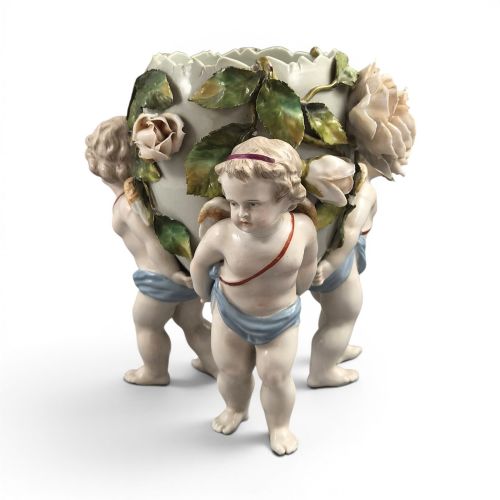
A german porcelain putto typically appears as a cherub, cupid, or winged infant integrated into decorative objects such as centrepieces, oil lamps, candelabras, and standalone figurines. These pieces span the eighteenth, nineteenth, and early twentieth centuries, drawing heavily upon Rococo and Victorian Rococo Revival aesthetics.
The most common examples on this page are nineteenth-century figures and table lighting from major German factories. Buyers encounter everything from single figurines and sweetmeat dishes to large musical centrepieces and clock garnitures adorned with applied roses and multiple putti.
Objects range from eighteenth-century Meissen figures to Edwardian and Art Deco pieces produced by regional potteries like Sitzendorf, Plaue Schierholz, and Volkstedt. The output demonstrates a sustained European taste for modelled infant figures set among glazed floral and gilt ornamentation.
Distinctions in craftsmanship and design
The application of enamel painting and the integration of subsidiary materials such as brass fittings and gold leaf determine the overall visual success of a piece. Well-preserved factory marks, balanced composition in multi-figure groups, and undamaged applied decorations elevate the status of lamps, clocks, and centrepieces within this tradition.
Some putti wear tricorne hats or disguises, proving that even immortal cherubs occasionally enjoy a spot of fancy dress.
Sitzendorf·Meissen·Plaue Schierholz·Volkstedt·KPM Berlin·Karl Tutter·Triebner ENS and Eckert·Johann Joachim Kändler·Paul Scheurich
The German Porcelain Putto Glossary
- Putto
- A plump, naked male infant, frequently winged, depicted in classical art and porcelain sculpture. They appear singly or in groups across various decorative objects.
- Hard-paste porcelain
- A dense, vitrified ceramic compound composed of kaolin and petuntse, fired at very high temperatures. This material forms the durable body of most German figures and lamps.
- Blanc de chine
- A French term denoting white porcelain without polychrome enamel decoration. It highlights pure sculptural contours through glaze alone.
- Centrepiece
- A large decorative table ornament placed in the middle of a dining or display surface. These often incorporate putti, bowls, and applied flowers.
- Candelabra
- A branched candlestick holding multiple lights. German examples frequently integrate putti figures entwined with scrolling arms.
German Porcelain Putto: Frequently Asked Questions
How were these porcelain lamps used?
Many nineteenth-century porcelain putto pieces were functional oil lamps designed to illuminate drawing rooms and parlours. The figures and floral appliqués wrapped around the font to combine utility with ornate decorative display.
Over time, many of these lighting items have been converted for modern electrical use while retaining their original ceramic bases.
How do I identify a Meissen figure?
Meissen figures are identified through fine sculptural modelling, historical subject matter such as the four seasons or allegorical figures, and the characteristic blue crossed swords factory mark. The quality of the enamel painting and delicate hand-formed details also point to this origin.
Pieces range from eighteenth-century works by modellers like Johann Joachim Kändler to later nineteenth-century interpretations.
Where were Schierholz centrepieces made?
Schierholz centrepieces were produced in Plaue, Germany, a region known for extensive porcelain manufacturing. These large decorative items frequently feature putti alongside applied roses and intricate openwork baskets.
Such works reflect the Victorian and Edwardian preference for highly ornate table decorations.