




German Oak Clock
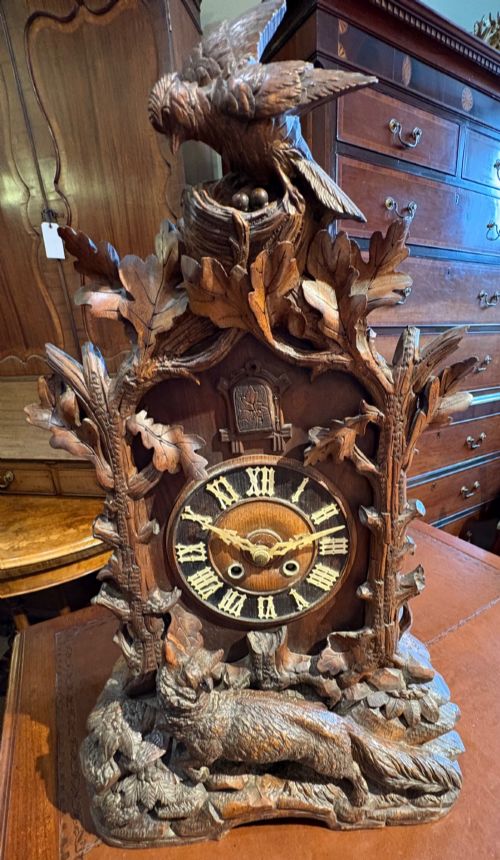
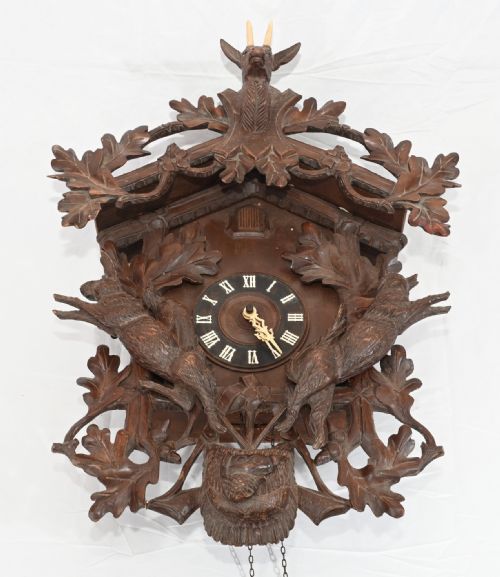
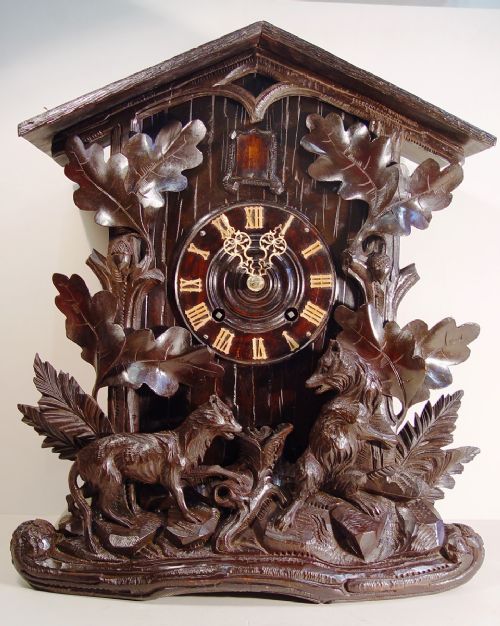
When you handle a german oak clock, you hold a piece defined by robust timber and precise continental movement.
German Oak Clock
A german oak clock encompasses a range of timepieces spanning the nineteenth century through the interwar decades, taking forms such as mantel clocks, wall clocks, bracket clocks, and longcase clocks. These pieces combine heavy regional timber cases with intricate mechanical movements produced in workshops across Germany.
Buyers browsing this selection encounter various interpretations of the form, from ornate carved styles and tall grandfather clocks to streamlined Art Deco designs. Oak serves as the primary structural housing across these eras, paired with brass, glass, and enamel dials.
How they were made
Craftsmen utilised seasoned oak alongside walnut and carved wood for the structural housing, often incorporating bevelled glass panels and brass fittings. Dials frequently combine enamel numerals with cast metal bezels, while interior movements rely on brass gear trains and steel arbors.
Cabinetmakers shaped the timber using traditional hand-carving and joinery techniques, particularly visible in pieces showing Black Forest influences. Clockmakers then fitted mechanical movements driven by weights, springs, or fuses to govern the striking and chiming mechanisms.
Materials recorded across these German timepieces include brass, glass, enamel, bone, and carved wood.
What varies in quality
The standard of a german oak clock depends heavily on the execution of the movement and the crispness of the timber carving. Pieces housing complex chime mechanisms or quarter-striking gear trains demonstrate greater technical ambition than simple timepieces.
Cabinet work separates standard production from finer workshop output, evident in the depth of carved detail, the selection of figured oak grain, and the integration of enamel dials and bevelled glass doors.
Winterhalder & Hofmeier·Philipp Haas·Junghans·Beha·Gustav Becker·Lenzkirch·Baden Clock Co
The German Oak Clock Glossary
- Bracket clock
- A portable table or shelf clock historically designed to sit upon a wall bracket. These models frequently feature heavy oak cases and brass carrying handles.
- Longcase clock
- A tall pendulum clock housed in a wooden trunk, often referred to as a grandfather or grandmother clock. These tall pieces utilise oak cases to enclose the hanging weights and pendulum.
- Mantel clock
- A smaller domestic clock designed for placement on a fireplace mantelpiece or sideboard. These compact examples rely on spring-driven movements rather than hanging weights.
- Fusee
- A conical pulley used in mechanical clocks to maintain even driving force as the mainspring unwinds. This device ensures more accurate timekeeping throughout the running cycle.
- Train
- The series of gears within a clock movement that transmits power from the source to the escapement. Multiple trains handle timekeeping, striking, and musical chiming.
German Oak Clock: Frequently Asked Questions
How do I wind a german oak clock?
Most mechanical examples require a key inserted into the dial holes to tension the internal springs or lift the driving weights. Care must be taken not to overwind the movement.
Different models require winding at intervals ranging from eight days to daily operation depending on the specific train configuration.
Where were these clocks built?
Production centred on German manufacturing regions renowned for horology, including the Black Forest and various specialised clockmaking factories.
While the movements and many cases originated in Germany, some completed units were exported to British retailers who housed them in local or continental oak cabinets.
How do I identify the period?
Stylistic indicators such as heavy Victorian carving, Edwardian inlay, or geometric Art Deco lines help date the timber housing. Movement signatures and dial designs provide further chronological markers.
Comparing the case style with the movement serial numbers allows collectors to narrow down the decade of manufacture.
How should I care for the oak case?
The timber housing benefits from stable room temperatures and protection from direct sunlight to prevent wood drying or cracking. Regular dusting maintains the finish without requiring harsh chemical polishes.
Waxing the oak periodically preserves the natural grain and moisture balance of the wood.