


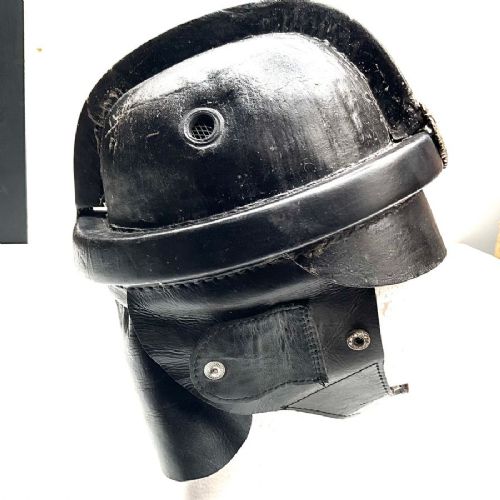
German Leather Helmet
These german leather helmet examples span military and motoring history, offering collectors tangible pieces of Imperial German and twentieth-century heritage.
German Leather Helmet
A german leather helmet encompasses military headgear and headwear originating from nineteenth-century campaigns through to the 1930s. Buyers searching this phrase typically encounter military helmets associated with the Imperial German army, alongside later motor cyclists variants.
Forms range from standard soldiers' and other ranks' equipment to officers' models and specialised pionier-bataillon or motor cyclists headwear. Each object type reflects the functional or ceremonial requirements of its era of origin.
How they were made
Construction relies heavily on leather and boiled leather as foundational materials, shaped to form the rigid body of the helmet. These organic components are combined with metal and brass elements, such as plates and fittings.
Textiles and natural fibres also play a structural or decorative role, incorporating felt, wool, fabric, and horsehair. These varied materials reflect the specific manufacturing standards of nineteenth-century military suppliers and later 1930s producers.
Early twentieth-century motorists relied on stiff leather caps to ward off bugs and wind before full windscreens became standard.
What varies in quality
Quality differences stem from the original tier of issuance, distinguishing standard other ranks equipment from officers' private purchase pieces. The refinement of metal embellishments, such as brass plates and hardware, marks this division.
The preservation of organic materials like boiled leather and horsehair defines the structural integrity of surviving examples. Variations also depend on whether the helmet retains its original configuration across different military and motoring periods.
The German Leather Helmet Glossary
- Pickelhaube
- A spiked helmet worn by nineteenth and twentieth-century German military forces, firefighters, and police. It is typically constructed from boiled leather with brass fittings.
- Kaiserreich
- The historical German Empire period spanning from 1871 to 1918. Items from this era often feature distinct imperial military insignia.
- Pionier-Bataillon
- A specialised combat engineer unit within the German military. Helmets designated to these units often carry specific regional or battalion markings.
- Boiled leather
- Leather hardened by immersion in hot water, wax, or grease to create a rigid, protective shell. This technique provided durability for military headgear.
- Other ranks
- Military personnel below commissioned officer status. Equipment issued to these ranks followed standardised regulatory patterns rather than private tailoring.
German Leather Helmet: Frequently Asked Questions
What is a german leather helmet?
A german leather helmet refers to historical military headgear and early motor cyclists protective wear originating from Germany. These pieces primarily date from the nineteenth century through the 1930s.
The category includes traditional spiked pickelhaubes worn by infantry units as well as later twentieth-century motoring headwear. Each piece reflects the specific operational or ceremonial needs of its time.
How do I date a german leather helmet?
Dating relies on identifying the underlying style, specific material construction, and associated imperial or military periods. Characteristics often align with nineteenth-century designs or 1930s motoring gear.
Changes in brass fittings, plate designs, and internal configurations help narrow the era of manufacture. Comparing structural details against documented military models provides further chronological context.
Were these helmets used in combat?
Many examples served practical military functions during nineteenth-century campaigns and the First World War. Others were designed for ceremonial dress or specialised roles like pionier units.
Later 1930s variants served civilian or organizational transport functions rather than active frontline military service. Usage varied strictly according to the specific branch and unit of the wearer.
How should I care for leather helmets?
Preservation requires stable environmental conditions away from direct sunlight and excessive humidity. Maintaining moderate indoor temperatures prevents the organic materials from drying out or degrading.
Handling should be minimised, supporting both the leather body and any attached brass or horsehair elements. Avoid applying modern cleaning chemicals to historical finishes.