

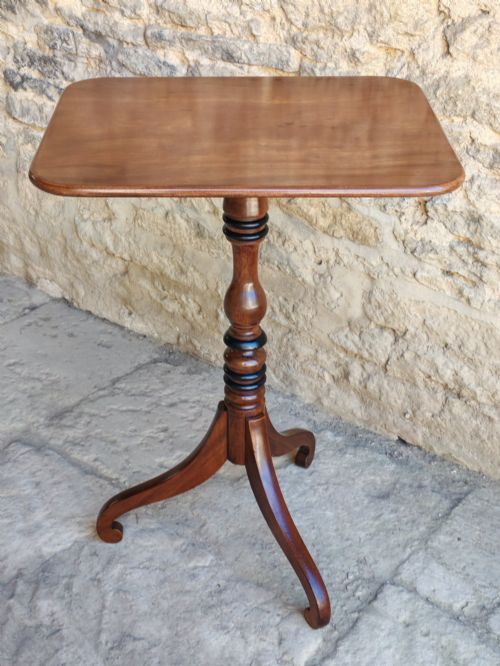
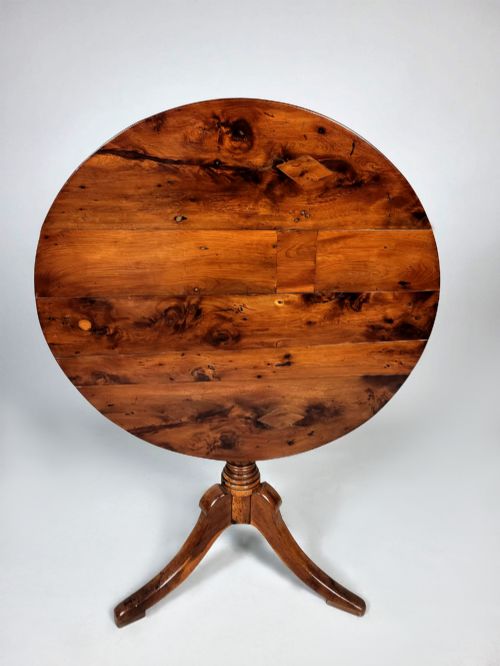


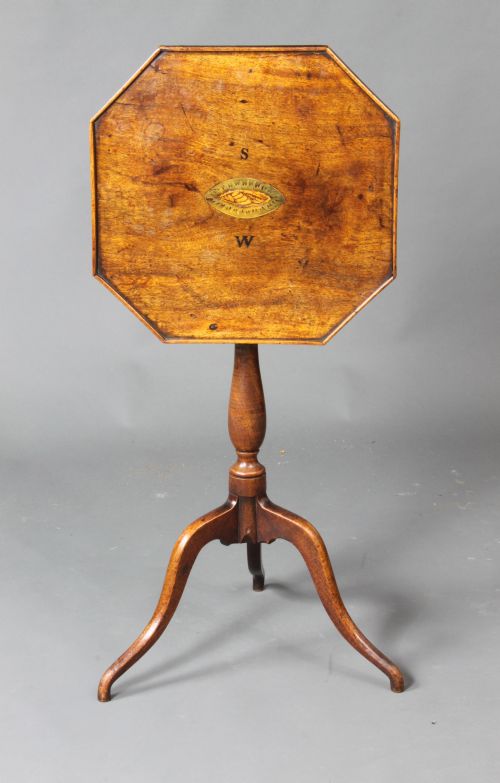


Georgian Yew Wine Table
A georgian yew wine table brings rich timber grain and compact proportions to a room, offering a small surface designed for the evening glass.
Georgian Yew Wine Table
When you search for a georgian yew wine table, you are looking at small tables designed for holding drinks or lighting in domestic interiors. These pieces appear in forms such as occasional tables, lamp tables, and kettle stands, often standing on slender tripod supports.
The versions you are most likely to meet on this page span the eighteenth century and the Regency period, with dates clustering around the middle of the eighteenth century up to the eighteen-twenties. Materials include solid yew, burr yew, satinwood, oak, and brass elements, reflecting the timber choices favoured by makers of the era.
The origins of these pieces connect to English workshops producing compact furniture for sitting rooms and parlours. They combine functional circular or rectangular tops with stable three-legged bases, making them versatile for modern spaces.
Materials and construction
Cabinet makers utilised yew wood and burr yew for their distinctive figuring and warm tone, sometimes combining them with oak or satinwood for contrasting structural elements. Ebonised wood and brass details appear occasionally on later Regency examples to accent the timber.
Tripod construction dominated the form, requiring precise joinery to connect the central pillar to three slender legs and a tilting or fixed top. The use of burr yew veneers on top surfaces demanded skilled cutting to display the rich patterns of the grain.
Georgian Yew Wine Table Retail Price Guide 2026
Typical asking prices for georgian yew wine table among the pieces listed under this phrase on Sellingantiques today, from the lower quarter to the upper quarter. They describe what is for sale here now, not the wider market.
Trees that grew these wild burrs left behind swirling timber patterns that carpenters chased across centuries just to catch the evening light.
Judging quality and character
The distinction between standard examples and superior pieces rests on the choice of timber and the complexity of the wood grain. Burr yew surfaces with deep figuring and varied colour command attention over plain timber tops.
Proportion and the delicacy of the tripod base dictate the elegance of the silhouette. Finely turned pillars and well-balanced legs demonstrate the confidence of the maker in handling dense hardwood.
Gillows
The Georgian Yew Wine Table Glossary
- Yew wood
- A dense, hard timber known for its varied grain patterns and warm golden-brown colour. Cabinet makers prized it for decorative furniture tops.
- Burr yew
- A growth abnormality in yew trees that produces swirling, highly decorative grain patterns. This material appears on high-status table tops.
- Tripod table
- A small freestanding table supported by a central pillar and three legs. This design remained stable on uneven floors.
- Tilt top
- A tabletop mechanism that allows the surface to pivot to a vertical position when not in use. This feature saved floor space in period rooms.
- Occasional table
- A small, movable table intended for specific, minor uses around the house. These pieces function easily as lamp or side tables today.
Georgian Yew Wine Table: Frequently Asked Questions
What is a wine table used for?
These small tables were originally designed to hold glasses, bottles, or candles close to hand during evening gatherings. Their compact size made them easy to move around a parlour or drawing room.
Today, they serve equally well beside a sofa or armchair as a lamp table or a place to rest a cup of tea.
How do I tell an 18th century table from a Regency one?
Eighteenth-century examples often display simpler lines and proportions associated with George III furniture, sometimes combining yew with oak. Regency pieces from around eighteen-twenty may incorporate ebonised wood or contrasting satinwood details.
The overall silhouette shifts from the traditional tripod designs of the seventeen-seventies toward more decorative finishes in the early nineteenth century.
Are all these tables made entirely of yew?
While yew and burr yew form the primary decorative surfaces, makers frequently used secondary timbers like oak for internal structures or supporting frames. This combination of woods was standard practice in English cabinet making.
Listing titles often note auxiliary materials such as satinwood or brass when they contribute to the visual design.
Can I use a tilt top table safely?
Tilt top mechanisms were designed to allow tables to fold flat against a wall when not in use. The catch mechanism secures the top horizontally when the table is needed.
When living with these pieces, check the catch before moving the table to ensure the top remains stable.