




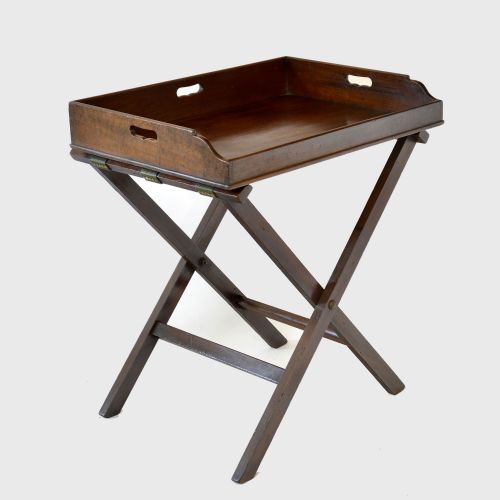
Georgian X Frame Table
A georgian x frame table brings structural symmetry and understated utility to a room through crossing stretcher supports.
Georgian X Frame Table
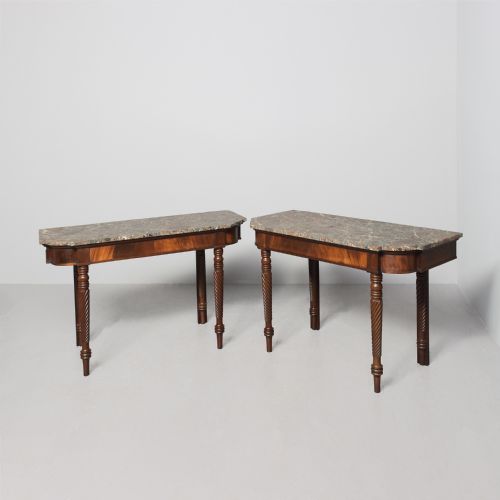
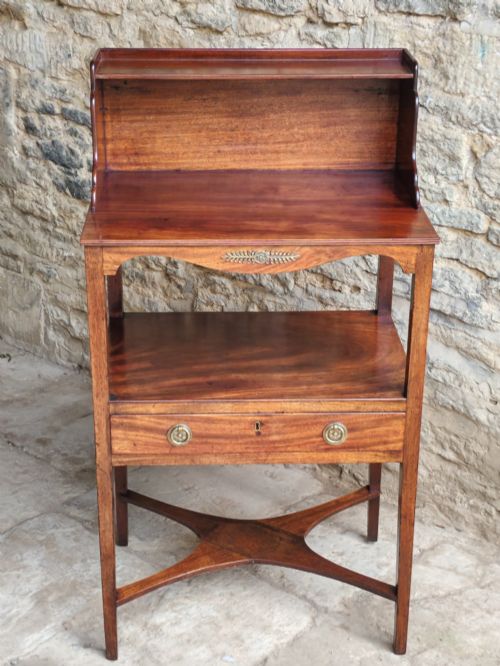
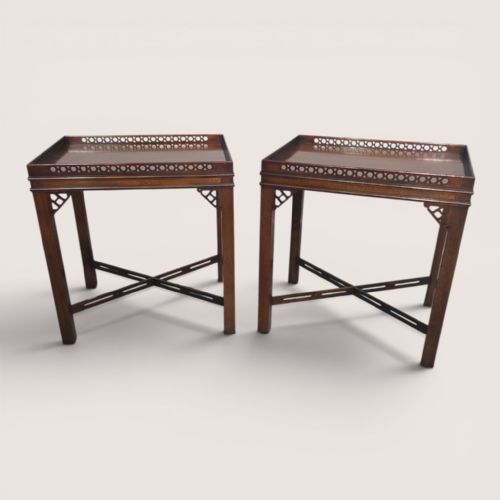
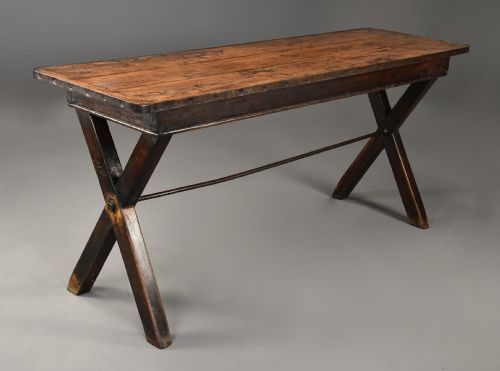
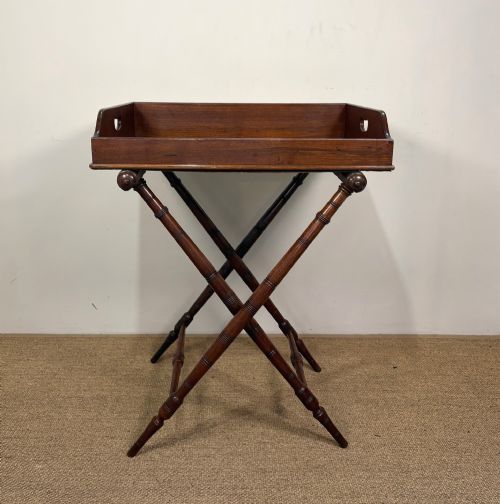
A georgian x frame table centres on a cross-form base design that supports various utilitarian and decorative surfaces. The archive shows these pieces appearing alongside related butler trays, tavern tables, and side tables from the eighteenth and nineteenth centuries.
Buyers encountering this search phrase most frequently meet mahogany and oak constructions spanning the Georgian, Regency, and Victorian periods. The cross-frame configuration provides stability while maintaining an open silhouette beneath the top surface.
Materials and construction
Makers utilised dense timbers such as mahogany, oak, and elm to construct the intersecting stretcher supports and tabletops. These woods provided the necessary load-bearing strength for folding trays, side surfaces, and tavern tables.
Joinery techniques relied on pegged or mortised joints where the crossed members intersect to handle weight and movement. Surfaces often exhibit original painted finishes or polished timber patinas developed over centuries of use.
Georgian X Frame Table Retail Price Guide 2026
Typical asking prices for georgian x frame table among the pieces listed under this phrase on Sellingantiques today, from the lower quarter to the upper quarter. They describe what is for sale here now, not the wider market.
Listings feature mahogany, oak, and elm woods across 18th-century, Regency, and Victorian periods.
Design and condition
Quality rests in the precision of the intersection where the x frame members meet and distribute weight evenly. Tighter joinery and thoughtful timber selection distinguish standard utilitarian items from finer examples.
Surface preservation significantly influences the standing of a piece, particularly where original paint, patinated timber, or brass fittings remain intact. Proportion and restraint in secondary details separate superior examples from heavier, later interpretations.
Gillows
The Georgian X Frame Table Glossary
- X Frame
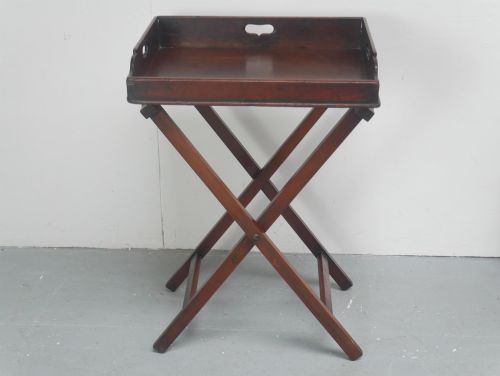
- A structural base design formed by two diagonal members crossing in the centre to support a tabletop. This configuration distributes weight efficiently while keeping the floor space beneath unobstructed.
- Butler Tray
- A removable wooden tray with hinged or fixed sides, designed to sit upon a folding or rigid stand. It allowed servants to transport items from kitchen to parlour.
- Patina
- The surface sheen and texture developed on wood or metal through age, handling, and regular polishing. It serves as an indicator of longevity and care.
- Tavern Table
- A sturdy, utilitarian table constructed for public houses and domestic use, typically featuring solid timber tops and robust underframing. These tables were built to withstand heavy daily service.
- Stretcher
- A horizontal timber connecting the legs of a table to increase rigidity and structural stability. In cross-frame designs, these members form the defining diagonal geometry.
Georgian X Frame Table: Frequently Asked Questions
What is an x frame table?
An x frame table uses intersecting diagonal stretchers beneath the top to provide structural support without solid panel sides. This design keeps the profile light and open.
Historical examples often appear in mahogany or oak as side tables, tavern tables, or stands for removable trays.
How were these tables used?
These tables served flexible domestic roles, ranging from serving surfaces in reception rooms to sturdy tavern furniture for dining and gathering. Folding versions allowed servants to clear and store surfaces easily.
Their portable nature meant they moved between rooms depending on the household requirements of the day.
How do I identify the period?
Period identification relies on timber species, construction methods, and hardware details like brass hinges or fixings. Eighteenth-century examples typically show dense Cuban mahogany or oak with hand-cut joinery.
Later nineteenth-century interpretations often incorporate softer secondary woods or revival styling cues from the Georgian and Regency eras.
How do I care for antique timber?
Antique timber surfaces require protection from direct sunlight and sudden humidity changes to prevent warping or splitting. Regular dusting with a dry, soft cloth preserves the finish.
Occasional application of traditional wax helps maintain the patina without building up heavy residue on the grain.