



Georgian Writing Desk Accessory
A georgian writing desk accessory brings order and elegance to a correspondence space, offering the tactile pleasure of period craftsmanship.
Georgian Writing Desk Accessory
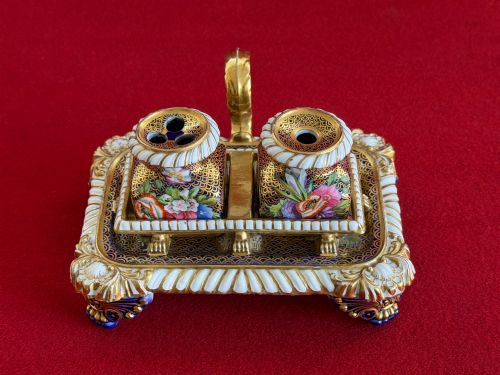
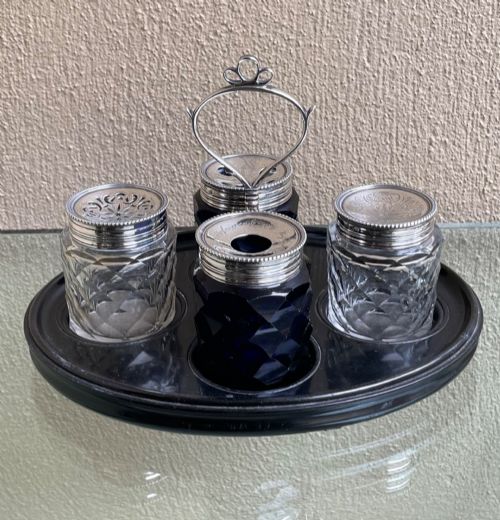
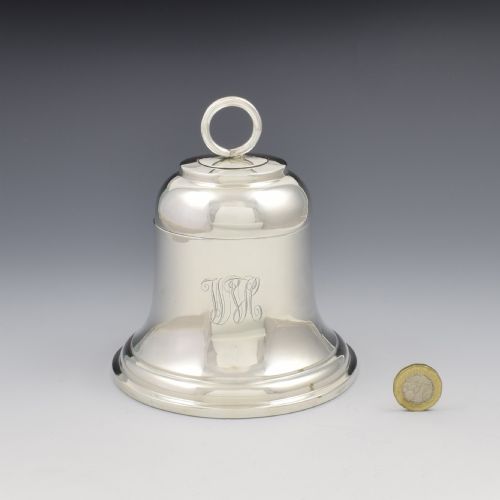
A georgian writing desk accessory encompasses the functional items used for correspondence, ink work, and seal pressing across the eighteenth and nineteenth centuries. The pieces most commonly met on this page include inkstands, inkwells, pounce pots, desk sets, and writing slopes.
The materials span sterling silver, porcelain, brass, pewter, and rosewood, reflecting the diverse needs of a traditional desk setup. Makers produced these implements in distinct styles such as Regency, George I, and George III, utilising glass and enamel details alongside precious metals.
How they were made
Metalsmiths employed sterling silver, Sheffield plate, and brass, often combining them with ebony or glass liners for structural integrity and utility. Silversmiths cast and hammered metal into inkstands and pounce pots, whilst woodworkers constructed rosewood and fruitwood writing slopes with inlaid brass details.
Ceramic pieces relied on porcelain bodies from factories such as Spode and Worcester, decorated with hand-painted patterns and enamel. Artisans also worked with cut glass, gold leaf, and pewter to create durable containers for liquid ink and fine sand.
What varies in quality
Quality rests upon the precision of the metalwork, the clarity of the porcelain painting, and the integrity of the timber. A piece with well-preserved gilding, crisp hallmarks, and original glass liners demonstrates superior original production.
The complexity of the form dictates distinction, separating simple utility items from elaborate multi-piece desk sets with matched accessories. Superior examples retain their original components, such as integrated stamp boxes, sealing wax holders, and complete sets of intaglio glass seals.
James Goodwin·Marson and Jones·Flight Barr and Barr·Daniel Holy of Sheffield
The Georgian Writing Desk Accessory Glossary
- Pounce pot
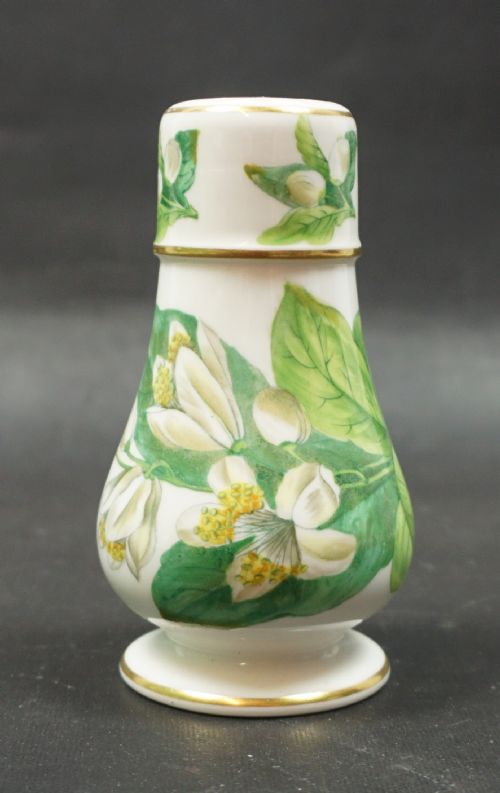
- A small shaker used to sprinkle fine sand or cuttlefish powder over wet ink to speed up drying and prepare the paper surface for further writing. These containers often feature pierced lids.
- Standish
- A portable tray or stand holding inkwells, pounce pots, and penholders for a desk. It serves as the central vessel for writing equipment.
- Sheffield plate
- A composite material made by fusing a thin sheet of silver to a thicker copper base. This technique preceded modern electroplating.
- Intaglio
- A design carved into the surface of a gemstone or glass seal so that an impression in wax appears in relief. These seals were mounted in handles for closing letters.
- Sealing wax
- A wax compound melted to secure documents and stamped with a signet or intaglio seal. It provided privacy and authentication for correspondence.
Georgian Writing Desk Accessory: Frequently Asked Questions
What is a pounce pot used for?
A pounce pot held fine powder or sand that writers sprinkled onto wet ink to absorb excess moisture and dry the page quickly. The perforated lid allowed the powder to distribute evenly across the paper.
Collectors find these small pots in silver, porcelain, and wood. They form part of a complete writing set alongside inkwells and seal boxes.
How do I care for silver desk accessories?
Sterling silver and Sheffield plate require gentle cleaning with a soft cloth to preserve the metal surface and any engraved details. Avoid harsh chemical dips that strip away historic patina.
Keep wooden items like rosewood writing slopes away from direct sunlight and extreme temperature changes. This prevents the timber and inlaid brass from warping.
What is the difference between an inkstand and an inkwell?
An inkstand is a larger tray or stand that holds multiple writing implements, including inkwells, sand containers, and pen troughs. It functions as the permanent desk centrepiece.
An inkwell is simply the individual vessel designed to contain the liquid ink. Many inkwells feature glass liners and hinged metal lids to prevent evaporation.
How do I identify the period of a desk set?
Period identification relies on examining hallmarks on silver components, stylistic markers in the woodwork, and ceramic factory marks. Regency and Georgian pieces often display neoclassical motifs and fine brass inlay.
Material combinations also indicate age, such as early Sheffield plate or pearl ware ceramics. Comparing the form to dated examples helps narrow down the decade of production.