

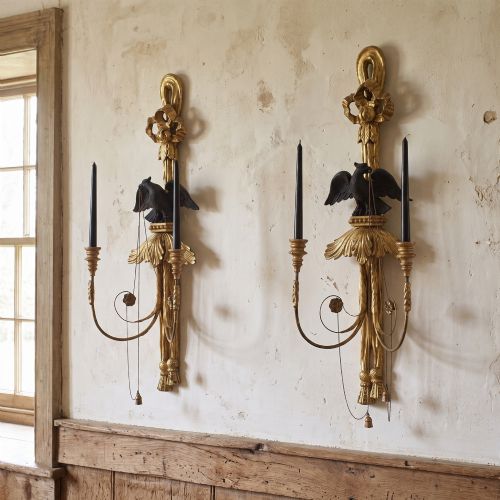
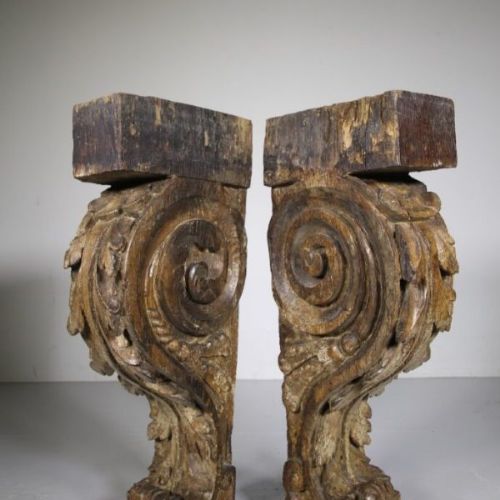

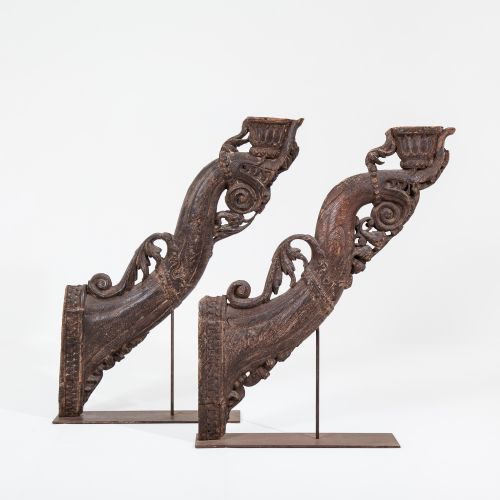


Georgian Wooden Wall Bracket
A georgian wooden wall bracket brings carved architectural presence into a room, holding sconces, clocks, or ornaments with period weight.
Georgian Wooden Wall Bracket
A georgian wooden wall bracket provides a sturdy protruding shelf or support mounted directly to vertical surfaces. These items range from architectural salvage and carved corbels to dedicated console tables and corner shelves.
The versions met most frequently on this page span the eighteenth century and the Regency era, along with later revival pieces designed in the George III style. Materials lean heavily towards carved timber, mahogany, walnut, and oak, occasionally enriched with gesso or giltwood details.
How they were made
Makers shaped these supports using solid native and imported timbers, carving mahogany, walnut, and oak by hand to achieve deep relief and structural strength. Figures and architectural motifs relied on traditional chisel work directly into the wood.
Surfaces were frequently finished with gesso and giltwood to catch candle light, particularly on wall sconces and eagle brackets. Brass fittings and metal elements occasionally supplemented the timber construction for hanging clocks or supporting heavier loads.
Georgian Wooden Wall Bracket Retail Price Guide 2026
Typical asking prices for georgian wooden wall bracket among the pieces listed under this phrase on Sellingantiques today, from the lower quarter to the upper quarter. They describe what is for sale here now, not the wider market.
Object types range from architectural salvage and corner shelves to console tables and hooded wall clocks.
What varies in quality
Quality rests in the crispness of the hand carving and the depth of the timber's grain. Superior pieces display fluid lines in foliage, birds, or architectural moulding, whereas lesser examples show softer, shallower execution.
The choice of material and integrity of the original construction dictate distinction across the range. Matched pairs and items retaining their original giltwood or untouched wooden surfaces command higher regard than heavily altered pieces.
Cording of London·Henry Deykin
The Georgian Wooden Wall Bracket Glossary
- Corbel
- A structural piece of stone, wood, or metal jutting from a wall to carry a superincumbent weight. In timber, these are heavily carved architectural supports.
- Giltwood
- Wood that has been treated with gesso and covered with thin sheets of gold leaf. This finish reflects candlelight effectively in period interiors.
- Padouk
- A dense tropical hardwood known for its deep reddish hue and durability. It appears in overseas trade furniture and specialised shelving.
- Sconce
- A wall-mounted light fixture that uses brackets to carry candles or lamps. Eighteenth-century versions often featured carved wooden or giltwood backplates.
- Console table
- A table fixed to a wall by ornamental brackets or legs, designed to sit flush against vertical surfaces. Some large wall brackets function similarly to these stands.
Georgian Wooden Wall Bracket: Frequently Asked Questions
How were wall brackets used?
These supports held clocks, heavy lighting, or decorative ornaments off the floor, saving valuable surface space in period rooms.
They also served an architectural role, framing doorways, supporting beam ends, or providing a sturdy foundation for displays.
Are these brackets structurally sound?
Most solid timber brackets are built to bear considerable weight, having been originally designed for heavy clocks or architectural elements.
Weight capacity depends on the mounting method and the density of the wood, such as oak or mahogany.
How do I date a wooden bracket?
Dating relies on timber species, tool marks, and stylistic clues from periods like the Georgian era or the Regency years.
Hand-cut joinery and traditional carving techniques distinguish eighteenth-century items from later nineteenth-century revivals.
Where should I mount a bracket?
Mounting requires fixing directly into wall studs or masonry to support the projection and any object placed upon it.
Placed at eye level or above furniture, they act as focal points for displaying lighting, clocks, or sculptures.