




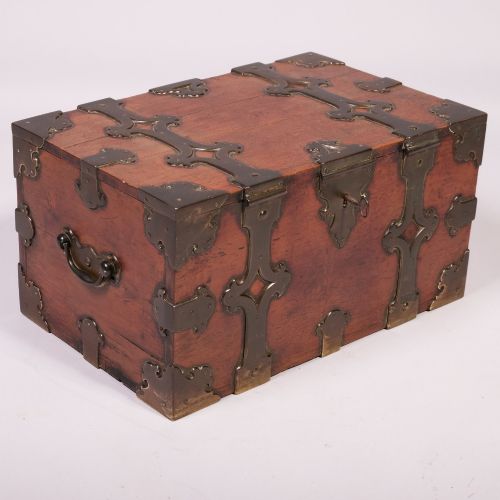
Georgian Wood Coffer
A georgian wood coffer brings centuries of domestic storage into a room, offering heavy timber construction and practical utility.
Georgian Wood Coffer
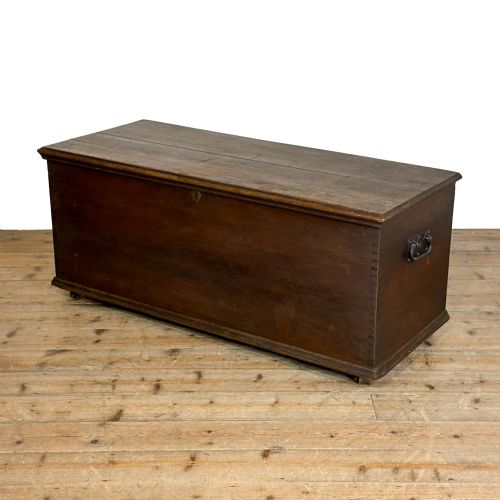
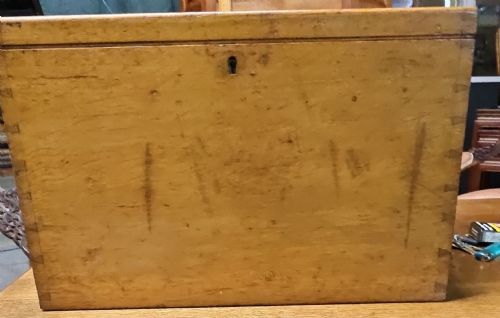
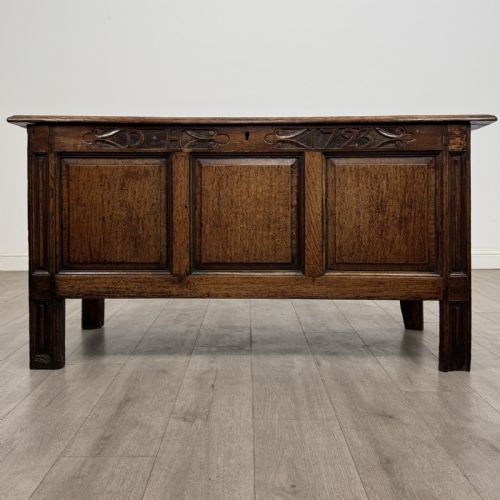
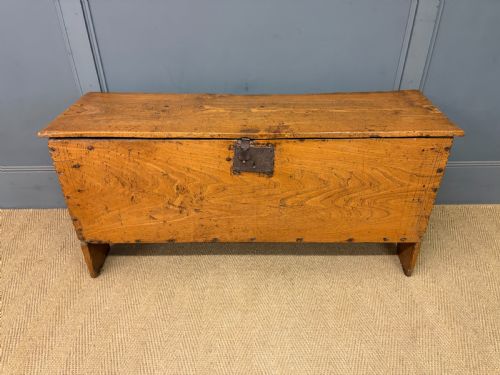
A georgian wood coffer is a traditional storage chest designed for blankets, linen, and household valuables. These pieces span the eighteenth and nineteenth centuries, reflecting domestic life and utilitarian craftsmanship across rural and urban settings.
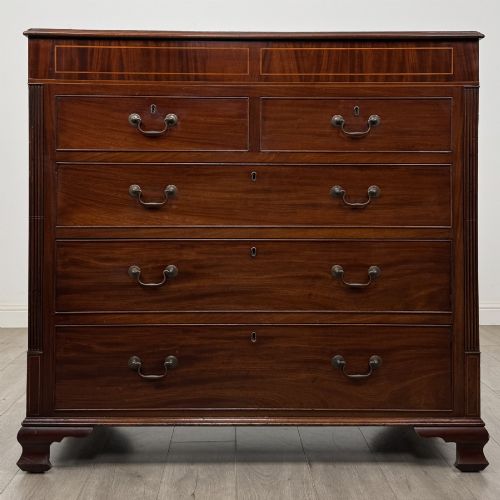
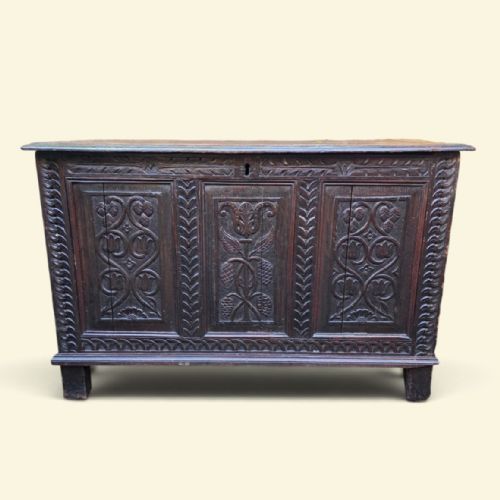
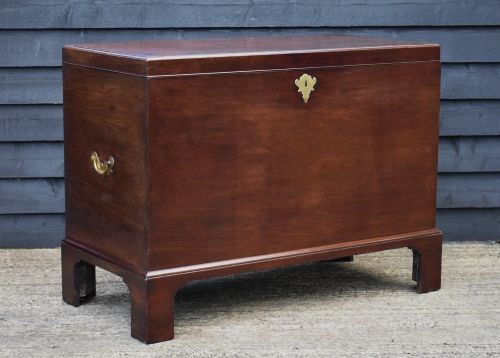
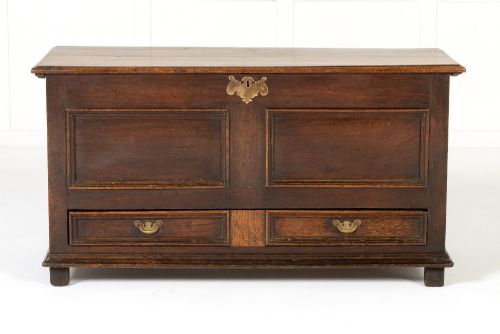
The version most commonly met on this page is the sturdy oak coffer, often featuring panelled construction and interior candle boxes. Alongside these traditional oak examples, variations in elm, mahogany, and camphorwood appear, alongside related mule chests and blanket boxes.
Makers utilised local timbers suited to regional vernacular traditions, resulting in heavy lids, robust iron hinges, and straightforward rectangular proportions. Buyers encounter both plain utility pieces and elaborately carved examples bearing the stylistic marks of their period.
Assessing quality and craftsmanship
Quality rests heavily on the integrity of the timber and the preservation of original structural elements such as feet, lids, and hinges. Pieces retaining their early boarded bottoms and interior tillers command greater appreciation than those altered or rebuilt over later centuries.
The refinement of the carving, the thickness of the original planks, and the tightness of the joinery distinguish high workshop output from basic regional carpentry. Surface patination, unblemished by aggressive stripping, indicates how carefully a piece was preserved through generations of domestic use.
Georgian Wood Coffer Retail Price Guide 2026
Typical asking prices for georgian wood coffer among the pieces listed under this phrase on Sellingantiques today, from the lower quarter to the upper quarter. They describe what is for sale here now, not the wider market.
Listings feature oak, mahogany, elm, and camphorwood spanning the eighteenth and nineteenth centuries.
The Georgian Wood Coffer Glossary
- Coffer
- A large wooden chest used for storing valuables, linen, or documents, typically fitted with a hinged lid.
- Mule chest
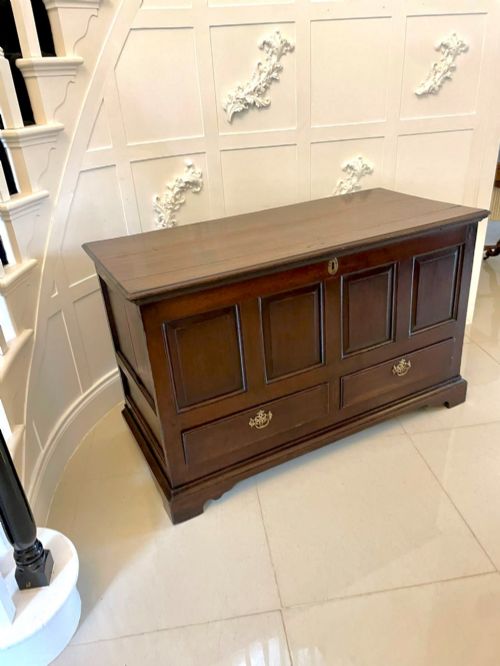
- A storage chest featuring one or more drawers beneath the main internal compartment, bridging the form of a coffer and a chest of drawers.
- Till
- A small internal compartment or box fitted inside a coffer, traditionally used for holding candles, coins, or small personal items.
- Vernacular
- Regional furniture styles built by local tradesmen using native timbers, prioritising function over academic design trends.
- Panelling
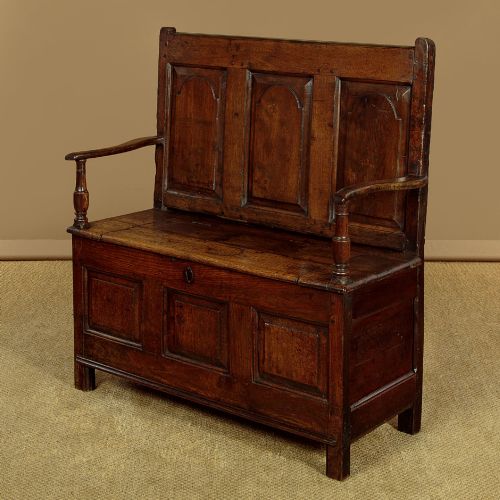
- Framework construction utilising wooden stiles and rails to hold thin central boards, preventing warping in large furniture surfaces.
Georgian Wood Coffer: Frequently Asked Questions
What is a georgian wood coffer used for?
These chests served historically as secure storage for household textiles, blankets, clothing, and documents before fitted wardrobes became common.
Today, they function as living room coffee tables, blanket boxes at the foot of a bed, or hallway storage for shoes and boots.
How do I tell an 18th century coffer apart from a later copy?
Examine the timber shrinkage, hand-forged ironwork, and peg construction used to join the frame and panels together.
Older pieces display natural surface wear, timber movement, and tool marks consistent with eighteenth-century hand woodworking tools rather than modern machinery.
Are oak and mahogany the only woods used?
While oak dominates the earlier eighteenth-century examples, mahogany became popular for refined urban furniture later in the period.
Regional makers also utilised elm, pine, and camphorwood depending on local availability and the intended destination of the trunk.
What is the difference between a coffer and a mule chest?
A standard coffer opens only from the top lid to reveal a single deep compartment for storage.
A mule chest incorporates one or more drawers built into the base beneath the main well, combining chest and drawer storage.