

Georgian Wardrobe Chest
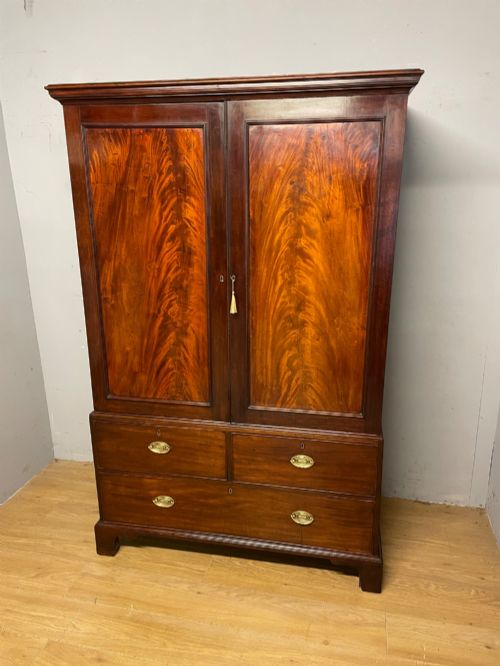
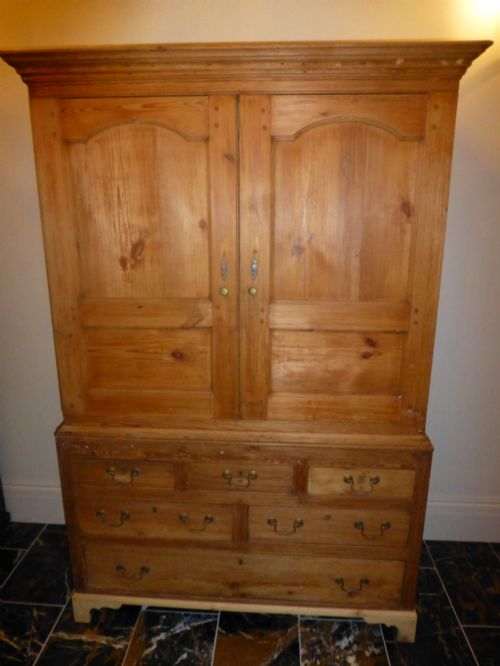
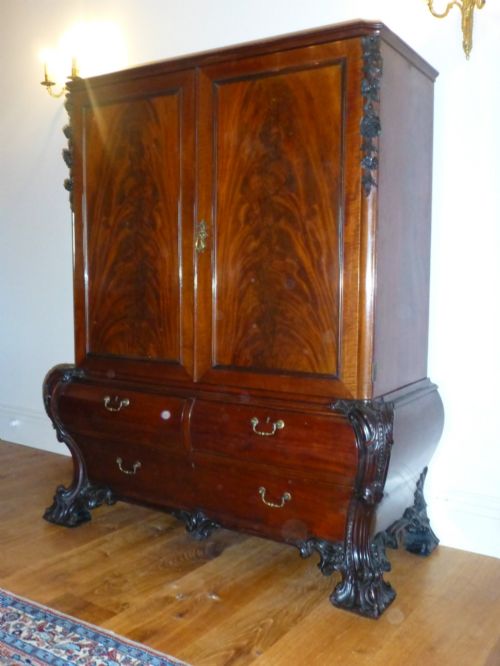
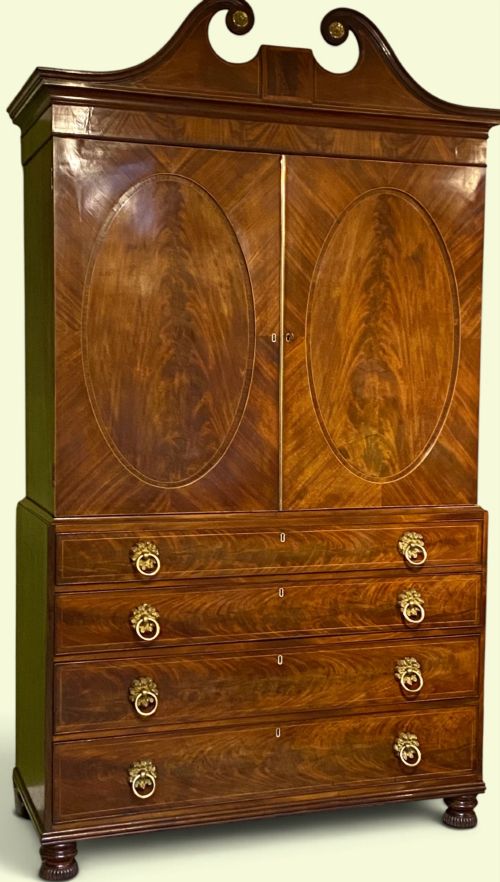
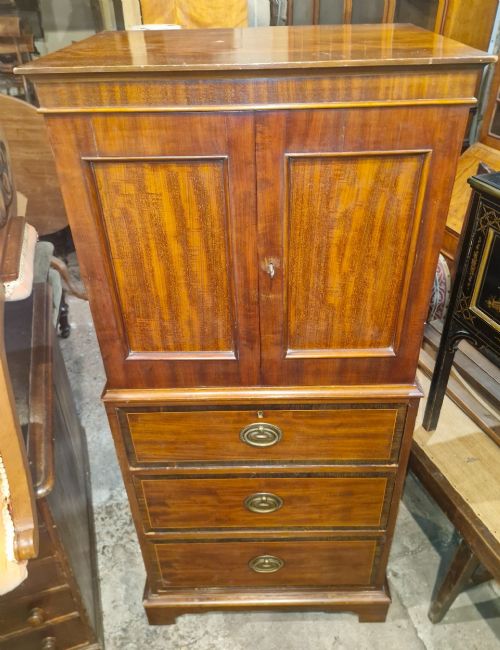
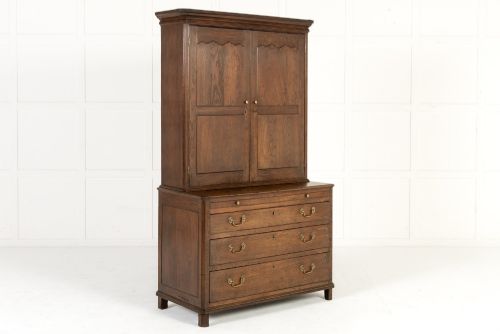
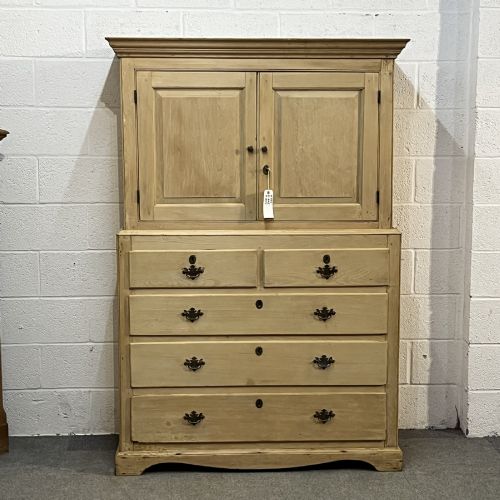
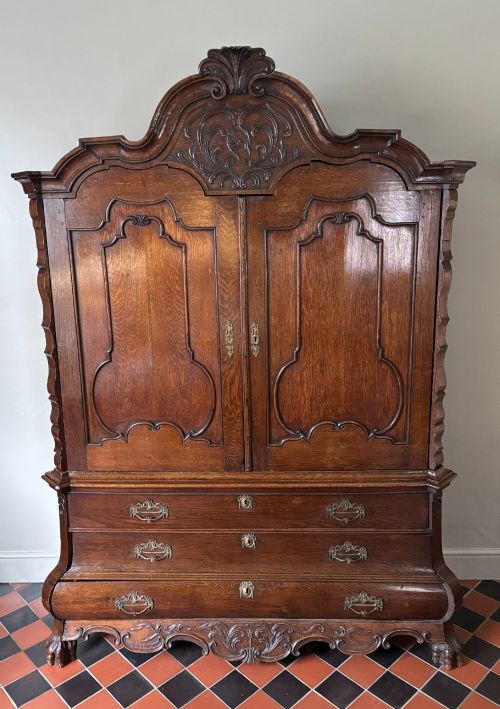
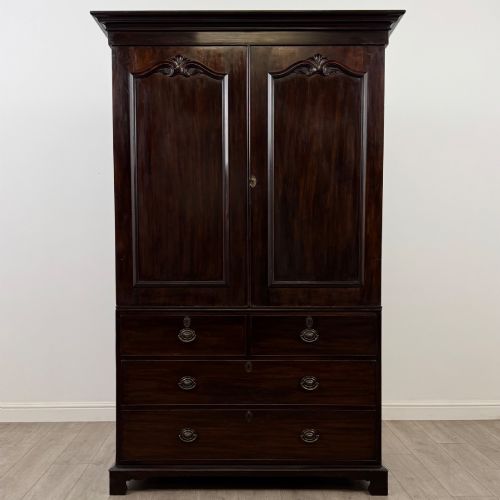
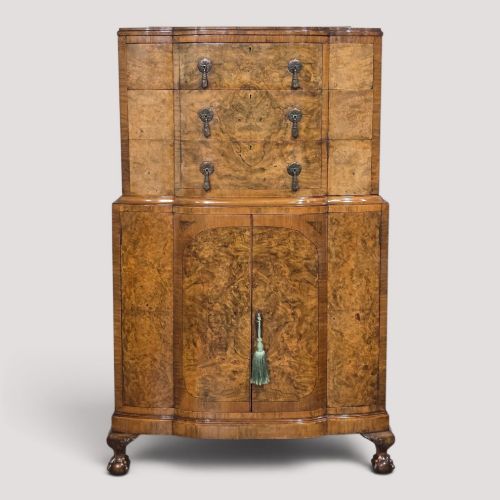
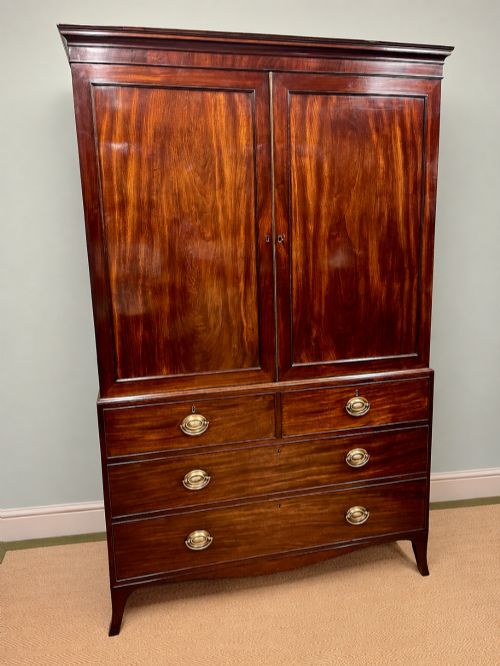
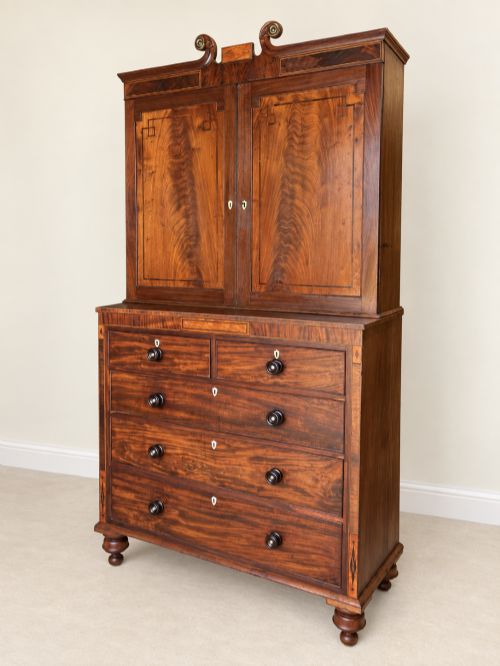
A georgian wardrobe chest provides substantial storage by combining upper linen storage with lower chest drawers.
Georgian Wardrobe Chest
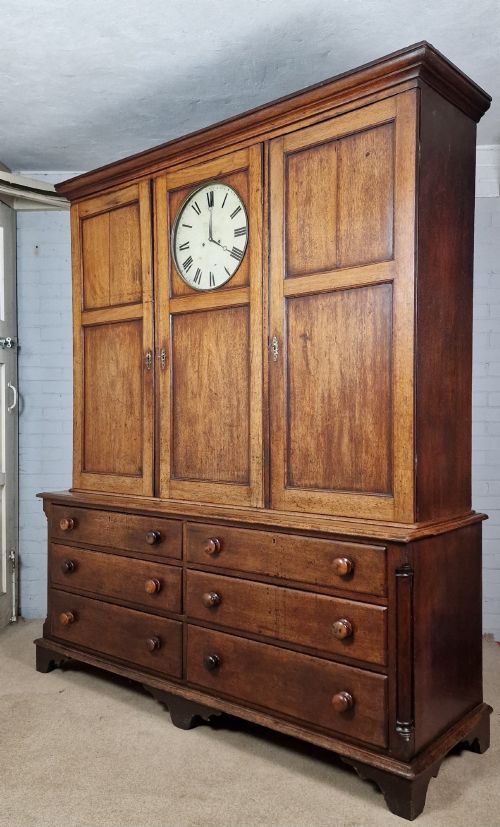
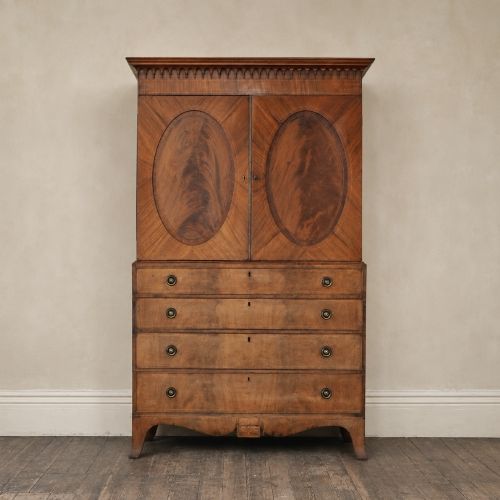
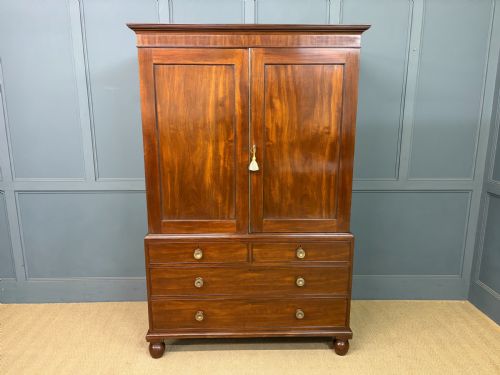
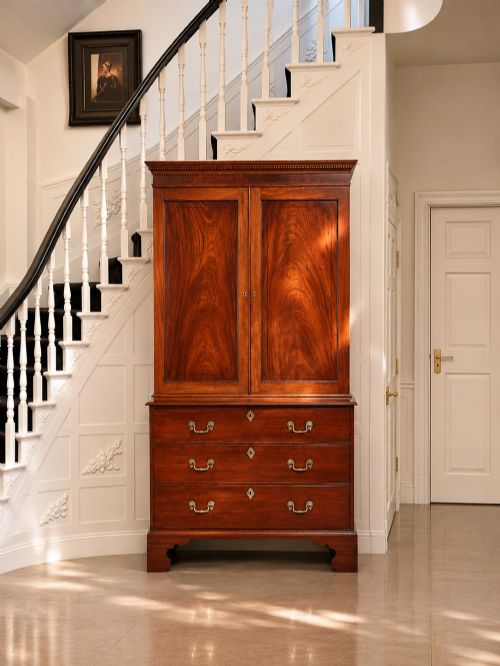
When searching for a georgian wardrobe chest, buyers encounter large storage furniture originating primarily from the eighteenth and nineteenth centuries. These pieces combine upper cupboard sections with lower banks of drawers, serving both linen storage and hanging needs.
The most common forms on this page include mahogany and oak linen presses, housekeepers cupboards, and press cupboards. Many examples date from the Georgian and Regency periods, showing regional variations from country workshops and larger urban cabinet makers.
How they were made
Cabinet makers built these pieces using solid timbers like oak and mahogany, often applying flame mahogany veneer or satinwood inlay to primary surfaces. Pine and other secondary woods appear in drawer linings and internal shelving.
Construction techniques involve panelled doors, dovetailed drawer construction, and brass hardware such as drop handles and escutcheons. Crossbanding in rosewood or other contrasting timbers frequently frames the primary door and drawer panels.
Georgian Wardrobe Chest Retail Price Guide 2026
Typical asking prices for georgian wardrobe chest among the pieces listed under this phrase on Sellingantiques today, from the lower quarter to the upper quarter. They describe what is for sale here now, not the wider market.
Housekeepers guarding their linen hoards kept the bottom drawer locked, ensuring nobody pinched the best damask tablecloths.
What varies in quality
Quality depends on the selection of timber, such as highly figured flame mahogany or burr walnut, matched across the drawer fronts and doors. Finer examples feature precise inlay work, well-proportioned cornices, and original brass hardware.
Construction depth also separates standard pieces from exceptional ones, particularly the thickness of the oak secondary woods and the hand-cut dovetails on the internal sliding trays and lower drawers.
The Georgian Wardrobe Chest Glossary
- Linen Press
- A tall piece of furniture featuring upper doors enclosing sliding shelves or hanging space, set above a chest of drawers. These items were originally designed for storing household textiles.
- Housekeepers Cupboard
- A large storage cabinet, typically made from oak, used in country houses for provisions and linens. They reflect vernacular joinery traditions.
- Flame Mahogany
- A wood veneer cut from the fork of the mahogany tree, creating a distinctive flamed or feathered grain pattern. Cabinet makers used this on prominent doors and drawer fronts.
- Crossbanding
- A narrow strip of veneer laid around the border of a panel so that the grain runs at right angles to the central wood. This technique creates a decorative frame.
- Livery Cupboard
- A traditional term for a standing cupboard used for storing food, drink, or clothing. Examples on this page date back to the eighteenth century in oak.
Georgian Wardrobe Chest: Frequently Asked Questions
What is the difference between a linen press and a wardrobe?
A linen press traditionally contains internal sliding shelves or trays behind the upper doors for storing folded textiles. Many were later converted by removing trays to accommodate modern clothes hangers.
Wardrobes focus primarily on vertical hanging space from the outset. Both forms sit atop a chest of drawer bases in these listings.
How do I identify a Georgian piece?
Georgian pieces display proportion, classical architectural mouldings on the cornice, and specific timber choices such as Cuban mahogany or native oak. Cabinet makers of this era relied on hand-cut dovetails and pegged joints.
Stylistic markers include bracket feet, ogee bracket feet, and restrained satinwood inlay rather than heavy carving.
Where were these cupboards used in the home?
Housekeepers cupboards and linen presses originally stood in bedrooms, upstairs landings, or dedicated linen rooms of large country houses. They kept household textiles free from dust and dampness.
The lower drawer sections held smaller garments and accessories while the upper presses stored folded sheets and tablecloths.
Are the sliding trays inside original?
Many pieces retain their original oak or mahogany sliding trays within the upper press section. Some historical examples underwent conversion to hanging space during the nineteenth century to suit changing fashions.
Examining the interior sides reveals runner grooves that indicate whether trays were part of the initial construction.
How do I care for antique mahogany and oak?
Maintain these wooden surfaces by placing them away from direct heat sources and strong sunlight, which can dry out the timber and fade veneers. Regular dusting with a dry, soft cloth preserves the polish.
Occasional application of traditional beeswax helps nourish the wood without building up synthetic residues.