
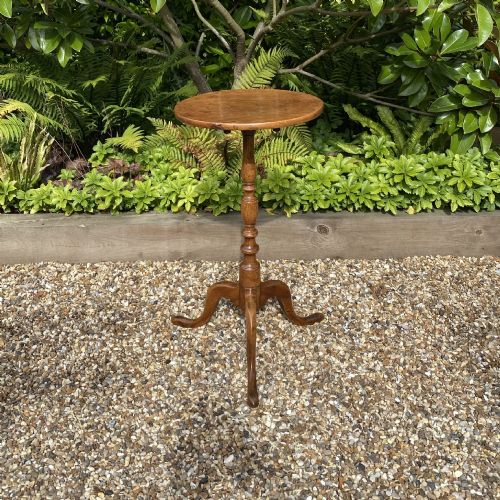
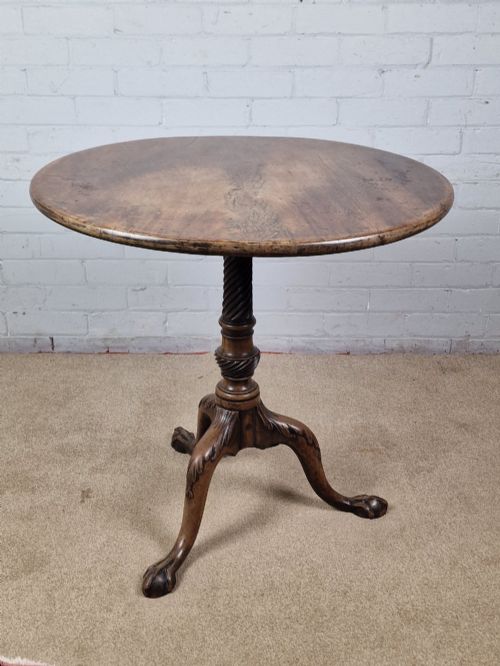
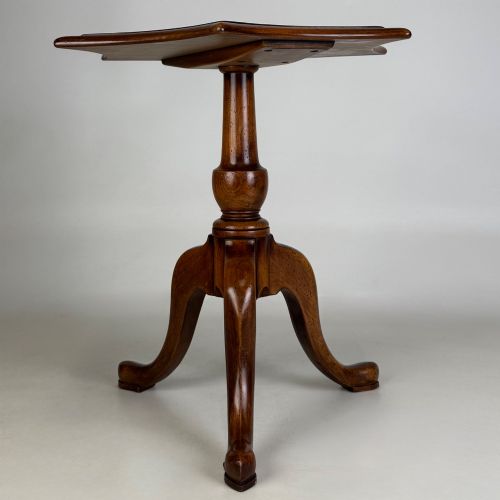
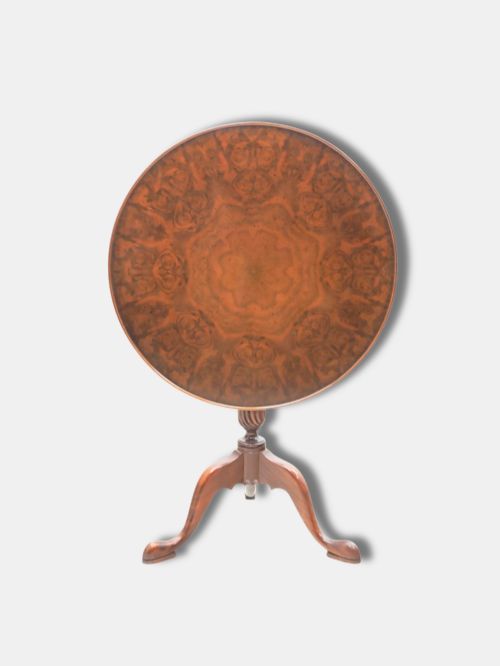


Georgian Walnut Wine Table
A georgian walnut wine table offers compact elegance for any room, bringing period character and practical surface space together.
Georgian Walnut Wine Table
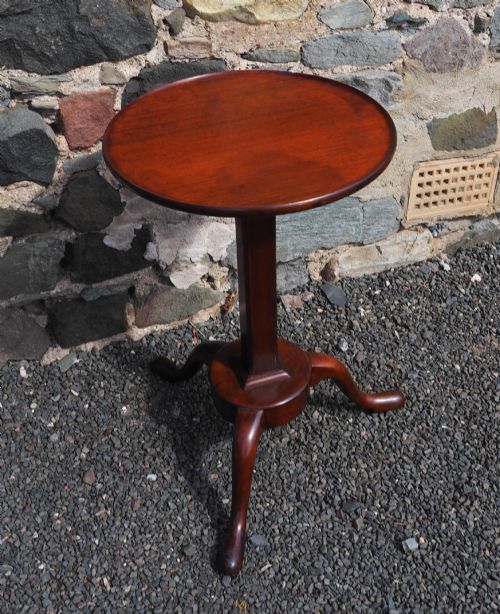
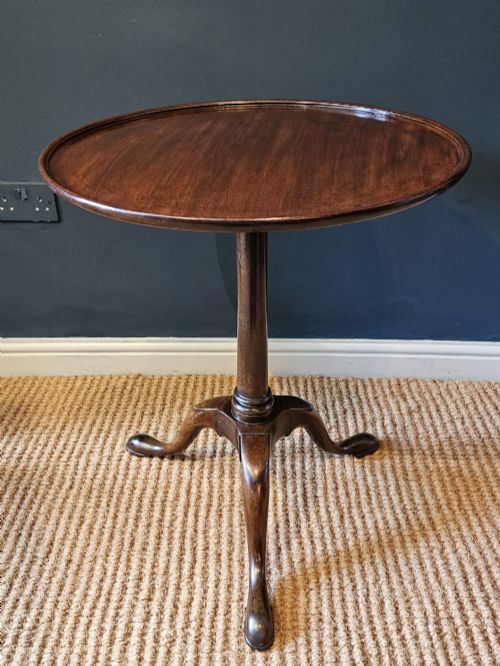
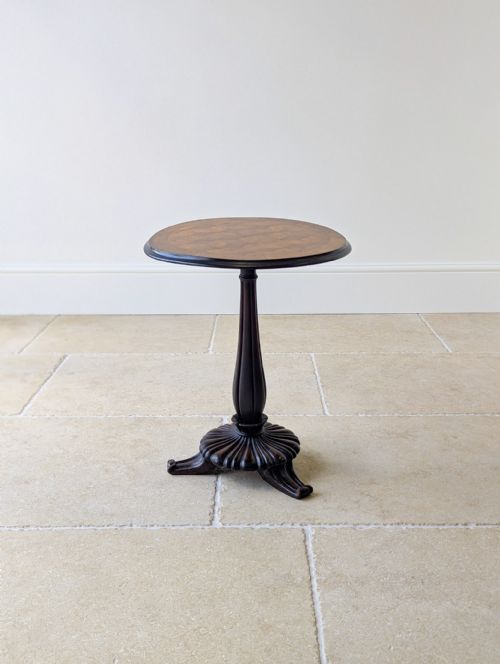
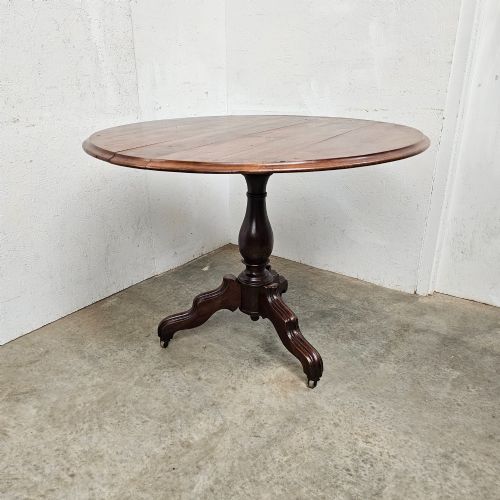
A georgian walnut wine table serves as a compact surface traditionally used for holding drinks, often featuring a circular top mounted on a slender pillar and tripod base. These pieces appear in forms such as tilt-top tables, snap-top tables, and occasional stands.
The examples found here span genuine eighteenth-century origins through to later revival periods, including George II and George III styles alongside Edwardian and twentieth-century interpretations. Buyers most frequently encounter variations incorporating tilt mechanisms, pie crust edges, and inlaid decorative details.
Materials and construction methods
Cabinet makers utilised solid walnut, red walnut, and burr walnut veneer, frequently applying decorative fruitwood marquetry or wood inlay to enhance the primary surfaces. These timbers were selected for their rich grain patterns and warm tones.
Structural integrity relied on stable tripod bases supporting turned pillars, often fitted with ingenious tilt-top mechanisms using brass catches. Skilled joinery ensured that snap-top and adjustable tables remained balanced despite their slender proportions.
Some tilt-top tables were cleverly designed to fold flat so servants could stack them neatly out of sight after the wine glasses were cleared.
Assessing quality and craftsmanship
The distinction between ordinary and superior examples lies in the selection of figured timber, such as highly decorative burr walnut veneer or deeply patinated red walnut. Finer pieces display meticulous hand-cut marquetry and crisp carving on the tripod legs rather than plain, utilitarian turning.
Structural refinement also defines the better pieces, evident in the smooth operation of the tilt mechanism and the seamless fit of the table top to the central column. Original brass components and well-preserved joinery further distinguish the superior items in this range.
The Georgian Walnut Wine Table Glossary
- Tilt top
- A table top hinged to the central pillar so it can be tipped vertically when not in use. This clever mechanism allowed the furniture to stand flat against a wall to save space.
- Tripod base
- A support structure comprising three spreading legs attached to a central column. This design provided reliable stability on uneven historical floorboards.
- Snap top
- A spring-loaded or catch-secured mechanism holding a tilt top firmly in the horizontal position. It prevents the surface from tipping unexpectedly during use.
- Pie crust
- A raised, carved rim around the edge of a circular table top shaped to resemble pastry work. This decorative flourish required patient hand-chiselling by the cabinet maker.
- Marquetry
- The art of applying decorative pieces of wood veneer to a structure to form intricate floral or geometric patterns. Craftsmen combined different tinted woods to create contrasting pictorial designs.
Georgian Walnut Wine Table: Frequently Asked Questions
What is a wine table used for today?
These tables provide a convenient small surface for resting drinks, books, or decorative items beside a chair. Their compact footprint makes them versatile additions to drawing rooms, hallways, and studies.
Historically designed for serving beverages, they now function primarily as accent furniture that introduces period warmth into contemporary interiors.
How do I distinguish an eighteenth-century table from a later revival piece?
Examination of the timber beneath the top, the tool marks left by the maker, and the method of joint construction reveals the age of the piece. Eighteenth-century examples display natural timber ageing and hand-wrought iron or brass fixings.
Revival pieces from the Edwardian era or the nineteen-twenties often employ machine-cut elements and standardised fittings while faithfully imitating earlier George II or George III aesthetics.
What does tilt top mean?
A tilt top incorporates a clever hinge mechanism beneath the surface that allows the circular table top to swing from horizontal to vertical. This enabled servants to store multiple tables compactly against the perimeter of a dining or drawing room.
When returned to the horizontal position, a small wooden or brass catch secures the top in place for use.
Where should I place a tripod table in my home?
The slender three-legged base allows these tables to fit neatly into awkward corners or beside seating where four-legged furniture would prove too bulky. They serve admirably as lamp tables, bedside stands, or display surfaces for cherished ornaments.
Their modest scale ensures they complement both traditional period rooms and more modern interior schemes without dominating the floor space.