
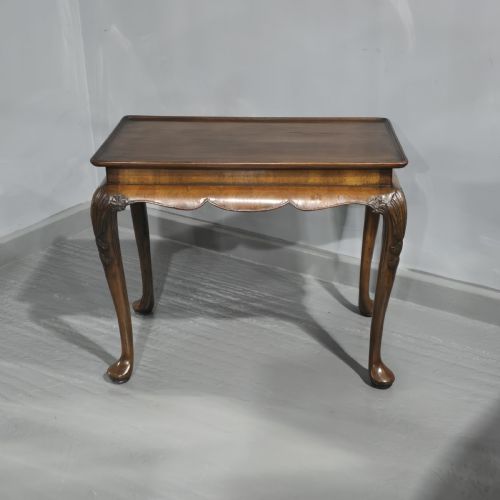


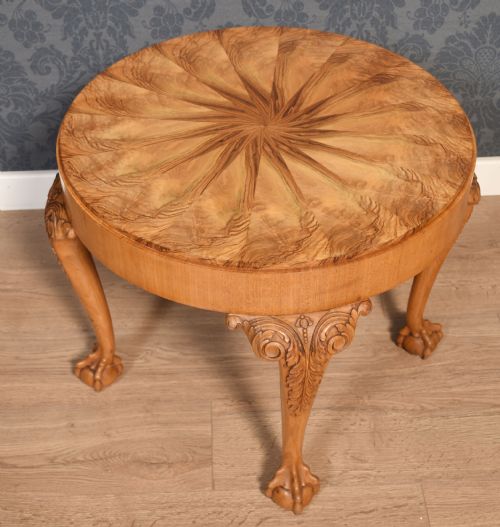


Georgian Walnut Low Table
A georgian walnut low table brings warmth and rich timber grain to a room, offering a practical surface with period character.
How they were made
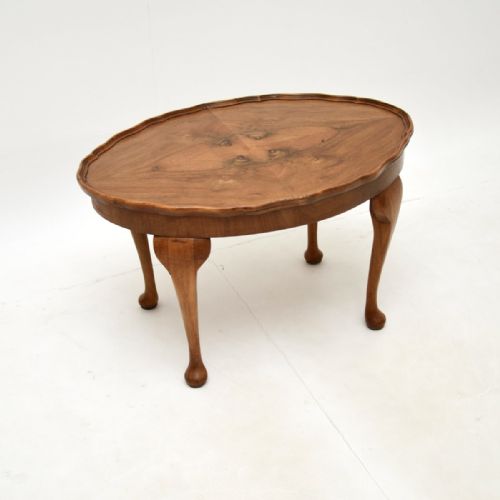
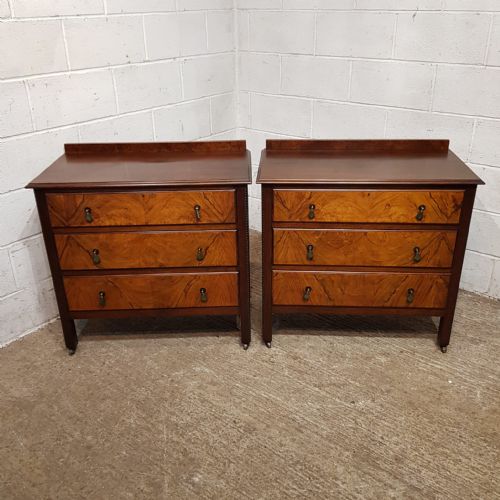
Cabinet makers utilised solid walnut, burr walnut, and figured walnut veneers applied to secondary timbers such as mahogany or fruitwood. The distinctive swirling patterns of burr walnut provide decorative surfaces on table tops, whilst solid timber forms the structural frames and legs.
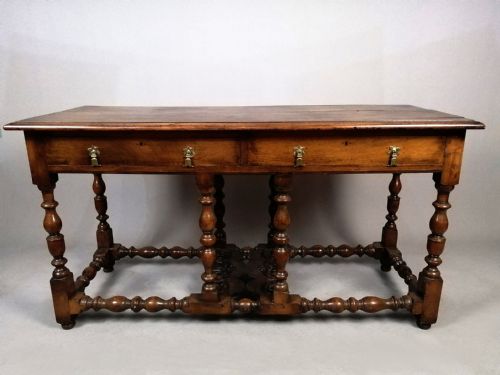
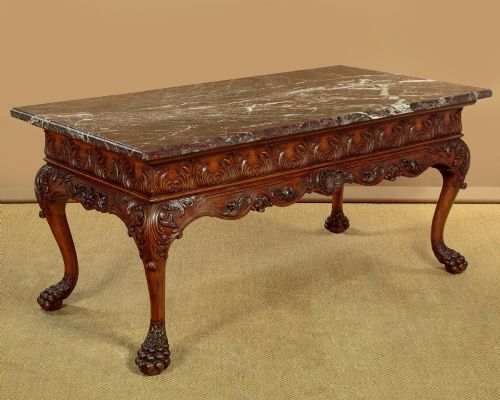
Joinery techniques include pegged joints in vernacular pieces and fine dovetailing in drawers. Additional materials such as brass for handles or mounts and marble for table tops appear on specific revival and high-status pieces.
What varies in quality
The distinction between standard and superior pieces rests upon the choice of timber and the fidelity of the period style. Finely figured burr walnut veneers and crisp edge carvings, such as pie-crust borders, elevate the visual appeal of a table.
Proportion and construction integrity also define the upper tier of the range. Tables retaining their original timber surfaces and authentic structural elements command greater appreciation than those altered or lowered at later dates.
Listings feature walnut, burr walnut, and fruitwood materials across periods spanning from the eighteenth century to nineteen thirty.
The Georgian Walnut Low Table Glossary
- Burr walnut
- A prized wood veneer obtained from the knot growths of walnut trees, noted for its swirling, intricate grain patterns. It provides a highly decorative surface on table tops.
- Lowboy
- A small eighteenth-century dressing or writing table featuring one or more rows of drawers beneath a flat top. These forms frequently serve as low coffee tables today.
- Pie crust
- A raised, carved decorative moulding around the perimeter of a circular table top, resembling pastry edges. This technique requires skilled hand carving.
- Vernacular
- Furniture made by local craftsmen using traditional regional methods rather than following strict high-style metropolitan designs. These pieces often display simpler, robust construction.
Georgian Walnut Low Table: Frequently Asked Questions
What is a lowboy table?
A lowboy is a small table with drawers, originally used as a dressing or writing desk in the eighteenth century.
Their compact proportions and low height make them suitable for use as side tables or coffee tables in modern rooms.
How do I care for walnut wood?
Walnut benefits from occasional polishing with suitable natural waxes to nourish the timber and maintain its lustre.
Keep these tables away from direct heat sources and strong sunlight to prevent the wood or veneer from drying out.
Are these tables original eighteenth century?
The selection includes genuine eighteenth-century pieces alongside revival furniture made during the early twentieth century.
Checking construction methods, timber patination, and design details helps distinguish authentic period pieces from later interpretations.
What does burr walnut mean?
Burr walnut refers to timber cut from the abnormal growth on a walnut tree, producing complex and swirling grain patterns.
Cabinet makers apply these figured veneers to table tops to create a striking visual decorative effect.