

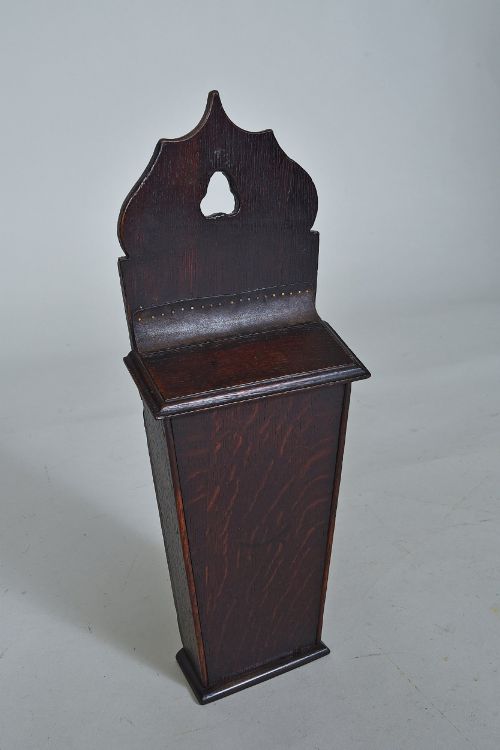
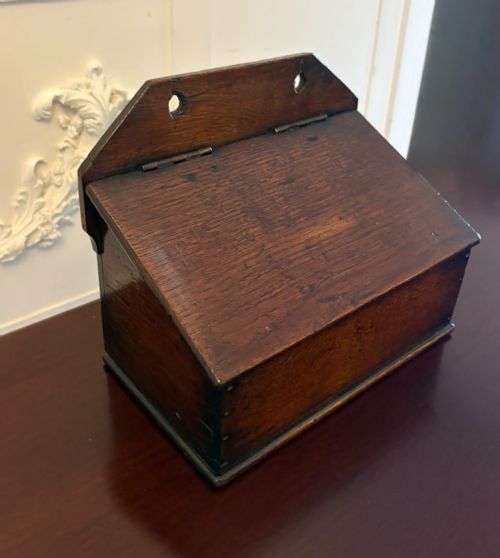
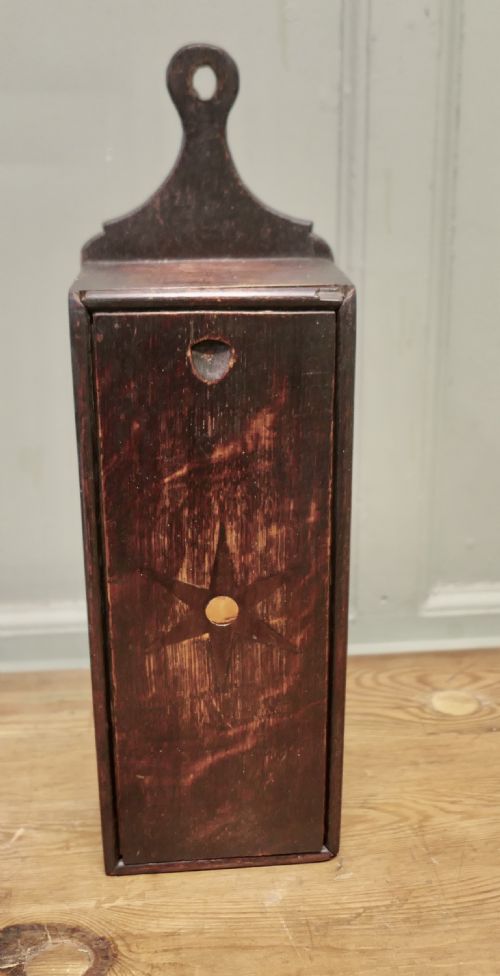
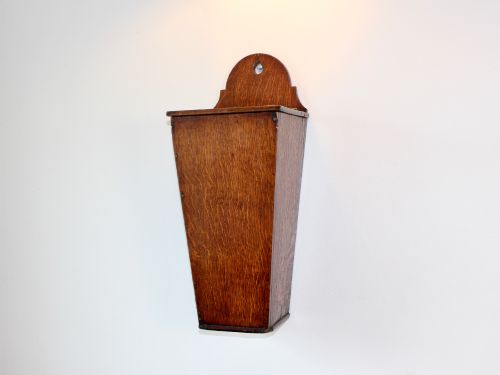
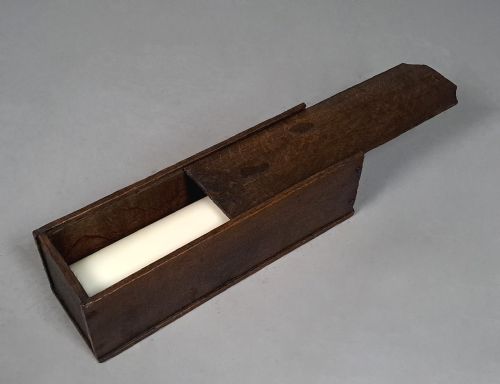


Georgian Wall Candle Box
A georgian wall candle box provides functional wooden storage that brings period character to a hallway or kitchen wall.
Georgian Wall Candle Box
A georgian wall candle box is a hanging wooden receptacle designed to keep household tapers safe from dust and damp. These pieces span the eighteenth century and the early nineteenth century, incorporating regional vernacular examples as well as formal pieces.
Most items encountered on this page are constructed from oak, often exhibiting simple tapered rectangular profiles intended to mount directly onto a wall. Variations include salt boxes and spill boxes sharing the same fundamental hanging form.
Origins stretch across British and Dutch traditions, ranging from rustic country workshops to refined English country houses. The surviving examples demonstrate how everyday lighting was stored before the widespread adoption of gas and electricity.
How they were made
Makers relied primarily on solid oak, supplemented by pine and mahogany, joined with traditional carpentry methods suited to everyday utility. Boxwood inlay appears on certain surfaces to provide subtle decorative contrast.
Iron hardware and brass fittings secure the lids and hanging points, while surviving traces of red paint indicate that makers occasionally applied surface finishes to these utilitarian objects.
Georgian Wall Candle Box Retail Price Guide 2026
Typical asking prices for georgian wall candle box among the pieces listed under this phrase on Sellingantiques today, from the lower quarter to the upper quarter. They describe what is for sale here now, not the wider market.
What varies in quality
The standard of timber selection and the crispness of the box construction separate basic utilitarian containers from more considered vernacular examples. Finer pieces display careful joinery and thoughtful proportions that elevate a simple domestic object.
The survival of original iron hardware and early surface finishes significantly influences the character of a piece. Altered hinges or stripped surfaces diminish the historical integrity of the box.
The Georgian Wall Candle Box Glossary
- Taper
- A slender wax or tallow candle used for lighting or sealing letters. These boxes were specifically proportioned to hold such items.
- Spill box
- A small container for holding thin slips of wood or paper used to transfer a flame from the hearth. They share a similar wall-hanging format to candle boxes.
- Vernacular
- Objects made by local craftsmen for everyday use rather than following high-style academic designs. This tradition defines the majority of the oak pieces seen here.
- Treen
- Small handmade wooden household utensils and domestic objects. Candle boxes are frequently categorised within this collecting field.
- Salt box
- A wall-mounted storage container with a sloping lid, closely related in form and function to the candle box.
Georgian Wall Candle Box: Frequently Asked Questions
What is a georgian wall candle box?
A georgian wall candle box is a small wooden container featuring a hinged lid and a panel punched for hanging on a wall. These boxes kept valuable tallow or wax candles clean and secure in domestic interiors.
They represent a practical aspect of historical lighting, designed to be accessed easily in a kitchen or hallway.
How were these boxes used?
These boxes hung near hearths or doorways where candles were needed most urgently for daily illumination. Their sliding or hinged lids protected the contents from household dust and pests.
Over time, many served dual purposes for storing salt, taper spills, or small household necessities.
Where should I hang a wall box?
A wall box hangs securely from its original backplate mounting point on any stable wall surface in a home. Many owners place them in hallways, kitchens, or studies to display period timber grain.
Keep them away from direct heat sources to protect the historic wood and original ironwork.
How do I date an oak candle box?
Dating relies on observing construction methods, timber characteristics, and the style of the hardware. Eighteenth-century examples often exhibit pegged joinery and hand-sawn board marks.
Comparing the patination of the oak and the style of any brass or iron fixings helps narrow down the period of manufacture.