




Georgian Verge Escapement
A georgian verge escapement provides the traditional heartbeat for period clocks and pocket watches.
Georgian Verge Escapement
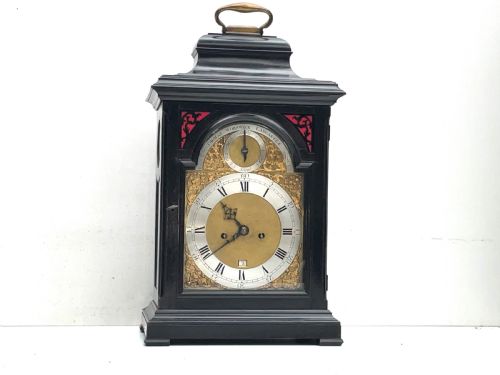
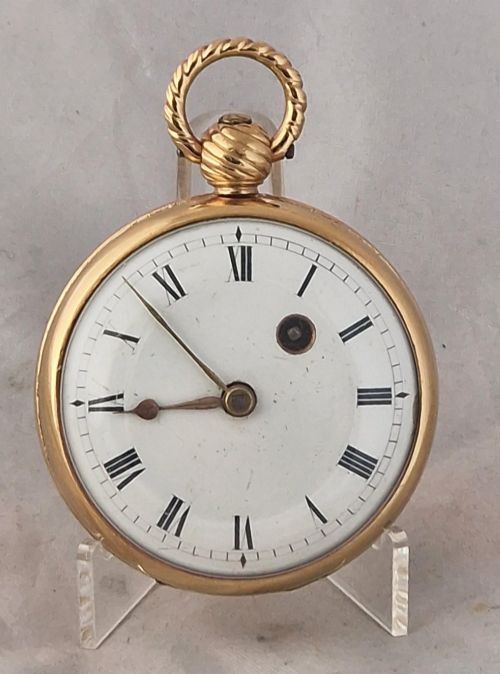
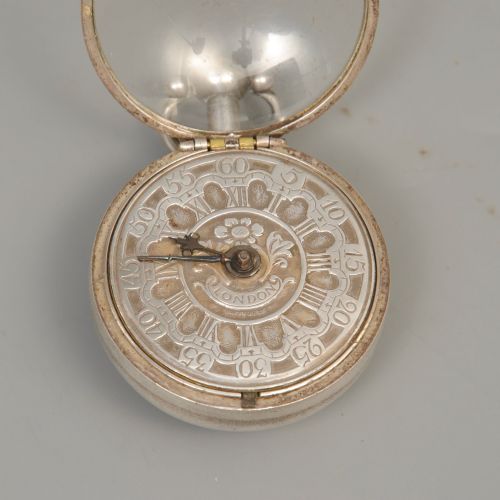
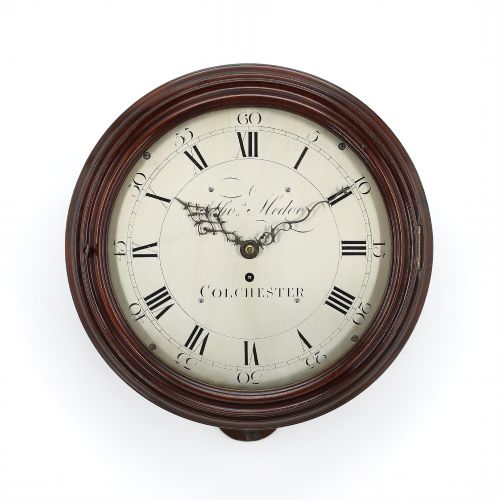
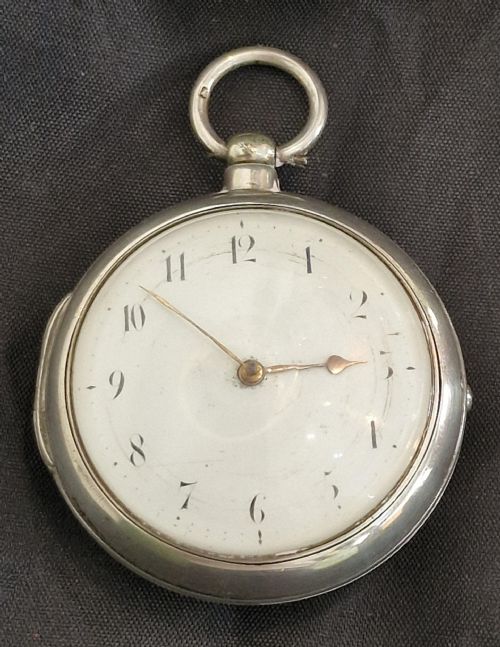
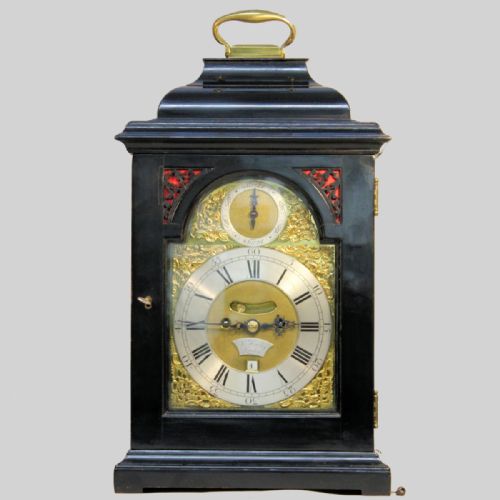
A georgian verge escapement brings together domestic bracket clocks, wall clocks, lantern clocks, and pocket watches from the eighteenth and nineteenth centuries. Bracket clocks and pocket watches dominate the selection, often housed in mahogany or ebonised wood cases with brass or silvered dials.
Makers from London feature heavily among the surviving examples, alongside regional English watchmakers and French workshop pieces. The mechanism itself spans the transition from early lantern clock forms to sophisticated bell-top bracket clocks and pair cased pocket watches.
Materials and Construction
Watch and clock makers utilised brass and steel for the intricate internal movements, mounting them within cases constructed from mahogany, ebonised wood, and occasionally yew wood. Silver and gilt brass appeared frequently on pocket watch pairs and clock dials, sometimes paired with enamel backs or silvered chapter rings.
The record includes clocks and watches housing brass and steel movements inside mahogany, ebonised wood, glass, and silver cases.
Craftsmanship and Survival
Quality rests upon the degree of original survival within the movement and case, distinguishing untouched gear trains from those receiving later replacement parts. Engraving depth on backplates and the crispness of dial signatures indicate the standing of the maker.
Case timber selection and secondary decorative details, such as gilt brass mounts or bell-top proportions, separate standard production pieces from miniature or specialised commissions. The integration of complications like quarter repeating or multiple bells demonstrates higher technical ambition.
Thomas Hedge of Colchester·Windmills and Bennet·William Barrow·Andrew Marchant·John Taylor·Isaac Hurley·Peter Debaufre·John Rapton·Thomas Percival·George Cooper·Gravell and Tolkien·Robert Brown·Richard Young·George Borrett·John Richardson·Bartholowmew Devis
The Georgian Verge Escapement Glossary
- Verge escapement
- An early mechanical escapement using a crown wheel and a vertical rod with pallets to regulate the power. It produces a distinctive ticking rhythm in clocks and pocket watches.
- Bracket clock
- A portable household clock designed to sit on a bracket or table, typically featuring a carrying handle on top and a striking movement. Eighteenth-century examples frequently employ bell-top wooden cases.
- Pair cased
- A pocket watch style utilising two separate fitted cases for protection. The inner case holds the movement, while the outer case guards against dust and damage.
- Lantern clock
- An early brass chamber clock driven by weights, featuring an open bell on top and side-mounted frets. Many were later converted from verge to pendulum regulation.
- Fusee
- A conical pulley connected to the mainspring by a cord or chain, designed to equalise the torque as the spring unwinds. It ensures consistent power delivery to the escapement.
Georgian Verge Escapement: Frequently Asked Questions
What is a verge escapement?
A verge escapement is an early mechanical regulating device found in antique clocks and pocket watches. It uses a crown wheel and pallet staff to control the release of power from the mainspring or weights.
This mechanism creates a rapid, energetic motion and produces the traditional audible beat characteristic of eighteenth-century timepieces.
How do I wind a bracket clock?
Most bracket clocks require a key inserted into winding holes on the dial face to tension the mainsprings. Care must be taken not to overwind the movement.
Quarter repeating or striking models may have separate winding squares for the time and strike trains, requiring attention to both sides of the movement.
Where were these clocks placed?
Bracket clocks were designed as portable items for domestic rooms, sitting upon wooden wall brackets, tables, or mantel shelves. Their carrying handles allowed easy movement between rooms.
Lantern clocks hung directly from wall hooks by a rear loop, with their driving weights suspended below on chains or cords.
How are periods identified?
Periods are determined through a combination of case architecture, dial materials, and maker signatures recorded in historical archives. Eighteenth-century pieces often display bell-top mahogany cases and engraved backplates.
Lantern clocks and pair cased watches exhibit earlier structural traits, such as pierced brass frets or pair cased outer shells typical of the seventeen-hundreds.