
Georgian Upholstered Footstool
These georgian upholstered footstool examples combine sturdy timber frames with traditional textile seats, offering a low resting place for tired feet.
Georgian Upholstered Footstool
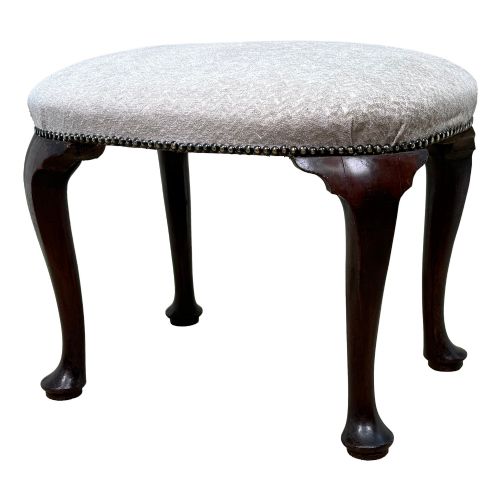
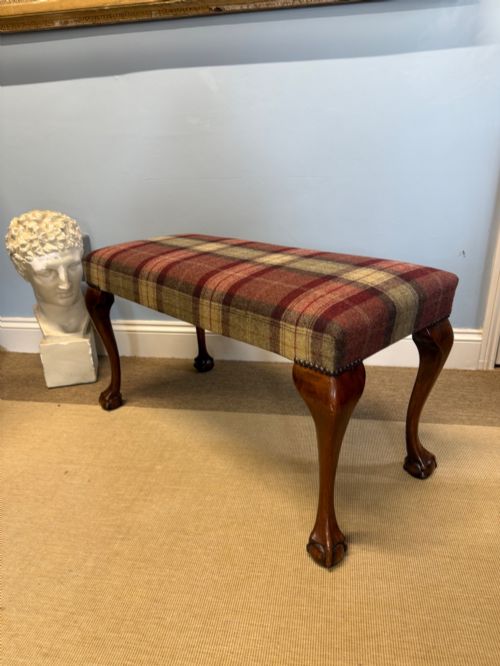
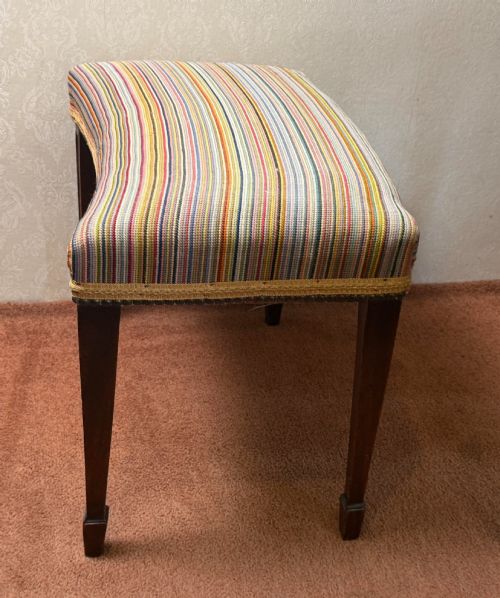
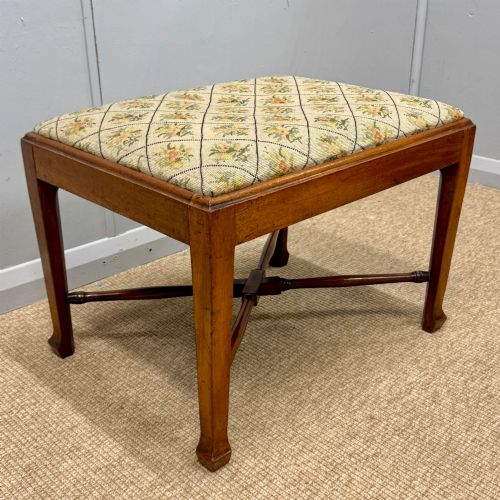
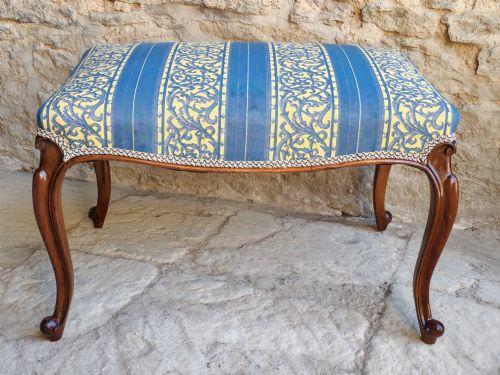
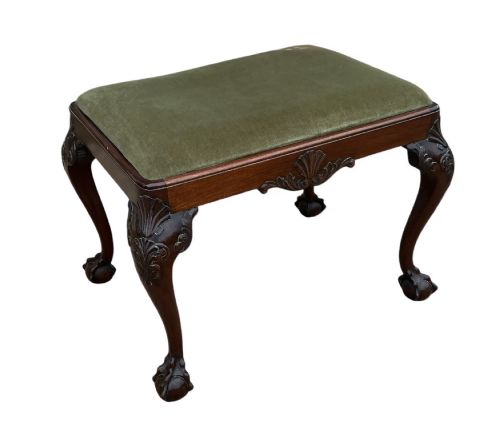
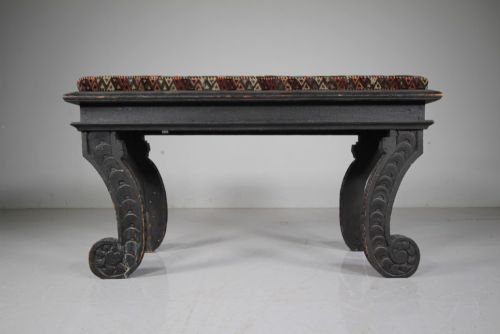
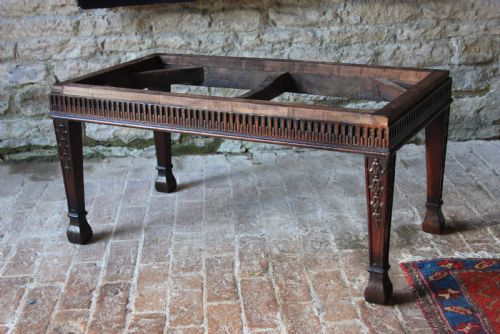
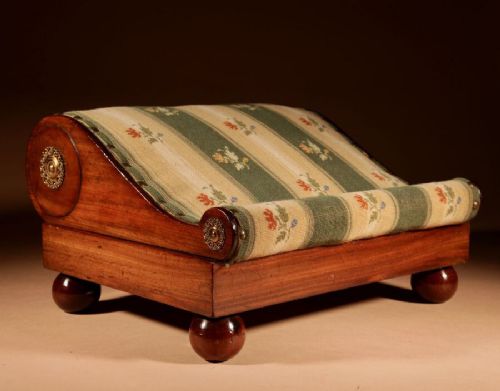
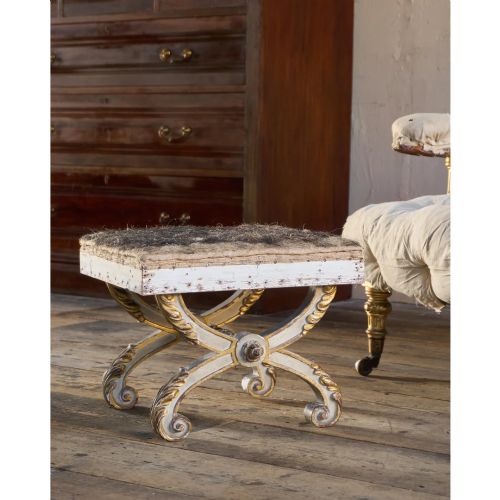
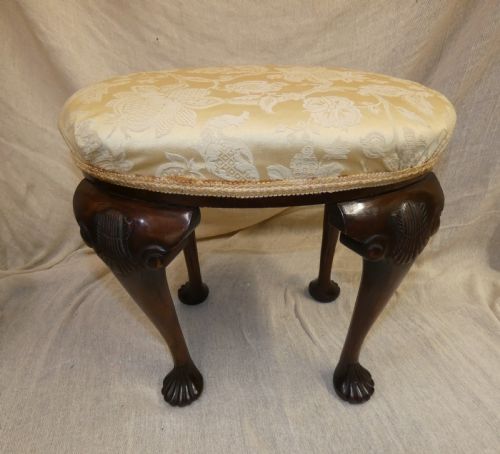
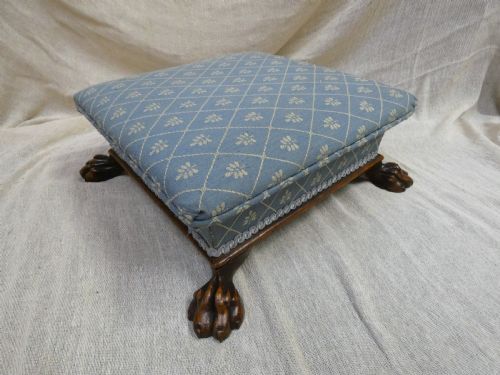
A georgian upholstered footstool takes many forms across this selection, appearing as small square seats, long benches, and dressing table stools supported by wooden legs. The pieces span the eighteenth century and the Regency period alongside later revival interpretations built in the nineteenth and twentieth centuries.
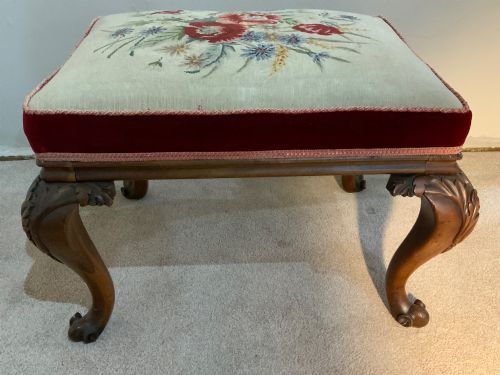
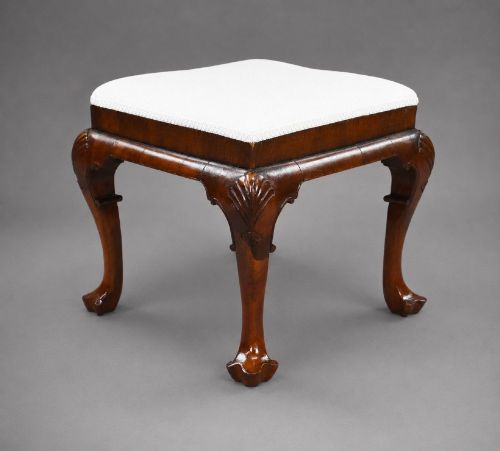
Makers shaped these low seats in mahogany, walnut, and rosewood, often fitting them with cross stretchers or cabriole legs. Examples range from plain wooden frames to carved styles carrying the design hallmarks of George II and George III periods.
Woods and textiles
Carpenters constructed the structural frames using dense hardwoods like mahogany and walnut, shaping legs with tapering lines, square profiles, or carved cabriole curves. Joinery relied on traditional pegged or glued joints to handle the weight placed upon low seating.
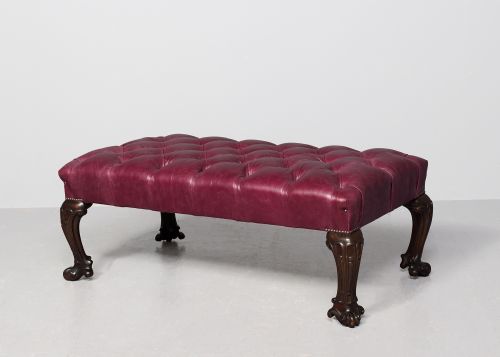
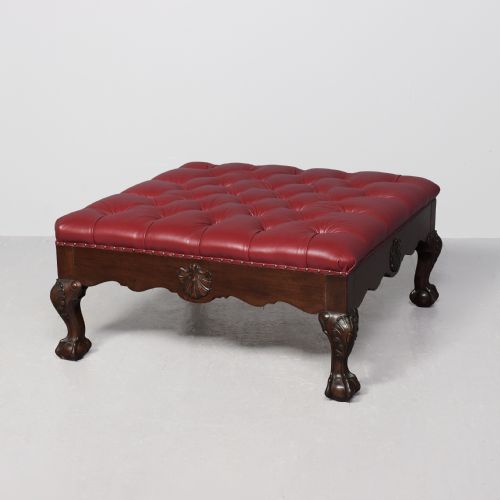
Upholsterers finished the tops with textile coverings including wool, velvet, tapestry, needlework, and hide, frequently securing the edges with brass studs or buttoning.
Listings feature mahogany, walnut, and rosewood frames paired with wool, velvet, tapestry, and hide textiles.
Craft and proportion
Superior examples display well-drawn proportions and crisp carving on the wooden frames, whereas simpler items rely on plain turned or straight legs. The crispness of carved details on the woodwork and the tension of the internal upholstery webbing determine the calibre of the piece.
Miles & Edwards
The Georgian Upholstered Footstool Glossary
- Cabriole leg
- A furniture leg that curves out and then narrows inward, imitating an animal limb. It typically terminates in a pad or claw foot.
- Cross stretcher
- Wooden stretchers intersecting diagonally between the legs of a stool to provide structural rigidity. They often meet at a central wooden boss.
- Curule
- An X-shaped frame structure derived from classical Roman folding seats. This curule form appears on nineteenth-century footstools.
- Kilim
- A flatwoven wool textile used to cover seat cushions. These patterned coverings bring traditional textile work onto wooden stool frames.
- Hide
- Animal skin treated for upholstery use, appearing in smooth or buttoned finishes on footstool tops. Red and burgundy hide variations are recorded.
Georgian Upholstered Footstool: Frequently Asked Questions
How do I spot an 18th-century footstool?
Examine the timber species and leg construction closely, noting hand-carved details and traditional joinery methods that separate older pieces from later revivals.
Look for honest patination on mahogany and walnut frames alongside period textile coverings like tapestry or needlework.
Where were these stools used?
These low seats functioned primarily beside chairs in the parlour or drawing room to support feet during long evenings.
They also served near dressing tables or piano stools in domestic chambers where compact seating was necessary.
How do I care for leather upholstery?
Keep hide-covered surfaces away from direct sunlight and heat sources to prevent the leather from drying out or cracking over time.
Clean the material gently with a soft dry cloth and apply appropriate leather conditioners sparingly to maintain suppleness.
What is a window seat?
A window seat is an elongated stool or low bench designed specifically to fit within the architectural recess of a home window.
These upholstered forms often feature decorative end supports or wooden frames matching the interior woodwork of the room.