



Georgian Turned Wood Bowl
A georgian turned wood bowl is a tactile piece of domestic treen, shaped at the lathe for daily use and prized today for its honest grain.
Georgian Turned Wood Bowl
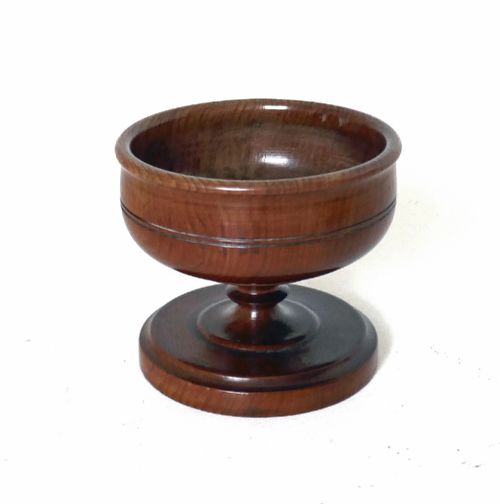
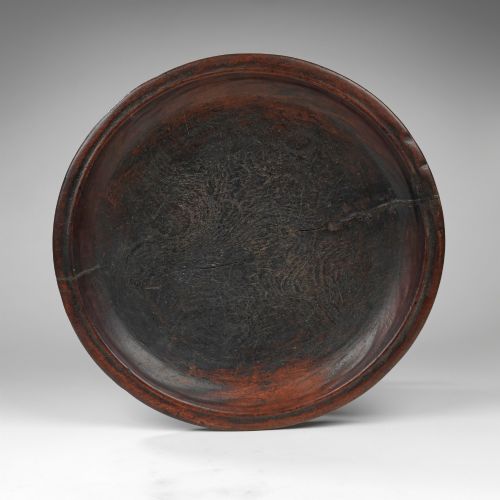
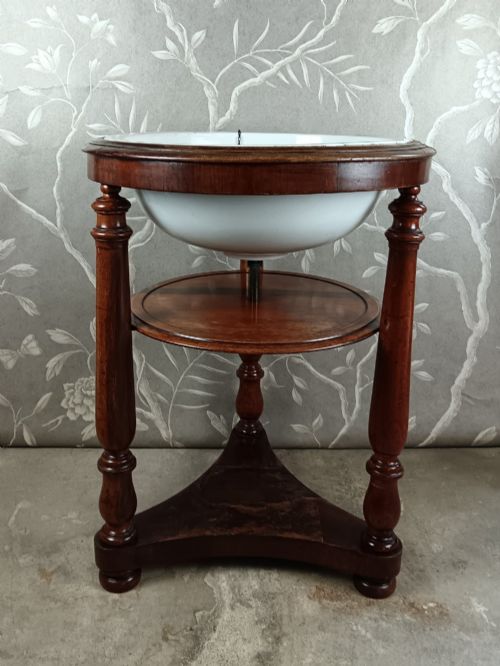
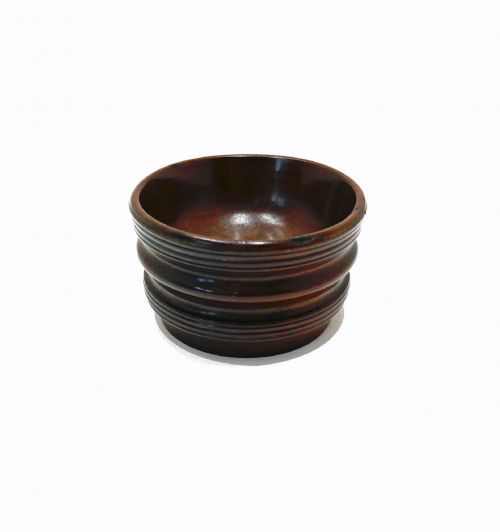
The versions most commonly met on this page span the georgian and nineteenth-century periods, showing the simple utility of English country life. Alongside bowls, the selection includes related turned forms such as mortars, washstands, and salt cellars made from yew wood, laburnum, walnut, and mahogany.
Makers shaped these pieces on a lathe, prioritising durability and balance over ornamentation. Every piece carries the visible marks of its turning, connecting modern interiors directly to historical domestic routines.
Materials and turning methods
Turned wood objects rely entirely on the selection of dense native hardwoods like yew wood, laburnum, and walnut, chosen for their resilience and striking grain patterns. Artisans mounted green or seasoned timber on a lathe, using gouges and chisels to pare the rotating block down to a balanced wall thickness.
Makers often utilised contrasting materials for functional enhancements, incorporating brass mounts or ceramic elements where extra strength or weight was required. The exterior surfaces were frequently left bare or lightly finished with oils and waxes, allowing the natural figuring of the hardwood to show through handling and age.
Georgian Turned Wood Bowl Retail Price Guide 2026
Typical asking prices for georgian turned wood bowl among the pieces listed under this phrase on Sellingantiques today, from the lower quarter to the upper quarter. They describe what is for sale here now, not the wider market.
Listings feature items from the eighteenth and nineteenth centuries, spanning the georgian period and utilising yew wood, laburnum, walnut, and mahogany.
Assessing quality and character
The distinction between standard domestic utilitarian objects and finer pieces lies in the crispness of the turning lines and the selection of the timber. A well-turned rim and a balanced base demonstrate the hand of a confident artisan working at the lathe.
Surface patina and the depth of the wood grain separate ordinary examples from exceptional ones. Rich colour developed through decades of handling elevates simple treen into a piece with genuine visual presence.
The Georgian Turned Wood Bowl Glossary
- Treen
- Small, useful wooden articles made for the home. These objects were traditionally turned on a lathe or carved by hand.
- Laburnum
- A dense hardwood valued for its striking contrast between dark heartwood and pale sapwood. It was frequently utilised for decorative turned vessels.
- Yew Wood
- A resilient timber featuring intricate knots and fine growth rings. It was widely chosen for turned domestic items requiring strength.
- Mortar
- A heavy bowl used with a pestle for crushing ingredients. Wooden examples often display thick walls designed to absorb repeated impact.
Georgian Turned Wood Bowl: Frequently Asked Questions
What is a turned wood bowl?
A turned wood bowl is a vessel shaped on a lathe from a solid block of timber. These items were made for everyday domestic tasks in the kitchen and dining room.
Over decades of use, the wood develops a warm patina and a smooth surface texture that reveals the underlying grain.
How do I date a wooden bowl?
Dating relies on identifying the timber species, tool marks left by the lathe, and the overall form. Earlier pieces often display distinct chisel signatures and heavier wall proportions.
Comparing the object to documented examples from the eighteenth and nineteenth centuries helps narrow down its period of origin.
How were these bowls used historically?
These vessels served practical functions in period households, holding dry goods, spices, or salt near the hearth. Their robust construction was designed for daily handling rather than display.
Many survived because they remained useful across generations, gradually acquiring signs of wear from active domestic service.
How should I care for antique treen?
Keep wooden items away from direct heat sources and sudden humidity changes to prevent the timber from splitting. A light application of neutral wax helps nourish the dry grain without altering the historical surface.
Avoid washing antique wood in water, cleaning instead with a soft, dry cloth to preserve the accumulated patina.