

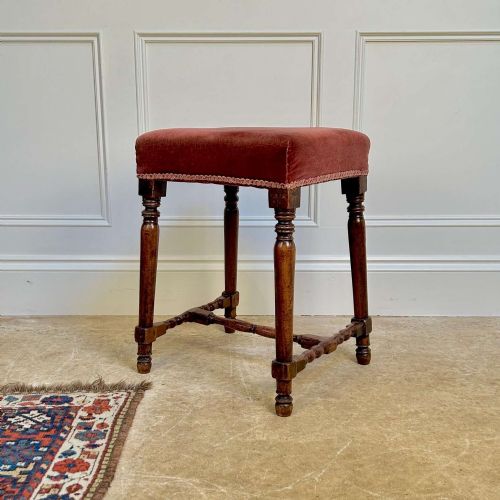


Georgian Turned Leg Stool
A georgian turned leg stool brings practical seating with honest proportions into a room, shaped by simple country or formal hands.
Georgian Turned Leg Stool
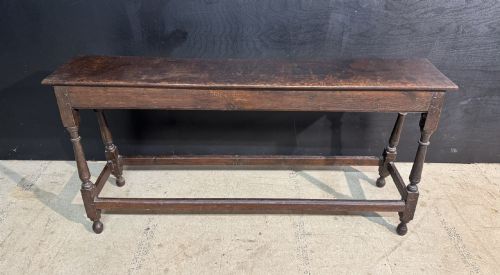
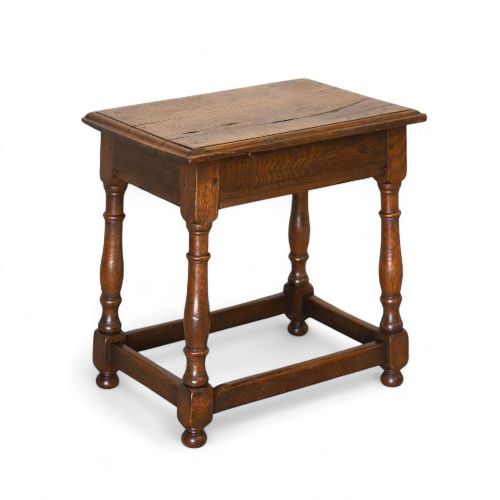
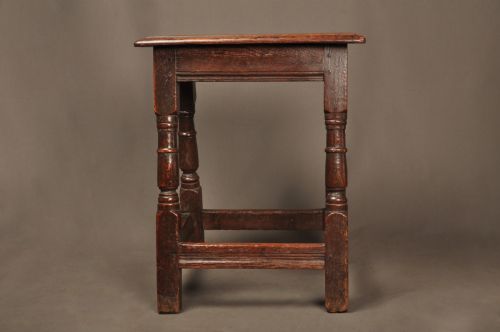
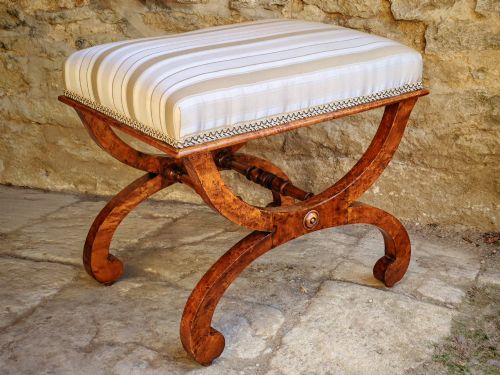
A georgian turned leg stool offers solid timber construction designed for domestic life, appearing in various forms from low three-legged country pieces to upholstered window seats. Buyers seeking a georgian turned leg stool generally encounter robust oak, elm, or mahogany frames shaped during the eighteenth and nineteenth centuries.
The selection here includes provincial joint stools, dressing table seats, and piano stools alongside simpler country variants. These items range from early examples up to later nineteenth-century interpretations sharing similar turned support structures.
Materials and construction methods
Carpenters utilised native hardwoods like oak, elm, ash, and yew alongside imported mahogany for finer urban seating. Frames relied on traditional joinery, with legs turned on a lathe to form smooth spindles or tapered supports.
Upholstered versions incorporated coverings in fabric, velvet, chenille, or kilim over stuffing. Secondary woods and brass details appear where appropriate to the specific period and workshop tradition.
One remarkably honest three-legged country stool arrived bearing the exact bruises of an eighteenth-century dairy floor.
Assessing quality in these pieces
Quality rests in the harmony of proportions and the integrity of the timber rather than elaborate decoration. Pieces showing crisp turning on the legs and well-balanced frames generally command more attention from collectors.
The depth of the wood's natural colour and the survival of original surface patination distinguish superior examples. Simpler provincial items rely entirely on the honesty of their construction and the character accumulated through age.
Gillows
The Georgian Turned Leg Stool Glossary
- Joint stool
- A low wooden seat constructed with mortise and tenon joints pegged together. These sturdy pieces predated upholstered chairs in many households.
- Turning
- The method of shaping wood on a lathe by rotating it against a cutting tool. This technique created the cylindrical legs seen on these stools.
- Window seat
- An elongated stool designed to sit beneath a window. These often feature upholstered tops and refined leg turning.
- Patina
- The surface sheen and colour developed by wood through decades of handling, light, and wax. A rich patina indicates long use and proper care.
Georgian Turned Leg Stool: Frequently Asked Questions
How do I date a turned leg stool?
Dating relies on identifying the timber species, tool marks, and leg profiles characteristic of specific periods like the eighteenth or nineteenth century. Examining the joinery beneath the top reveals construction methods typical of regional workshops.
Changes in turning styles from simple early spindles to more refined Regency tapered legs help narrow down the decade of production.
Were these stools used in formal rooms?
Formal mahogany and yew examples served in parlours and dressing rooms, often paired with matching tables. Finer pieces featured upholstered pads in chenille or velvet.
Simpler oak, ash, and elm variants remained in kitchens, dairies, and country rooms for daily chores.
How should I clean an antique wooden stool?
Maintain the surface by dusting with a dry, soft cloth and applying occasional quality beeswax to nourish the dry timber. Avoid modern silicone polishes that damage the historic finish.
Keep wooden furniture away from direct heat sources and strong sunlight to prevent the timber from splitting.
Can I use an antique stool as daily seating?
Sturdier joint stools and hardwood frames easily support everyday use in a modern home. Checking the stability of the leg joints ensures safety before regular use.
Upholstered window seats and dressing stools function well as occasional seats or low side tables.