


Georgian Toilet Mirror Drawers
Georgian toilet mirror drawers provide practical surface space and tidy storage while sitting neatly atop a chest or dressing table.
Georgian Toilet Mirror Drawers
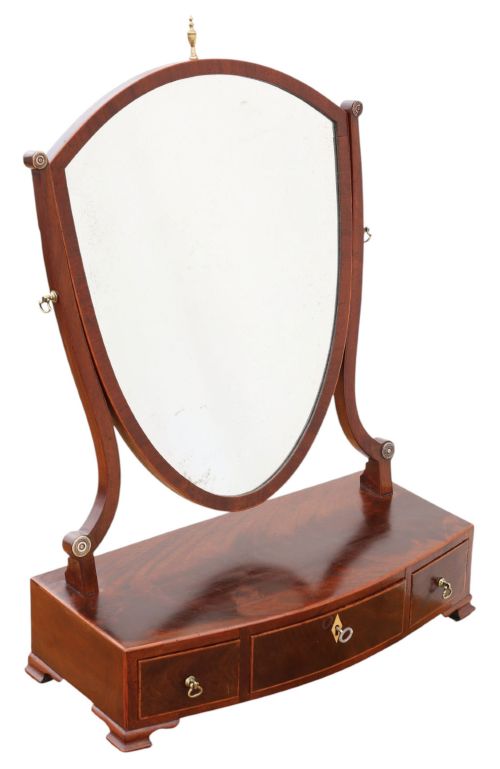
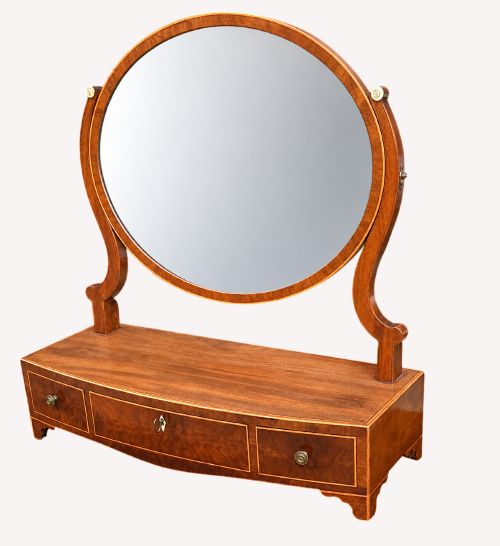
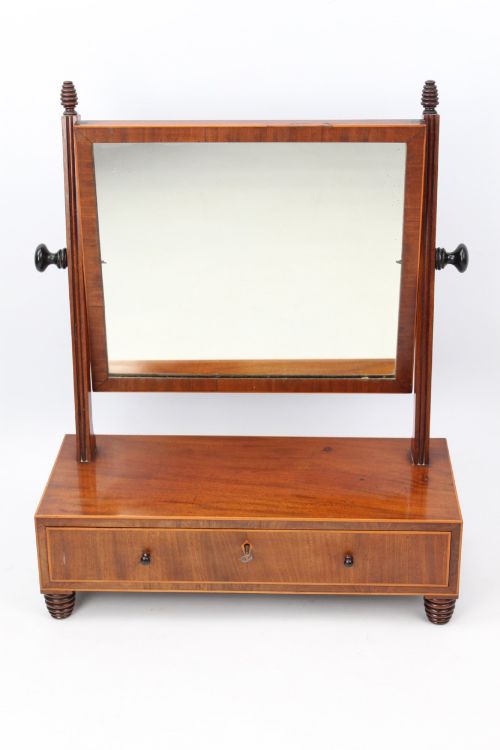
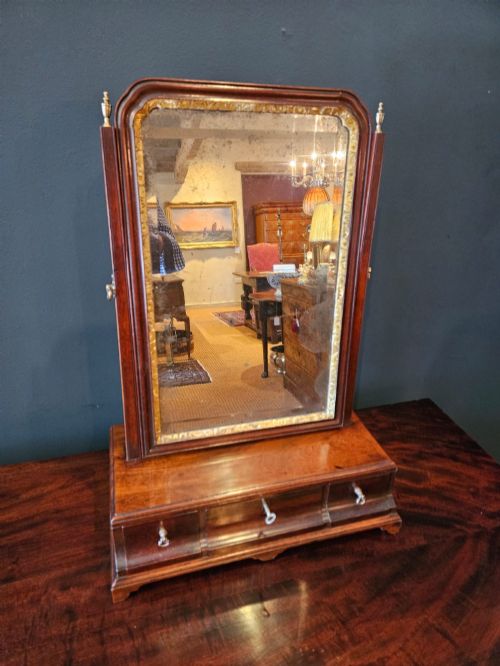
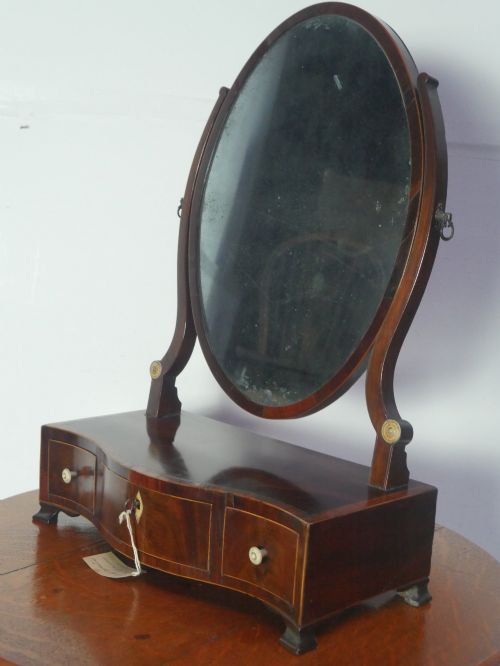
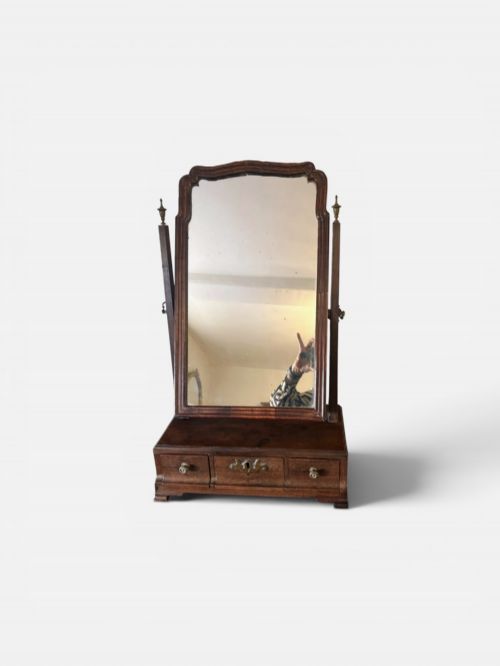
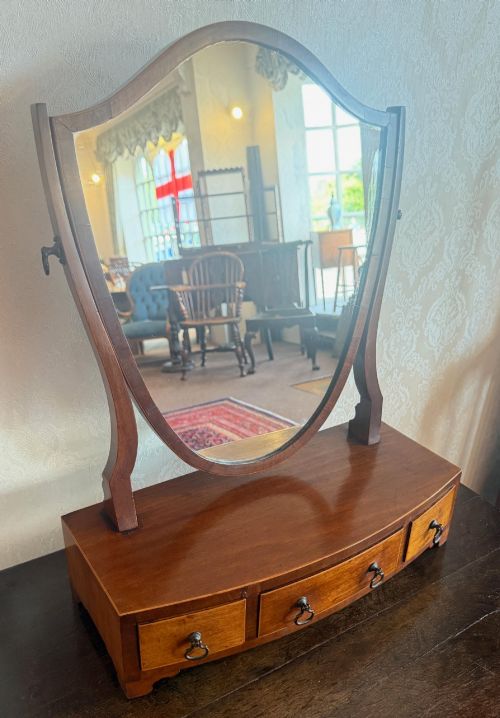
When you search for georgian toilet mirror drawers, you encounter pieces designed for personal grooming that combine a pivoted glass plate with a small box base fitted with functional compartments. These objects appear primarily in mahogany and walnut, spanning periods from the eighteenth century into the nineteenth century.
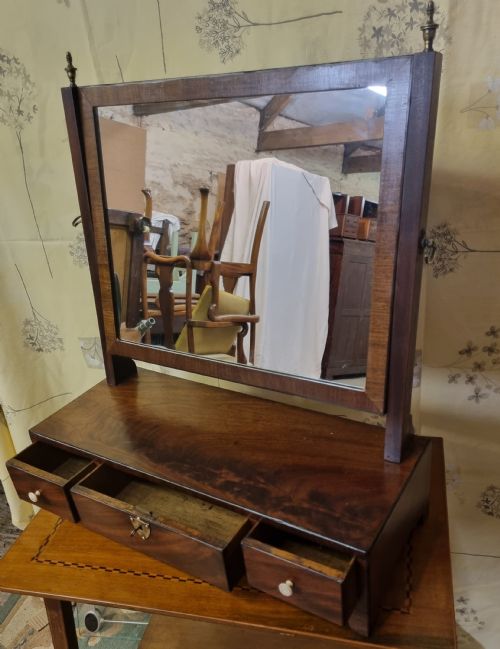
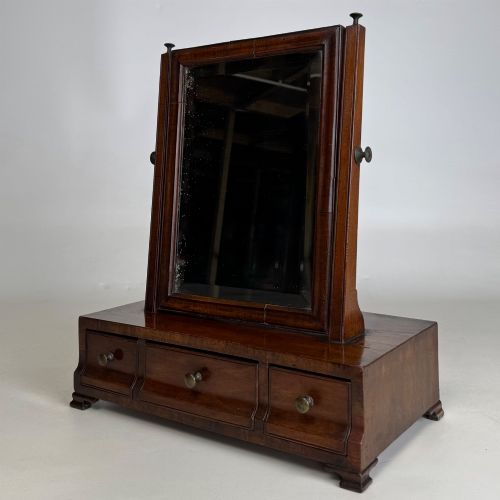
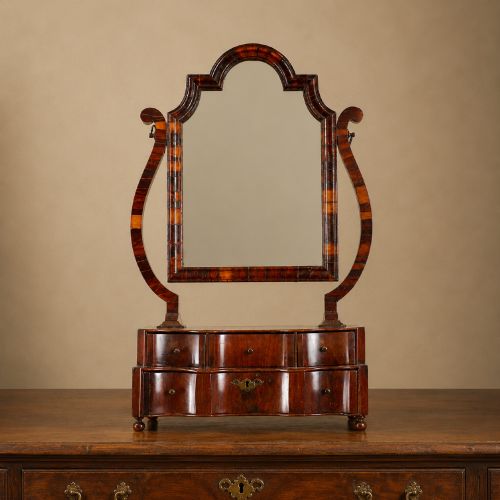
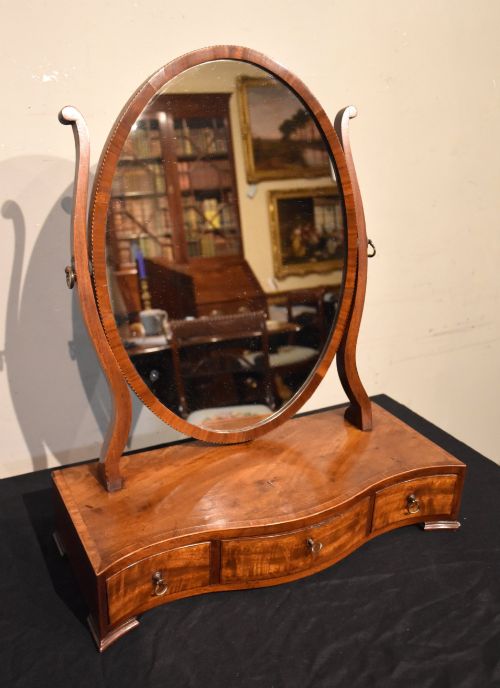
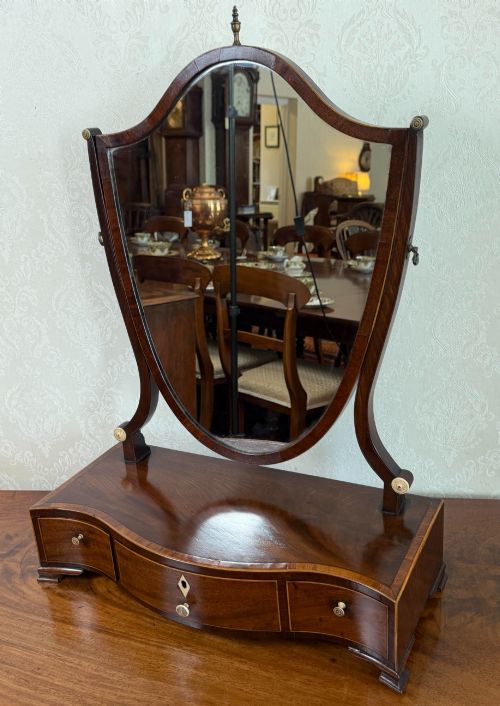
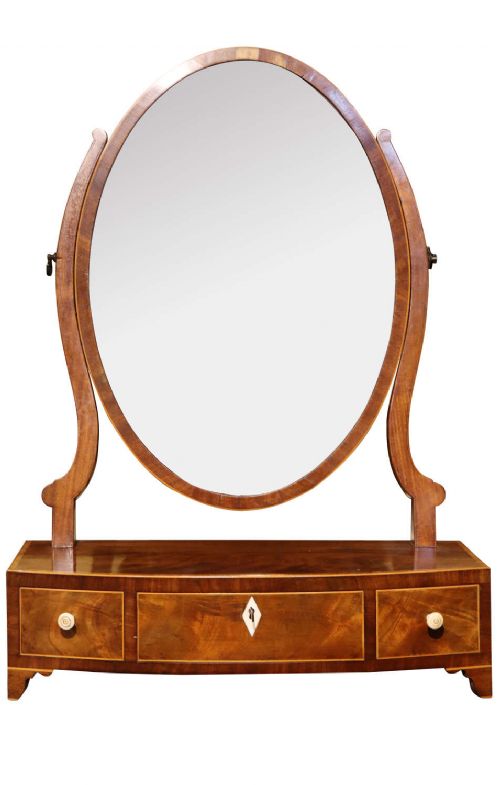
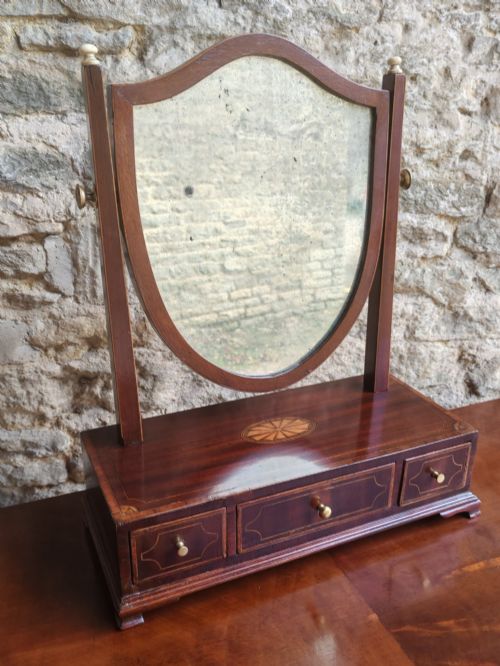
The most common form on this page is the swing mirror mounted between upright arms, sitting above a stepped or serpentine plinth containing one or more small compartments. These items range from plain utilitarian boxes to pieces featuring marquetry inlay, crossbanding, and parcel-gilt details.
Makers constructed these dressing glasses in various regional British and continental workshops, incorporating styles associated with George II, George III, and the Regency era. The fundamental architecture remains consistent: a movable frame poised securely over a weighted base designed to hold small valuables.
Materials and construction methods
Cabinetmakers built the foundational carcasses using dense timbers such as mahogany and walnut, frequently selecting figured veneers for the primary visible surfaces. Secondary woods provided structural stability inside the hidden compartments of the base.
Workshops applied decorative techniques including satinwood inlay, bone escutcheons, and delicate crossbanding to accentuate the rectilinear or curved profiles of the drawer fronts. Brass hardware such as adjustable screw knobs and miniature bracket feet completed the structural assembly.
Secret compartments occasionally hide within the stepped drawer bases, waiting to surprise future owners with forgotten trinkets.
Factors determining quality
Excellence in these pieces rests upon the crispness of the cabinetwork, particularly the precision of the dovetail joints connecting the miniature drawers and the harmony of the timber grain selected for the facade. Superior examples exhibit balanced proportions between the pivoting mirror frame and the supporting box base.
The presence of original mirror glass, intact brass screw fittings, and untouched secondary timbers elevates a piece significantly above examples altered or restored in later eras. Subtle details like serpentine shaping and fine stringing demonstrate the higher tier of period craftsmanship.
The Georgian Toilet Mirror Drawers Glossary
- Serpentine front
- A furniture front curving outward in the centre and inward at the sides. This contour requires precise hand-shaping by the cabinetmaker.
- Crossbanding
- A strip of veneer applied perpendicularly to the grain of the main surface. It frames panels on drawer fronts and tabletops.
- Swing mirror
- A looking glass mounted on pivots between two upright posts. This mechanism allows the user to tilt the angle of reflection.
- Parcel-gilt
- Partially gilded with thin sheets of gold leaf. It highlights carved mouldings and decorative motifs against a dark wood background.
- Marquetry
- Inlaid patterns formed from various coloured woods fitted into a veneer ground. It creates pictorial or geometric designs across the surface.
Georgian Toilet Mirror Drawers: Frequently Asked Questions
Where did people place these mirrors?
These dressing glasses sat directly upon larger chests of drawers, sideboards, or dedicated dressing tables within bedchambers and dressing rooms. Their elevated base provided a comfortable height for personal grooming without requiring floor space.
Because they were portable, owners frequently shifted them around rooms to catch optimal daylight near windows before artificial lighting became reliable.
How do I date a toilet mirror?
Dating relies on observing timber choices, construction techniques, and stylistic markers such as bracket feet, hardware, and veneer types. Eighteenth-century pieces often display fine mahogany or walnut figures with hand-cut dovetails.
Later nineteenth-century interpretations sometimes incorporate heavier mouldings, differing secondary woods, or machine-cut elements that distinguish them from earlier Georgian work.
What were the drawers used for?
The small compartments held personal items such as rings, pins, cosmetics, and coins used during daily grooming routines. These miniature receptacles kept dressing surfaces tidy and secure.
Makers arranged the drawers in single rows or stepped tiers beneath the mirror supports to maximise storage within a compact footprint.
Are the mirror plates usually original?
Many surviving examples retain later mirror glass because original plates degraded or broke over centuries of use. Replacement glass often appears cleaner and lacks the characteristic minor imperfections of period float glass.
Inspectors look at the backing boards and silvering deterioration to determine whether the reflective plate dates from the same era as the wooden frame.
How should I care for the wood?
Maintain these surfaces by keeping them away from direct sunlight and fluctuating humidity levels which cause timber to warp and veneers to lift. Dust gently with a dry, soft cloth rather than applying modern silicone polishes.
Waxing occasionally with a quality microcrystalline or beeswax formulation helps preserve the natural sheen of historic mahogany and walnut.