



Georgian Tea Table Inlay
A georgian tea table inlay combines disciplined timber construction with precise decorative banding, offering a functional surface that doubles as a display piece.
Georgian Tea Table Inlay
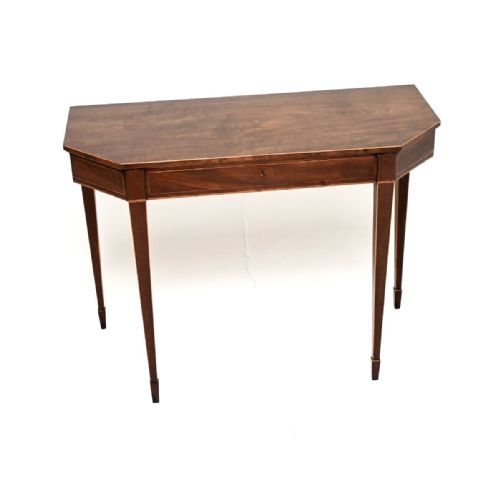
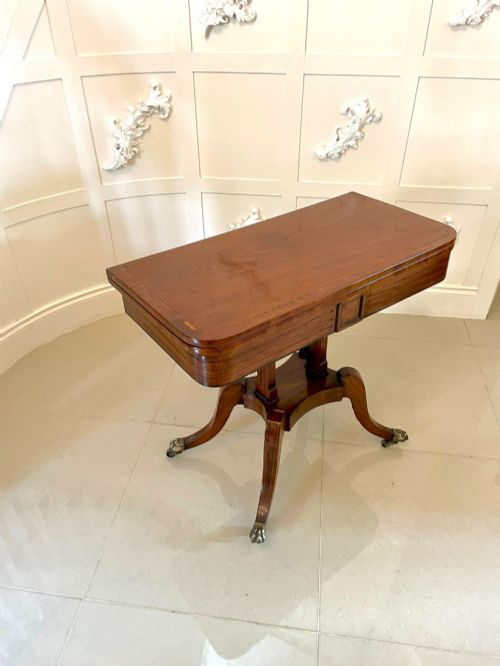
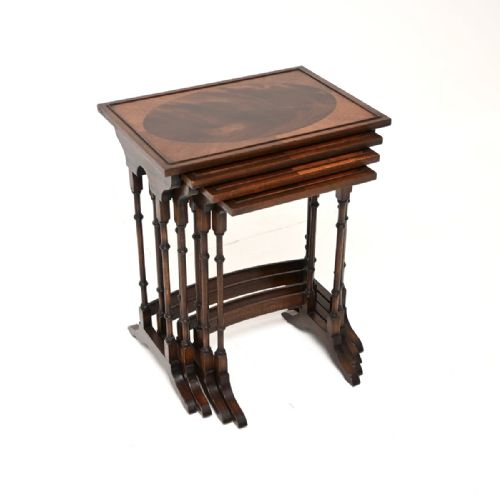
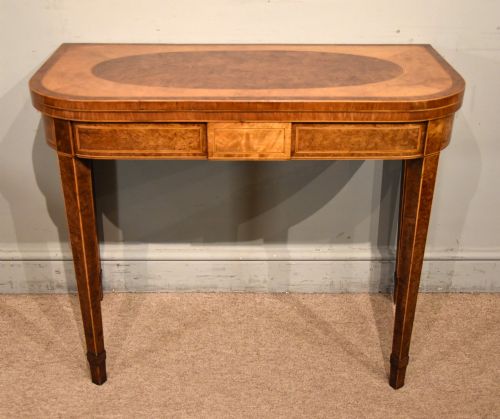
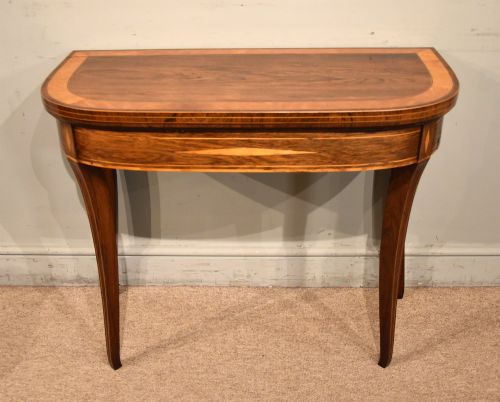
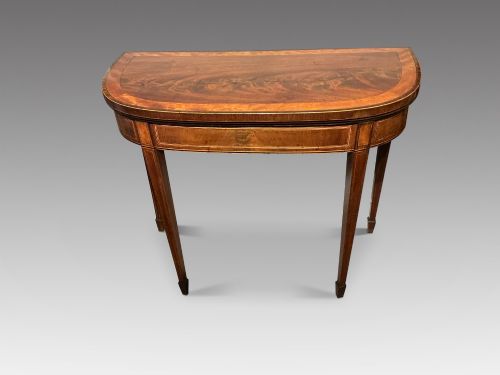
When buyers search for a georgian tea table inlay, they are looking at folding-top tables designed for social entertaining during the eighteenth and early nineteenth centuries. The versions most commonly met on this page include mahogany demilune and fold-over card tables carrying contrasting wood veneers.
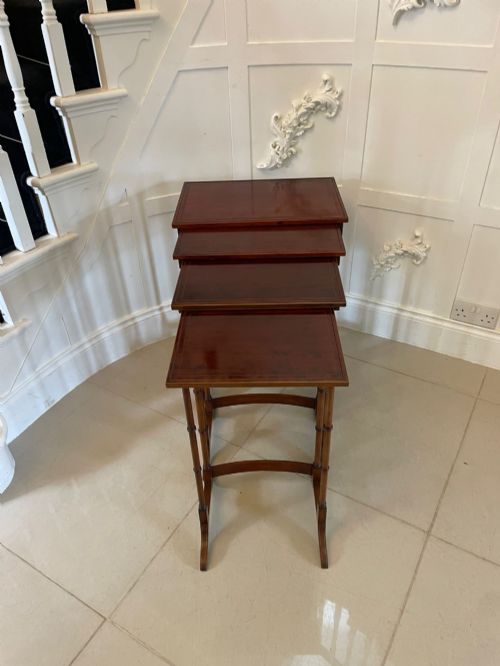
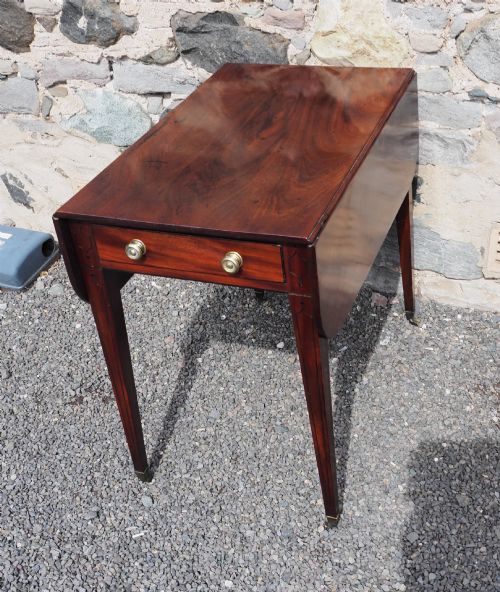
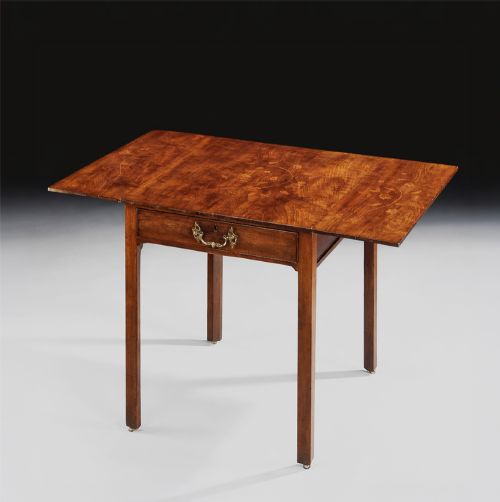
These forms span the Georgian, George III, and Regency periods, alongside later revival pieces from the Edwardian era. Alongside tea tables, the selection incorporates Pembroke tables, games tables, and occasional tables with detailed surface decoration.
How They Were Made
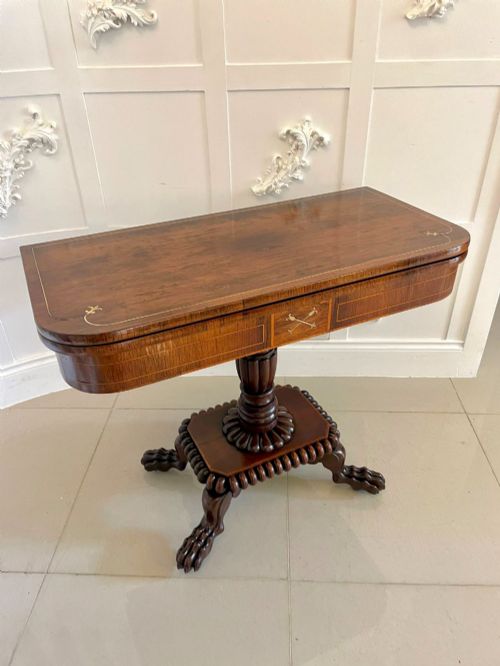
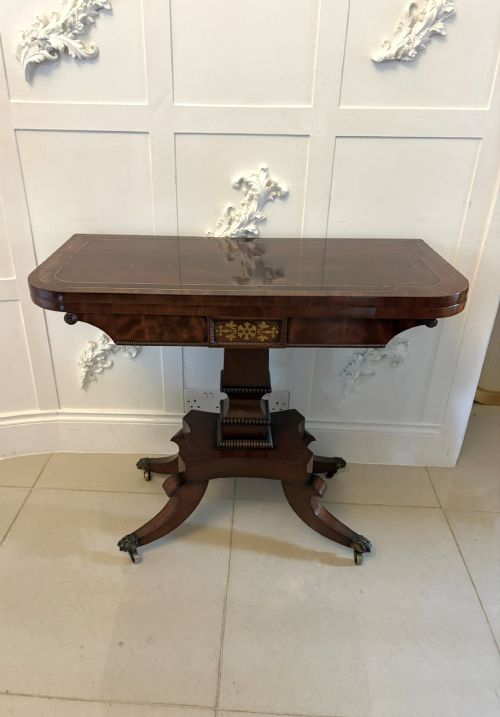
Cabinet makers constructed these pieces primarily using solid mahogany and mahogany veneers, enriched with contrasting details in satinwood, boxwood, and rosewood. Surface decoration relies heavily on precise wood inlay and crossbanding to define the edges and central panels.
Certain Regency pieces integrate brass inlay into the dark timbers to create crisp geometric patterns. Structural stability is maintained through folding hinge mechanisms, pillar supports, and tripod bases.
Listings feature mahogany, satinwood, and rosewood across Georgian, Regency, and Edwardian periods.
What Varies in Quality
Quality rests upon the crispness of the timber figuring and the precision of the inlay work. Finer examples display sharply defined contrasting borders and deeply figured Honduras mahogany or burr yew without disruption to the grain.
The integration of the folding mechanism and the proportion of the legs separate standard workshop output from exceptional cabinet work. Subtle details such as well-matched crossbanding elevate the visual depth of the top.
Bruce and Burns of Edinburgh
The Georgian Tea Table Inlay Glossary
- Demilune
- Half-moon shaped, describing tables with a straight back edge designed to sit against a wall. This form is common among folding tea and card tables.
- Inlay
- A technique where contrasting woods or metals are set flush into the surface timber to form decorative patterns. Boxwood and satinwood are frequent choices for this work.
- Crossbanding
- A strip of veneer applied to the border of a table top with the grain running perpendicular to the main panel. It frames the central timber figure.
- Pembroke table
- A small rectangular table with hinged drop flaps on either side and a drawer beneath. They served multiple domestic functions in Georgian rooms.
- Tilt top
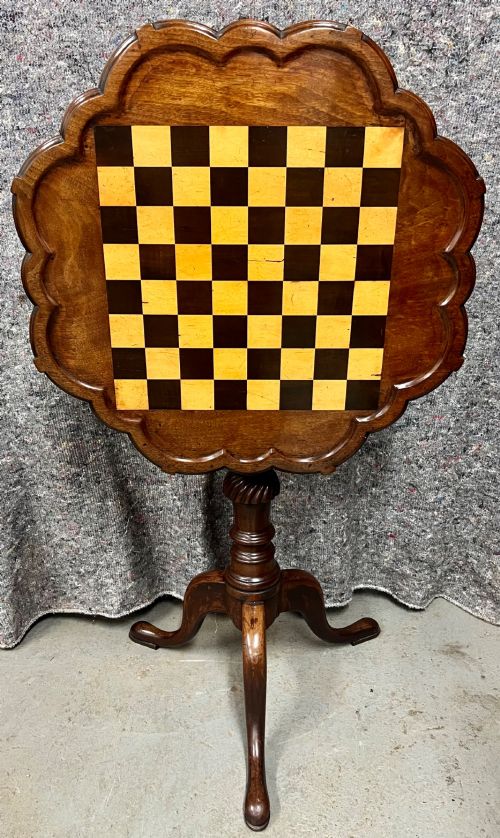
- A table top mounted on a mechanism that allows the surface to pivot vertically when not in use. This design saved space in period interiors.
Georgian Tea Table Inlay: Frequently Asked Questions
How were georgian tea tables used?
These tables stood against a wall until evening social gatherings required a surface for serving tea. The hinged top unfolded to double the available area.
Once the tea service concluded, the same surface accommodated card games or conversation before folding back into a compact console.
How do I identify a georgian inlay?
Authentic period inlay uses contrasting natural timbers like boxwood, satinwood, or ebony set directly into the primary wood base by hand. The edges show microscopic irregularities typical of manual cutting.
Laser-cut precision or printed lines indicate modern reproduction work rather than period craftsmanship.
Where should I place a tea table?
A demilune or fold-over tea table sits naturally in a hallway or against a living room wall in its closed position. Opening the top requires clearance around the piece, so keep it away from tight corners.
Avoid direct sunlight to protect the fragile satinwood and mahogany veneers from fading.
What is the difference between regency and georgian pieces?
Georgian furniture generally displays classic proportions with mahogany as the primary timber and restrained geometric inlay. The subsequent Regency period introduces bolder contrasting veneers and occasional brass stringing.
Regency designs often incorporate heavier pedestal bases or sabre legs inspired by classical archaeology.