








Georgian Tambour Bedside
A georgian tambour bedside combines clever sliding closures with handsome timber, offering a neat bedside storage solution for discerning collectors.
Georgian Tambour Bedside
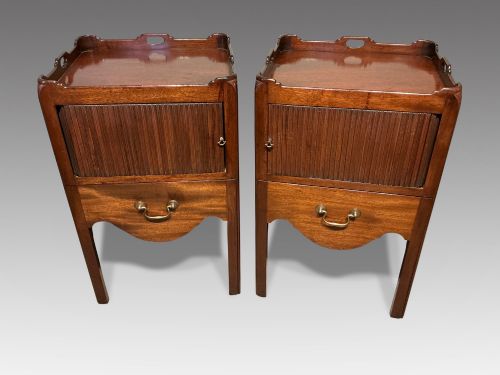
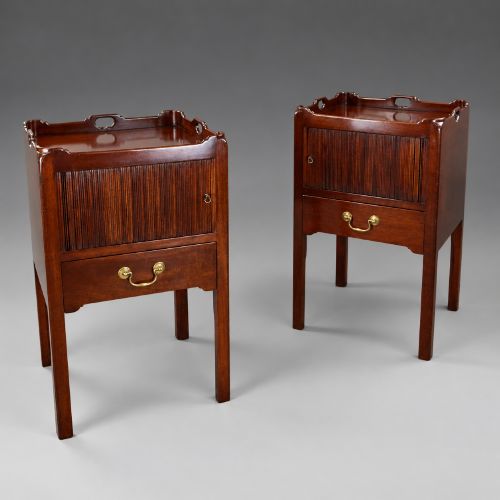
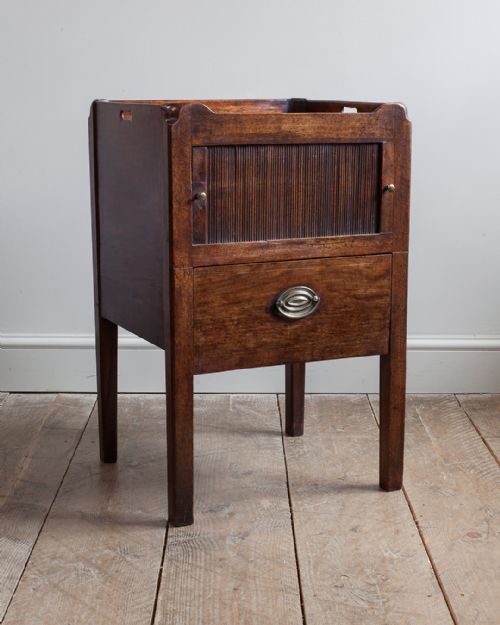
When searching for a georgian tambour bedside, you are looking at practical bedroom furniture designed during the Georgian and Regency periods. These pieces serve to conceal nighttime necessities behind flexible slatted shutters rather than standard hinged doors.
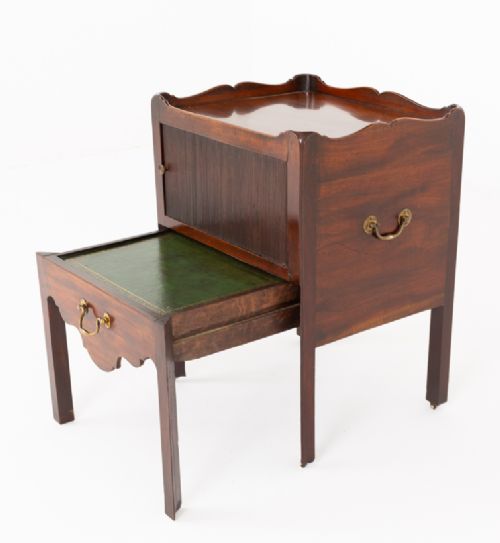
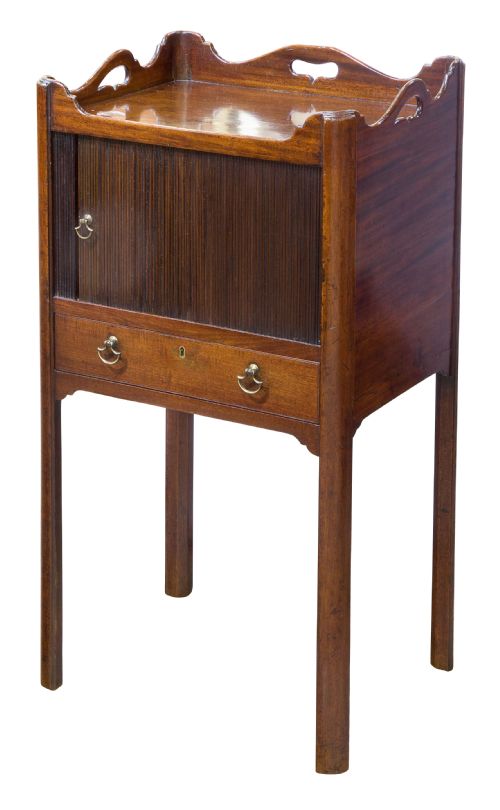
The version you are most likely to meet on this page is a mahogany bedside cabinet or commode, often featuring a tray top to keep items secure. Many date from the George III era, while others reflect later Georgian styles produced into the nineteenth and twentieth centuries.
How they were made
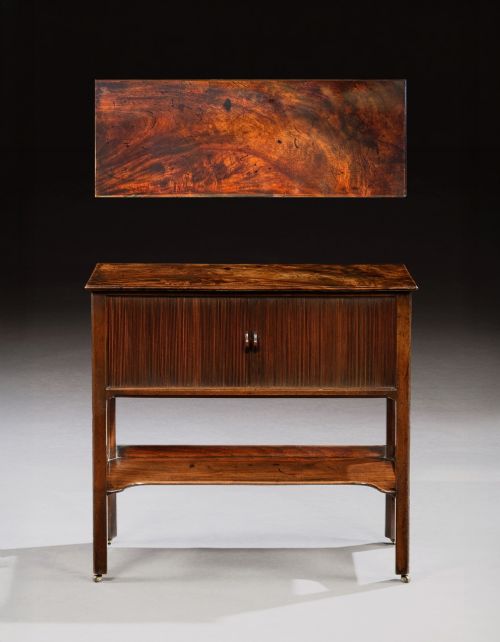
Cabinetmakers constructed these pieces primarily using solid and veneered mahogany, sometimes enriched with contrasting boxwood inlay, satinwood, or fruitwood. The defining tambour mechanism relies on small vertical strips of timber glued to a strong canvas or linen backing, allowing the shutter to glide smoothly along concealed tracks.
Fine brass handles, hinges, and occasional leather accents complete the construction, demonstrating the high standard of regional and London joinery. The framework balances sturdy carcase construction with the delicate precision required to build a working slatted door.
Georgian Tambour Bedside Retail Price Guide 2026
Typical asking prices for georgian tambour bedside among the pieces listed under this phrase on Sellingantiques today, from the lower quarter to the upper quarter. They describe what is for sale here now, not the wider market.
Listings feature mahogany predominantly, alongside decorative boxwood inlay, satinwood, fruitwood, and occasional walnut.
What varies in quality
The standard of a georgian tambour bedside rests upon the smoothness of the sliding shutter and the tightness of the individual slats. Superior examples maintain an even glide without sticking or sagging along the curved track.
Timber selection and secondary details also dictate worth, distinguishing straightforward utility items from elaborately inlaid or serpentine-fronted specimens. The crispness of the carving, the matching of timber grain across the front, and the integrity of the tray top all signal superior workshop production.
Gillows
The Georgian Tambour Bedside Glossary
- Tambour
- A flexible shutter made from narrow strips of wood glued to fabric, allowing it to slide around a curved corner. This clever device hides storage compartments without requiring clearance for swinging doors.
- Commode
- A closed piece of bedroom furniture fitted with doors, drawers, or tambour fronts. In Georgian terms, it denotes a refined bedside cabinet rather than modern sanitary ware.
- Tray top
- A raised rim surrounding the upper surface of a bedside table. It prevents small personal items or glassware from sliding off the edge during the night.
- Marquetry
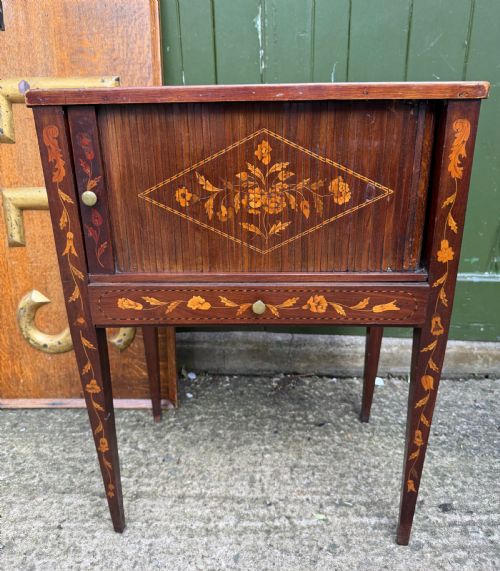
- Decorative veneer work arranged in floral or geometric patterns using various coloured woods. Dutch examples often display elaborate marquetry work across the entire cabinet.
Georgian Tambour Bedside: Frequently Asked Questions
What is a tambour front?
A tambour front consists of narrow wooden slats attached to a flexible backing fabric that slides along a grooved track. This allows the door to curve around the side of the cabinet when opened.
Cabinetmakers utilised this technique to provide easy access to interior storage in compact bedroom furniture without protruding doors.
How were these cabinets used?
These pieces sat beside the bed to hold chamber pots, night candles, and personal belongings out of sight. The enclosed cupboard and lower drawer kept the bedroom tidy and organised.
Wealthy households placed them in bedchambers as practical furnishings that combined concealed storage with a clean surface for a lamp or watch.
How do I spot a later reproduction?
Look closely at the timber backing behind the tambour slats and the uniformity of the interior construction. Machine-cut tracks and modern adhesives often indicate a twentieth-century piece rather than an 18th-century original.
Examining the wear patterns and the type of secondary woods used inside the drawers also helps clarify the age of the cabinet.
Are pairs common for these tables?
Matching pairs do appear among surviving pieces, though single bedside cabinets are far more common. Collectors prize pairs for symmetrical bedroom placement.
Many listings feature items that have been matched together later in life based on similar timber, proportions, and hardware.