
Georgian Tallboy Drawers
When you search for georgian tallboy drawers, you step into an array of vertical storage pieces built to hold linens and garments with architectural presence.
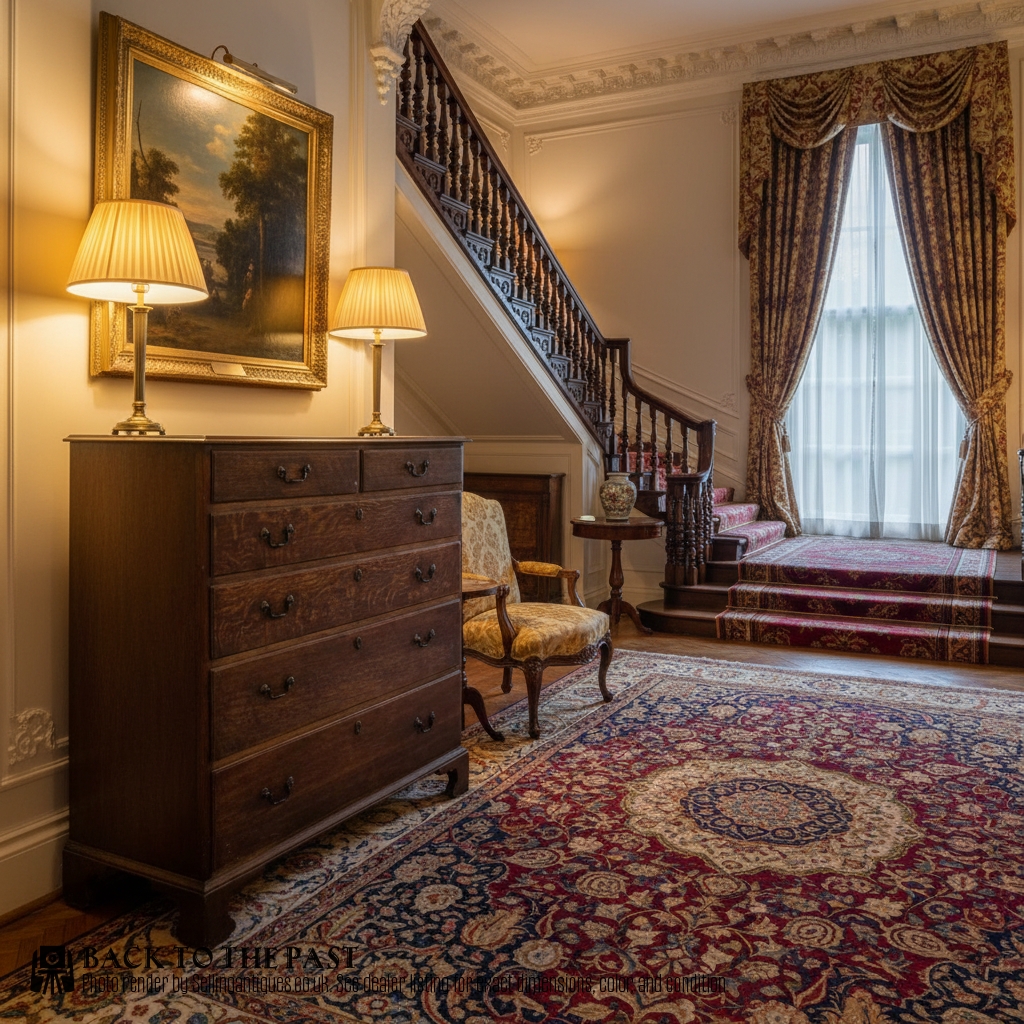
Georgian Tallboy Drawers
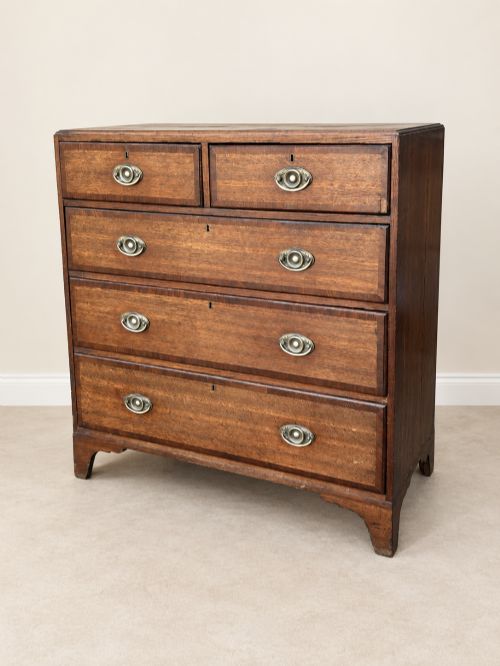
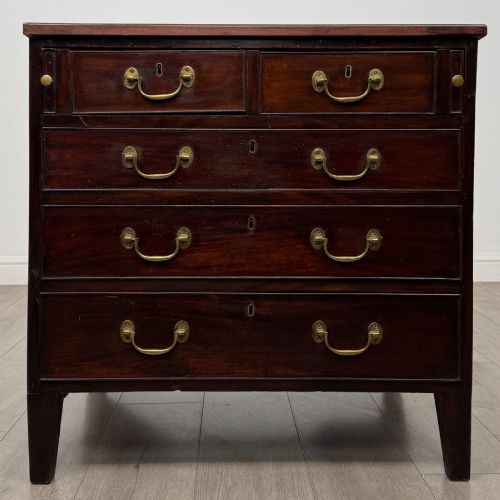
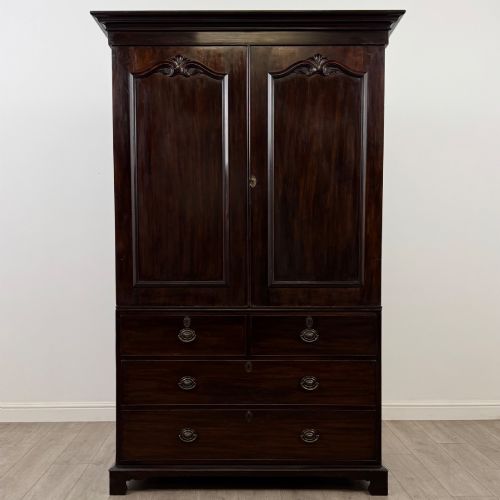
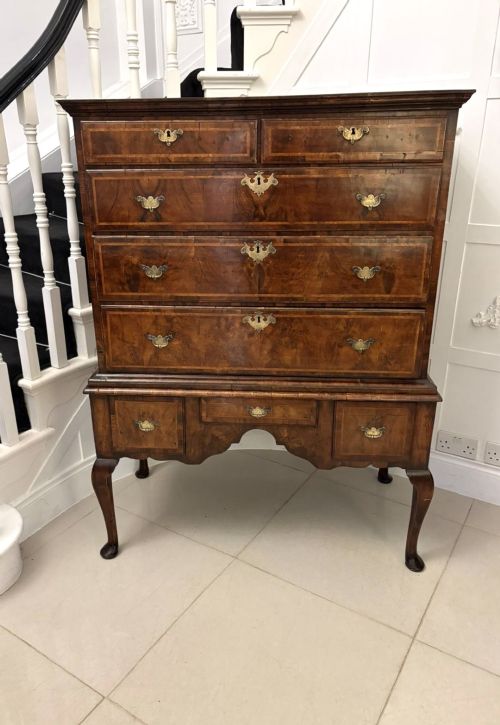
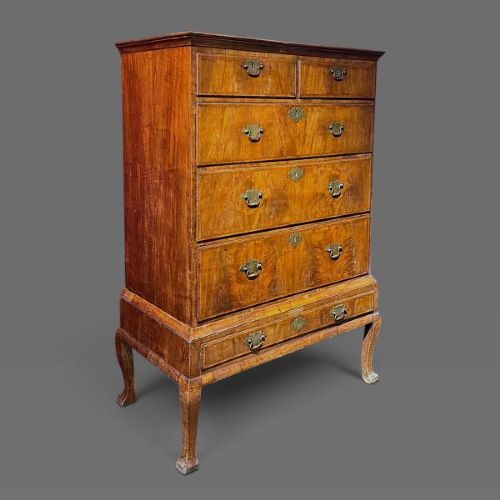
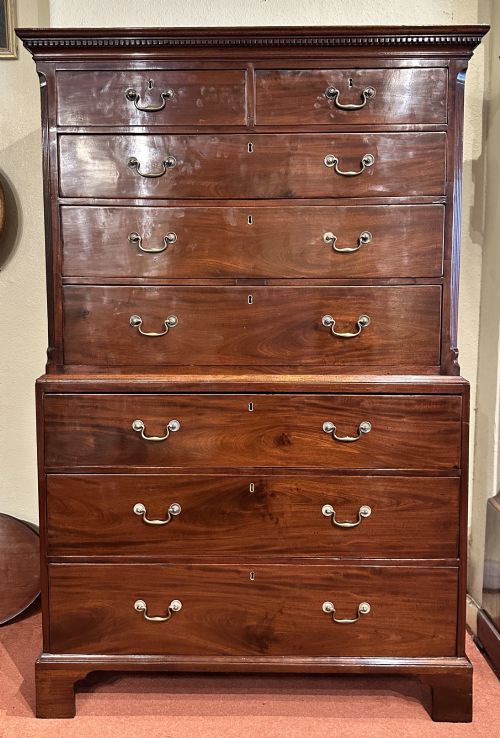
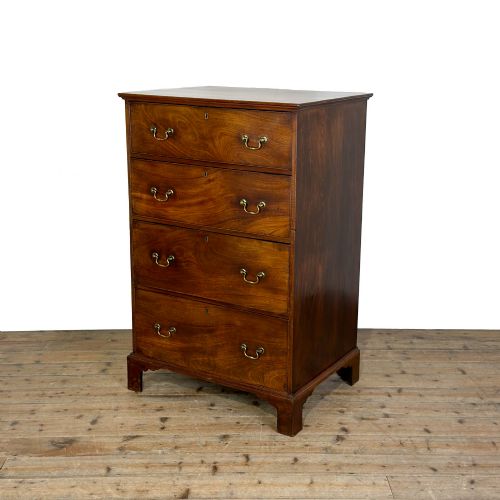
Georgian tallboy drawers encompass double-tiered chests on chests and single vertical carcasses designed to maximise bedroom storage without claiming too much floor space. The form frequently pairs a lower chest of three long drawers with a smaller upper section, creating an imposing elevation.
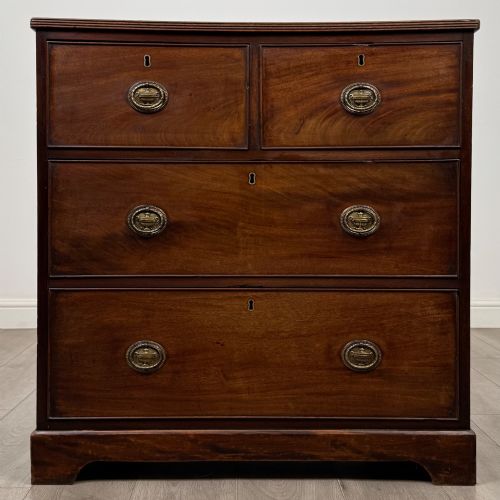
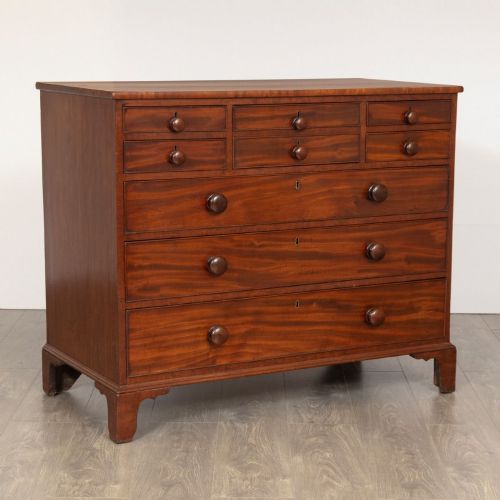
Pieces carrying this description span the eighteenth century into the Regency era, alongside later revival iterations from the twentieth century. The prevailing examples on this page balance utility with vertical proportion, often featuring graduated drawers that shorten toward the top.
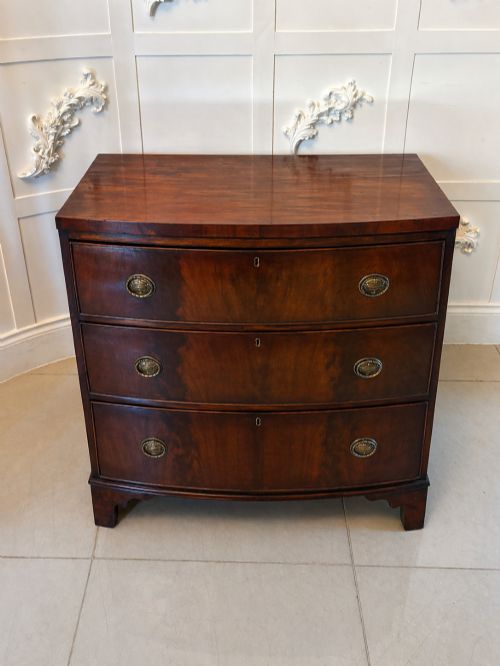
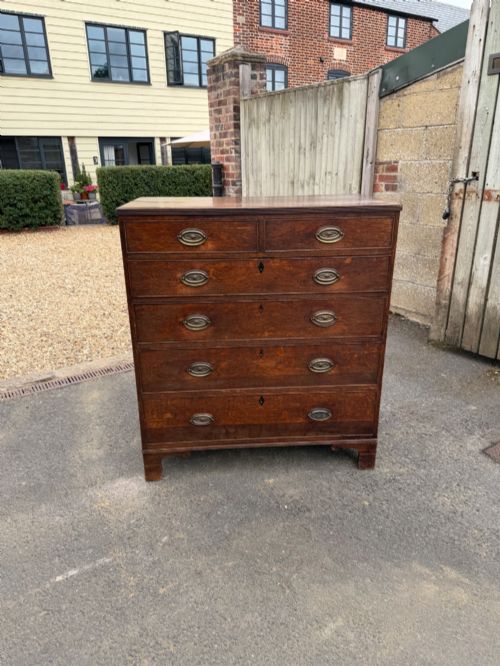
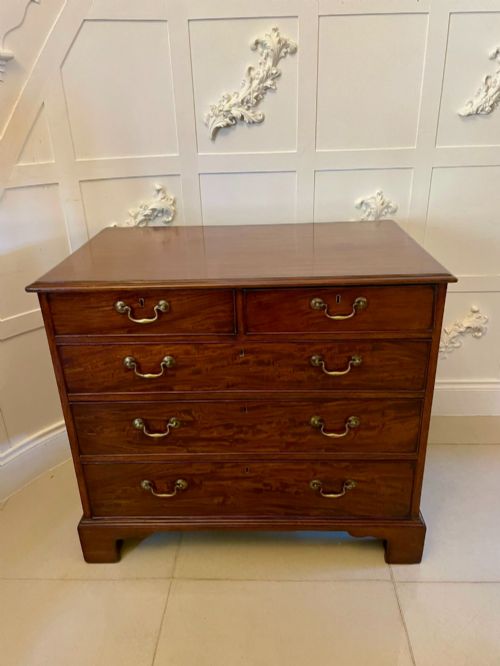
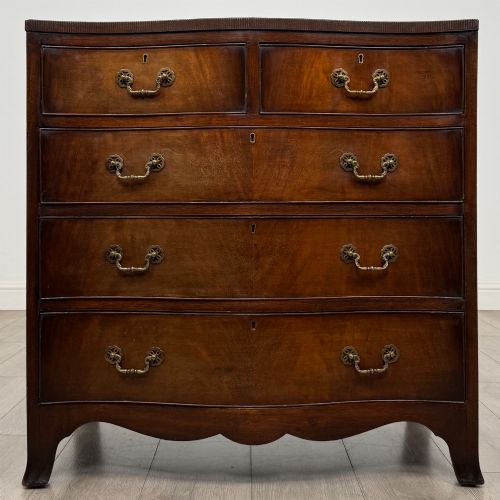
Variations range from flat-fronted oak and mahogany formats to curved bow-front and serpentine profiles. Alongside traditional tallboys, buyers encounter chests on stands and gentleman's chests that incorporate fitted writing slides or interior compartments.
How They Were Made
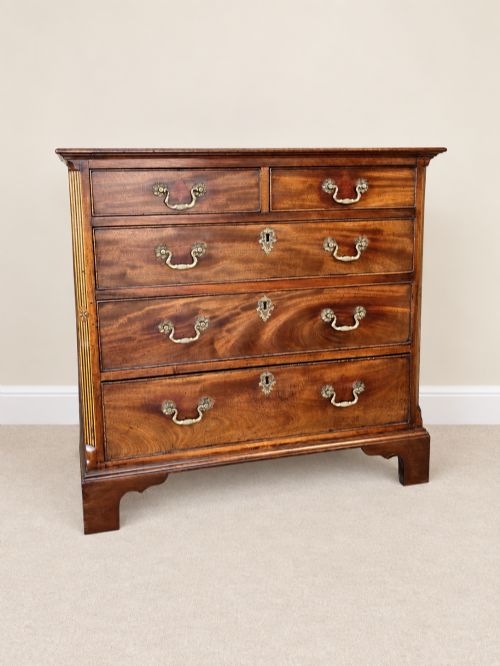
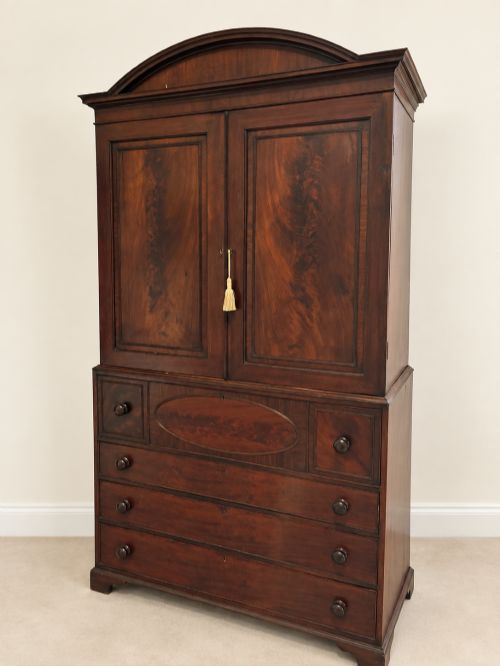
Cabinetmakers constructed these frames primarily in mahogany, oak, and walnut, frequently applying figured veneers or flame mahogany to principal drawer fronts to display rich grain patterns. Satinwood banding and contrasting stringing often outline the primary timbers on select Regency examples.
Drawer construction relied on hand-cut dovetails joined to solid secondary woods, while brass pull handles and escutcheons secured the drawer faces. Carved cornices, bracket feet, and occasionally satinwood or brass inlay completed the exterior architecture of the carcass.
Standard forms include bow fronts, serpentine fronts, and chests on stands alongside traditional stacked tallboys.
What Varies in Quality
The standard of timber selection and veneer matching defines the visual impact of a piece, separating uniform grain displays from patchy or mismatched surfaces. Superior examples exhibit continuous grain flow across multiple drawer tiers and precise matching of burr walnut or flame mahogany.
Joinery execution dictates structural integrity, evident in the tightness of dovetails, the smooth travel of drawers within their individual runners, and the preservation of original backboards. The retention of period brass hardware and untouched surface patination further distinguishes higher tiers of craftsmanship.
Whytock and Reid·J Moorcroft
The Georgian Tallboy Drawers Glossary
- Tallboy
- A tall chest of drawers, typically built as one chest stacked upon another, also known as a chest on chest. This vertical format provided substantial storage in eighteenth-century bedrooms.
- Chest on Stand
- A drawer carcass elevated on a separate framework with legs rather than resting directly on a base plinth. These often date to the early eighteenth century.
- Brushing Slide
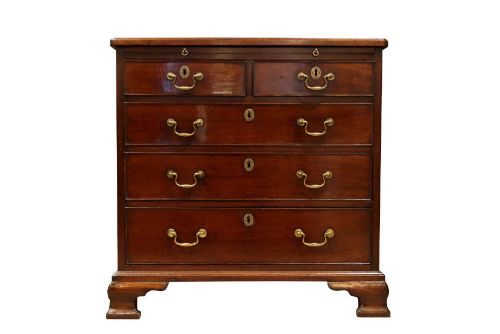
- A pull-out shelf integrated above the drawers, traditionally used for folding clothes or as a writing surface. It tucks flush into the moulding when not in use.
- Bow Front
- A convex curved drawer front that projects outward at the centre. This profile became popular during the late eighteenth and Regency periods.
- Serpentine Front
- A convex-concave-convex curved drawer front requiring advanced woodworking skill to shape. It is typically found on high-status Georgian case furniture.
- Caddy Top
- A raised, moulded tabletop profile resembling the lid of a tea caddy. This edge detail frequently appears on eighteenth-century chests.
Georgian Tallboy Drawers: Frequently Asked Questions
What is a tallboy?
A tallboy is a vertical chest of drawers built in two stacked sections, allowing for maximum drawer capacity within a compact footprint.
Cabinetmakers designed these pieces to house linens and garments in bedrooms with limited wall space.
How do I spot a reproduction?
Revival pieces from the twentieth century often display machine-cut joinery and modern secondary timbers behind the primary surfaces.
Examine the interior drawer construction and backboards to verify eighteenth- or nineteenth-century construction methods.
What is a brushing slide used for?
The pull-out slide served as a temporary shelf for folding garments or inspecting items before placing them into the drawers below.
It operates smoothly within the moulding directly above the uppermost full-width drawer.
How do I care for antique wood?
Keep these pieces away from direct sunlight and steady heat sources to prevent the timber and delicate veneers from drying or splitting.
Apply a traditional wax polish sparingly to maintain the protective patina developed over centuries of use.