

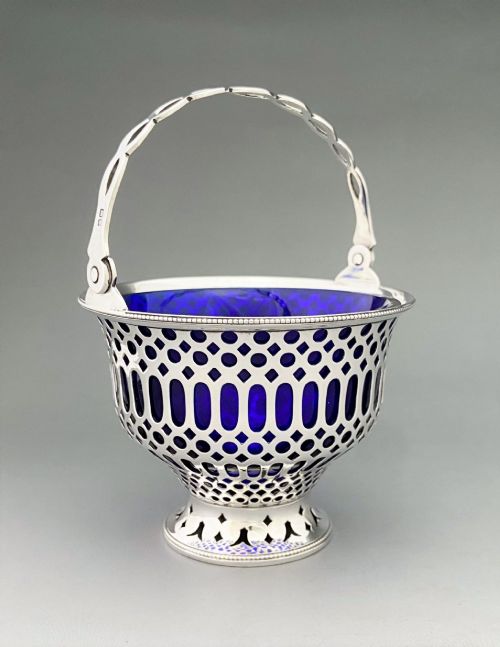

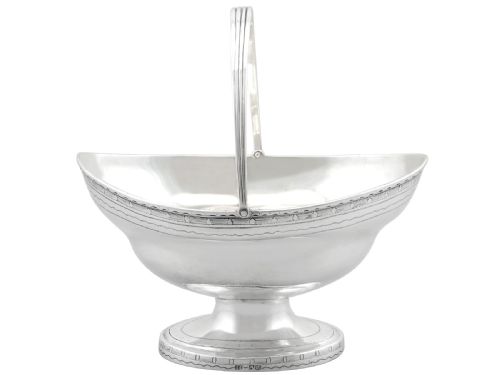


Georgian Sweetmeat Basket
A georgian sweetmeat basket is a small, elegant table vessel for preserved fruits and confectioneries, prized for its delicate metalwork.
Georgian Sweetmeat Basket
When you search for a georgian sweetmeat basket, you encounter small table vessels designed for serving delicate preserves, nuts and confectioneries. These pieces belong primarily to the eighteenth and early nineteenth centuries, emerging from periods defined by formal dining and refined hospitality.
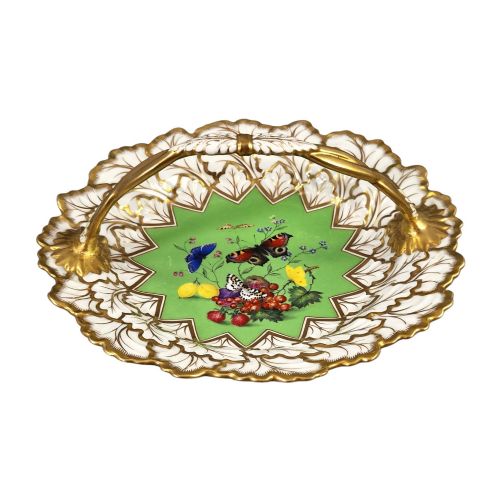
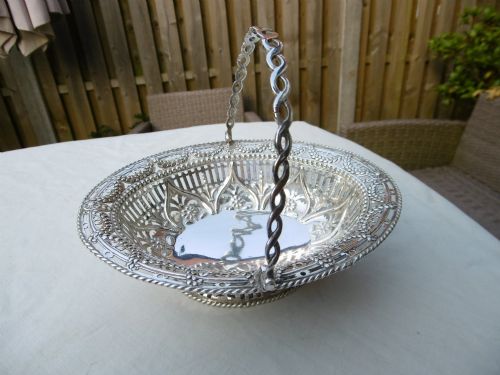
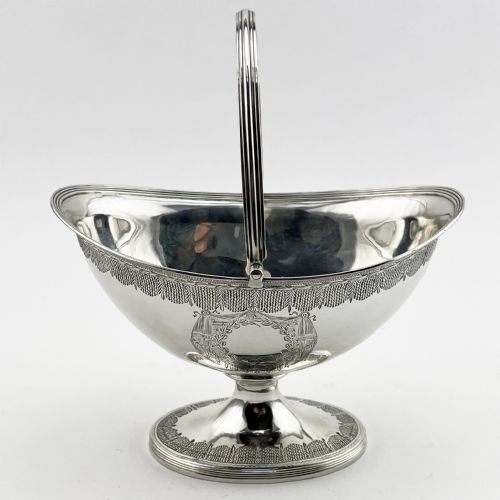
The versions most commonly met on this page take the form of swinging-handled silver baskets, cream pails and small footed bowls. Makers constructed these items in sterling silver, Sheffield plate and occasionally porcelain, reflecting the changing tastes of Georgian and Regency households.
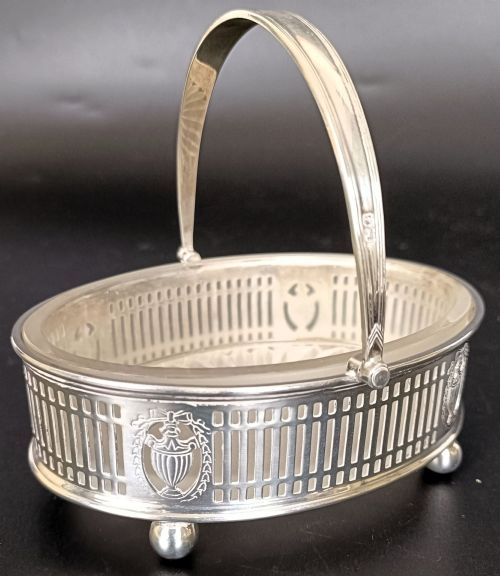
Stylistically, these baskets draw on Georgian neoclassical and Adam designs, featuring pierced lattice patterns and oval bodies. While many date directly to the reigns of George III, later revivals and Edwardian interpretations also appear within the selection.
How They Were Made
Silversmiths utilised sterling silver and Old Sheffield plate, shaping sheet metal through raising and piercing techniques to create intricate geometric and floral patterns. Piercing removed weight while maintaining structural integrity, allowing light to pass through the vessel walls.
Makers applied swing handles using soldered hinges and pinned joints, permitting the handle to drop flat against the rim. Internal gilding was frequently added to silver baskets to protect the metal from the acidic nature of sweetmeats and fruits.
Many swing handles still retain enough tension to stay upright independently, refusing to flop even after two centuries.
What Varies in Quality
The refinement of the piercing work dictates the visual distinction of a piece, separating mechanical repetition from crisp, hand-cut aperture details. Piercing that follows a coherent classical layout demonstrates superior workshop standards.
The gauge of the metal and the tension in the swing handle mechanism indicate the original cost and care of manufacture. Heavier gauge silver retains its shape and handle alignment more effectively over centuries of handling.
Aldridge and Green·Henry Chawner·William Bond·George Fox·Flight Barr and Barr·Fenton
The Georgian Sweetmeat Basket Glossary
- Sweetmeat
- A confection, preserved fruit or small delicacy served at the conclusion of a formal meal. These small foods required specialised small vessels to hold them on the table.
- Piercing
- A decorative technique involving the cutting of holes and slots through sheet metal to form patterns. Silversmiths used saws and chisels to create openwork lattice designs.
- Swing handle
- An articulated handle attached to opposing sides of a basket by pivots or hinges. This allows the handle to lie flat for storage and serving.
- Old Sheffield plate
- A composite material made by fusing a thin layer of silver to a thicker copper core. This technique predated modern electroplating.
- Silver gilt
- Sterling silver that has been coated with a thin layer of gold on the interior surface. This prevented tarnishing from food acids.
Georgian Sweetmeat Basket: Frequently Asked Questions
What were sweetmeat baskets used for?
These vessels held sweetmeats, preserved fruits, nuts and small confectioneries served during dessert courses in grand dining rooms. They sat centrally on tables as both functional tableware and decorative objects.
Over time, their uses shifted within households, leading to their employment as cream pails or sugar containers. Their portable nature allowed servants to pass them easily among guests.
How do I care for silver baskets?
Silver baskets require gentle cleaning with appropriate silver polish to maintain their finish without abrading delicate pierced details. Avoid harsh chemical dips that strip original patination and damage applied gilding.
Store them in stable environments away from high humidity to prevent accelerated tarnishing. Handling them by the body rather than straining the swing handle preserves the hinge mechanisms.
How can I distinguish Georgian from later pieces?
Georgian pieces display hallmarks specific to eighteenth and early nineteenth-century assay offices, alongside hand-worked piercing irregularities. The weight, hand-finished joints and neoclassical proportions generally differ from twentieth-century revivals.
Later Victorian and Edwardian examples often incorporate machine-stamped piercing and heavier, more rigid handle attachments. Comparing hallmark date letters provides definitive chronological placement.
Why do some baskets have gilded interiors?
Silversmiths gilded the inside of silver vessels to protect the base metal from acidic sweetmeats and fruit juices. Direct contact with sugar and fruit could tarnish or pit unprotected silver.
This gold wash also provided a rich visual contrast against the pierced exterior silverwork. Surviving gilding indicates minimal aggressive cleaning over the lifespan of the piece.