

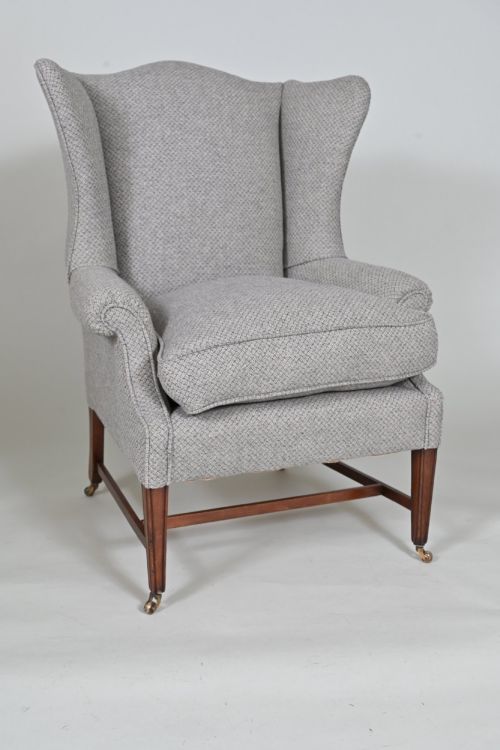
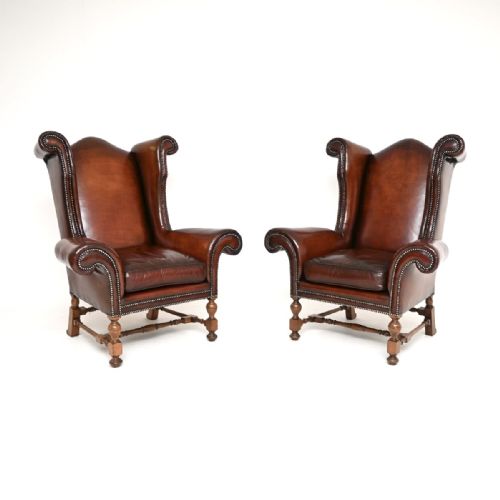
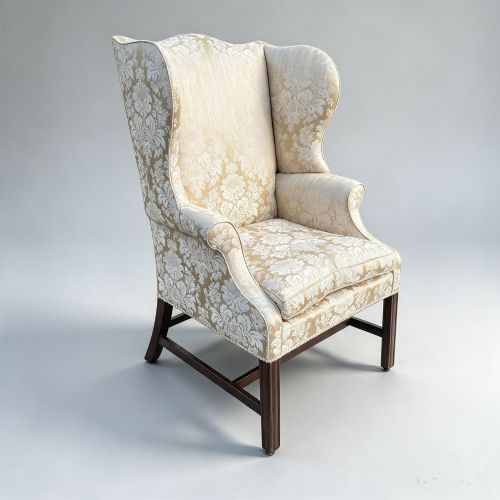
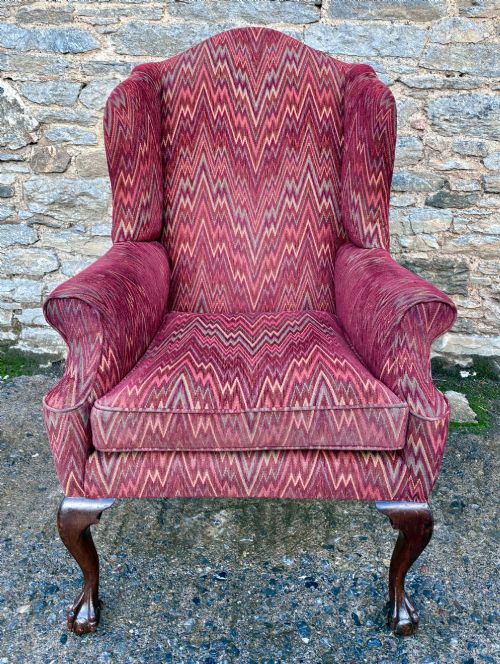
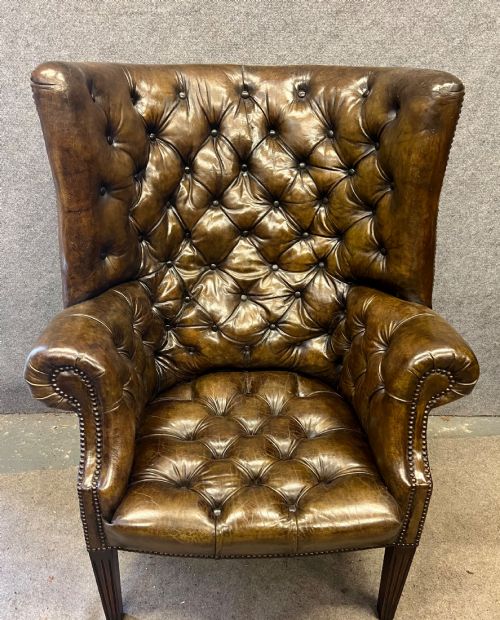
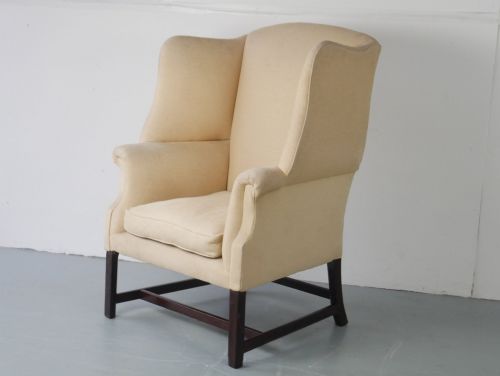
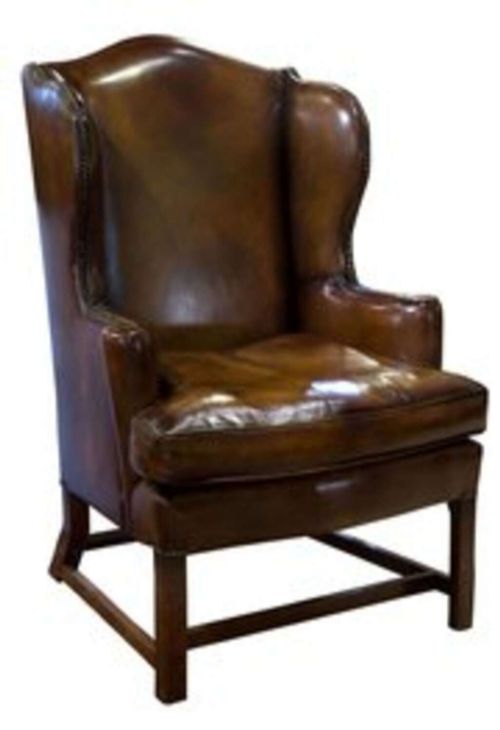
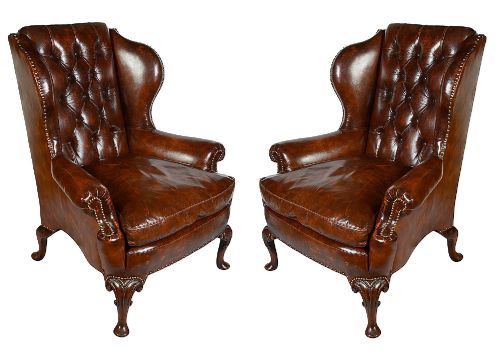
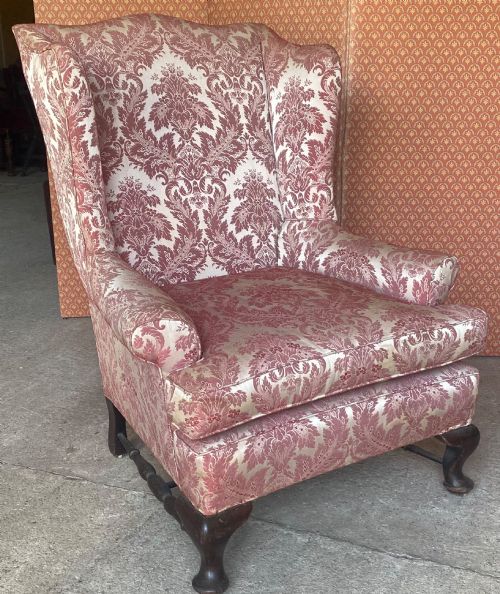
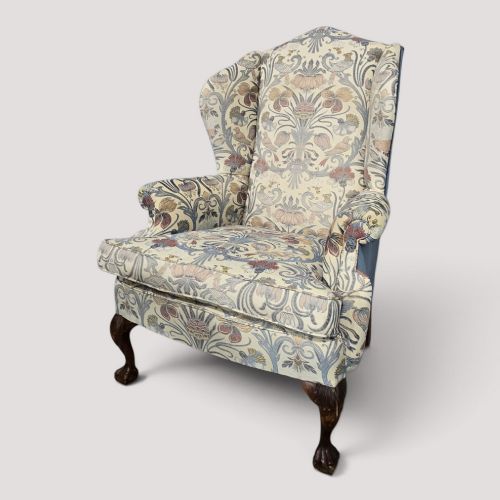
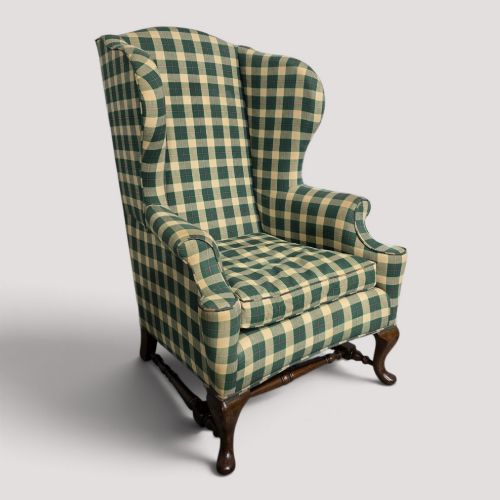
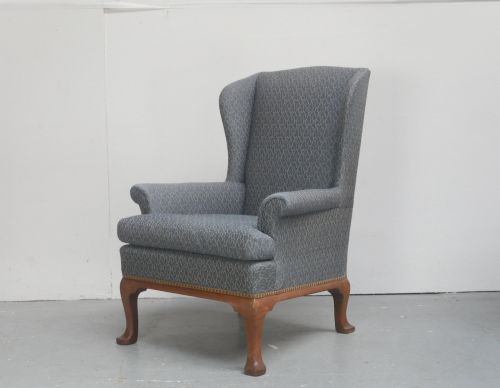
Georgian Style Wingback Chair
A georgian style wingback chair brings draught-excluding comfort and classic proportions to a room, drawing on eighteenth-century forms.
Georgian Style Wingback Chair
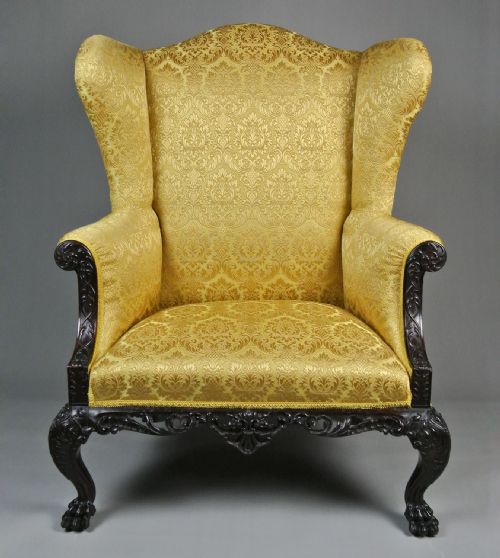
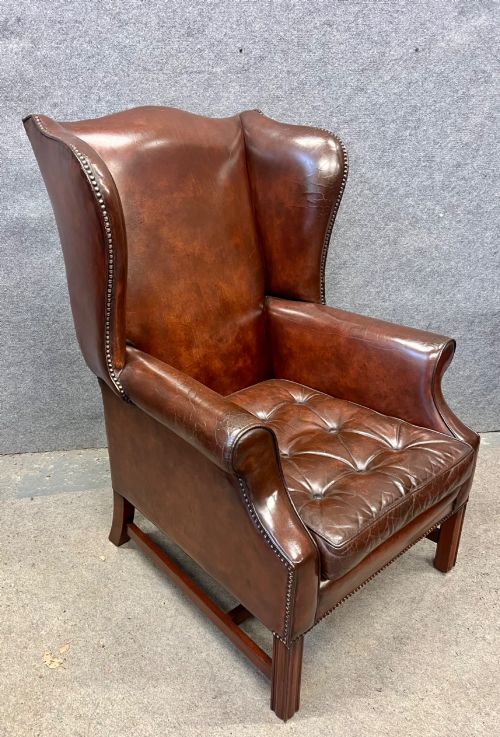
A georgian style wingback chair serves as a fireside seat designed to shield the occupant from draughts while keeping the warmth from a hearth close. The selections gathered here span genuine eighteenth-century pieces alongside later revivals from the nineteenth and twentieth centuries.
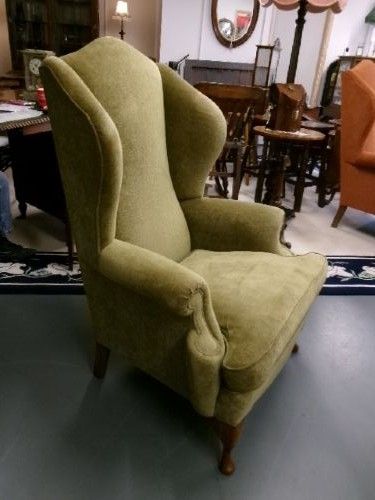
Buyers encounter forms ranging from walnut Queen Anne examples to mahogany Chippendale and George III interpretations, often upholstered in leather, fabric, velvet, or damask. Many listings show pieces presented to the calico stage, offering a blank canvas for final covering.
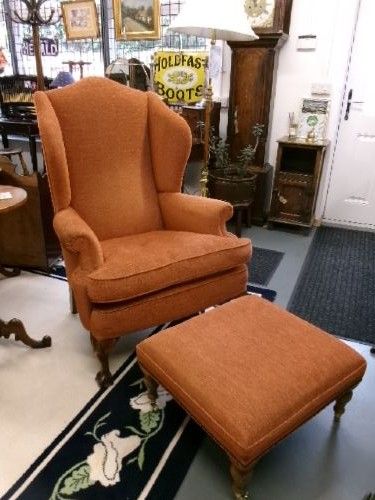
The inventory includes pairs, generous proportions suited to country houses, and occasional footstools, reflecting the diversity of seating designed for comfort and reception rooms over multiple centuries.
Materials and construction methods
Makers built the structural frames using timber such as mahogany, oak, and walnut, employing traditional joinery to support the substantial upholstered forms. Brass often appears in decorative details like castors or nailheads securing the outer coverings.
Upholstery techniques involve stuffing with traditional materials and covering the frame in leather, fabric, velvet, damask, or calico. Carved elements on the wooden legs and stretchers reflect the prevailing style of the maker, from Chippendale influences to Irish manners.
Georgian Style Wingback Chair Retail Price Guide 2026
Typical asking prices for georgian style wingback chair among the pieces listed under this phrase on Sellingantiques today, from the lower quarter to the upper quarter. They describe what is for sale here now, not the wider market.
Listings feature pieces spanning from the eighteenth century through Victorian, Edwardian, and twentieth-century revival periods, constructed in mahogany, oak, walnut, and timber.
Assessing quality in seating
Quality rests upon the integrity of the timber frame, the crispness of any carved woodwork, and the preservation of original proportions. Pieces retaining their structural firmness and genuine period wood display superior craftsmanship compared to lesser or heavily altered examples.
The standard of upholstery and the choice of covering material greatly influence the character of the piece. Fine leather or antique fabric finishes elevate the work, whereas later modifications or replacement frames alter the historical harmony.
The Georgian Style Wingback Chair Glossary
- Wingback
- An armchair featuring protective side panels attached to the arms and framing the back, originally designed to block cold draughts. These projections define the silhouette of the seat.
- Calico stage
- An intermediate point in upholstery where the chair wears an unprinted cotton cloth foundation before final decorative fabric is applied. This allows a buyer to choose their own top cover.
- Chippendale style
- A decorative design inspired by the eighteenth-century cabinetmaker Thomas Chippendale, characterised by carved mahogany frames and subtle flowing lines. Such chairs often feature elaborate leg work.
- Queen Anne style
- A form originating around the turn of the eighteenth century, marked by walnut construction, curved lines, and cushioned comfort without excessive ornamentation.
- Damask
- A reversible figured fabric woven on a jacquard loom, frequently utilised for traditional upholstery to add texture and subtle pattern.
Georgian Style Wingback Chair: Frequently Asked Questions
What is a georgian style wingback chair?
A georgian style wingback chair is a high-backed seat featuring protective wings designed to shield the user from draughts. These pieces incorporate traditional forms derived from eighteenth-century seating designs.
They appear in various woods including mahogany, oak, and walnut, and carry upholstery ranging from aged leather to damask and calico.
How were these chairs originally used?
These chairs were placed near fireplaces in country houses and reception rooms to trap heat from the hearth and block cold air from doors and windows. Their enclosed shape offered privacy and physical comfort for reading or resting.
Over time, they transitioned from utilitarian draught-excluders to prominent formal seating within gentleman's clubs and drawing rooms.
How do I live with antique leather upholstery?
Living with antique leather requires maintaining stable room temperatures and avoiding direct sunlight to prevent drying and cracking. Regular conditioning preserves the supple nature of the hide.
Over the decades, leather develops a natural patina that responds well to gentle cleaning and standard domestic care.
How can I tell different periods apart?
Distinguishing periods relies on examining the timber species, leg profiles, and structural joinery techniques. Walnut and curved lines often point towards earlier Queen Anne forms, whilst mahogany and carved details frequently indicate later Georgian or revival periods.
Revival pieces from the Edwardian and Victorian eras mimic these earlier traits but often display distinct machine-cut timber or twentieth-century padding methods upon closer inspection.