





Georgian Style Windsor Chair
A georgian style windsor chair is a sturdy timber seat built for comfort, and you want one for its honest vernacular character.
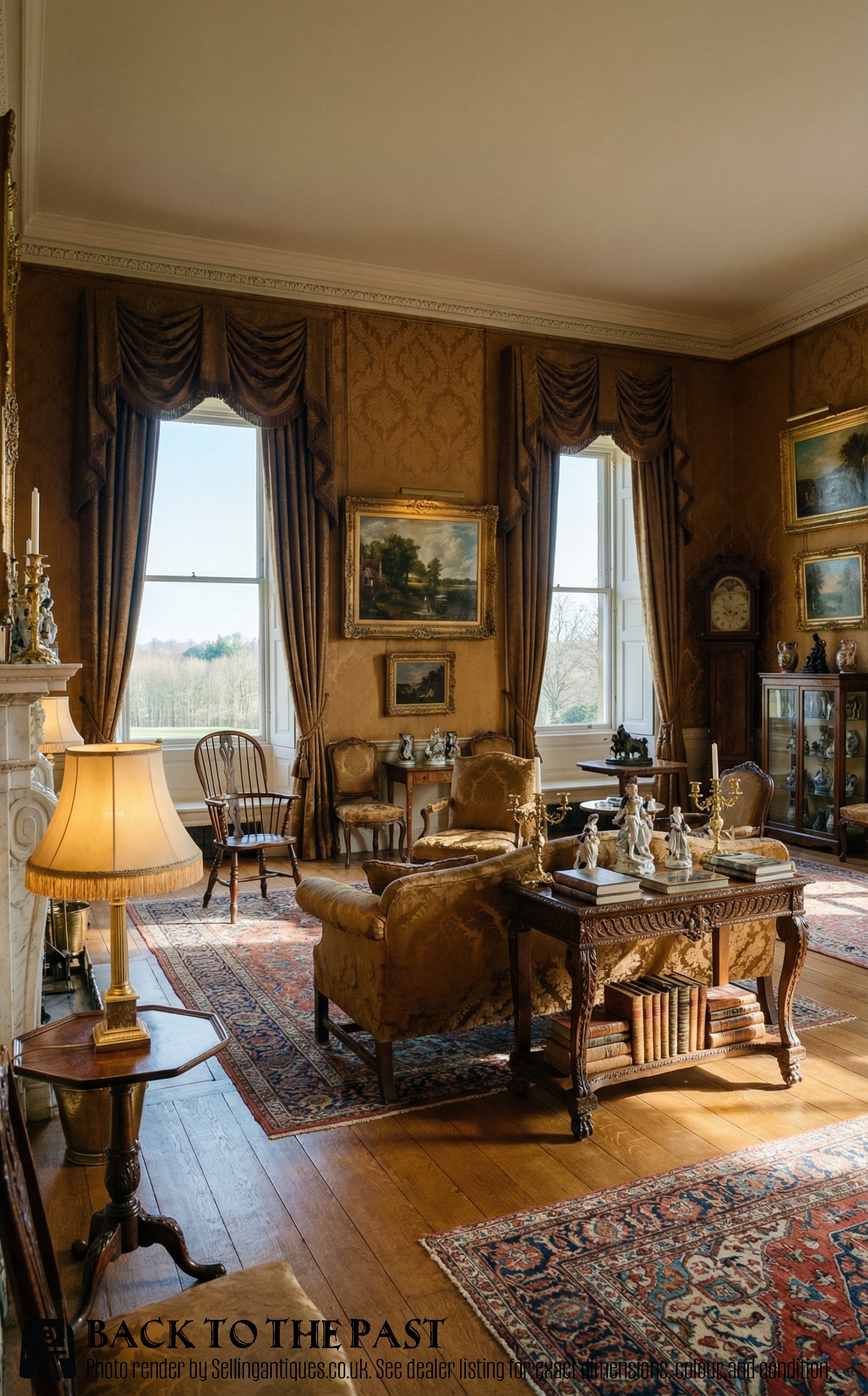
Georgian Style Windsor Chair
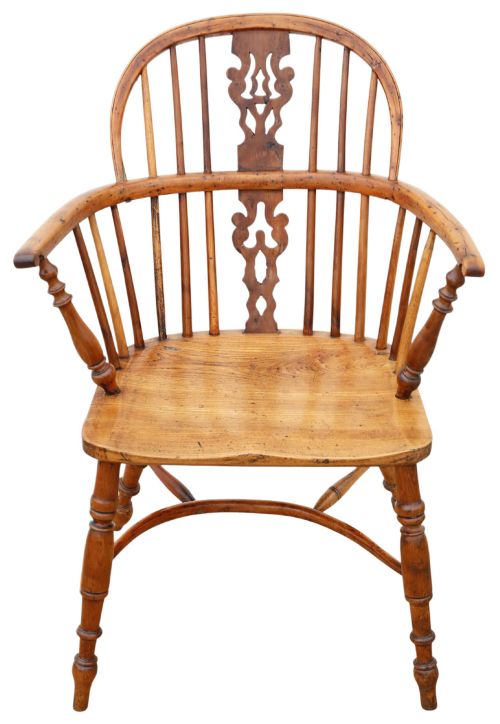
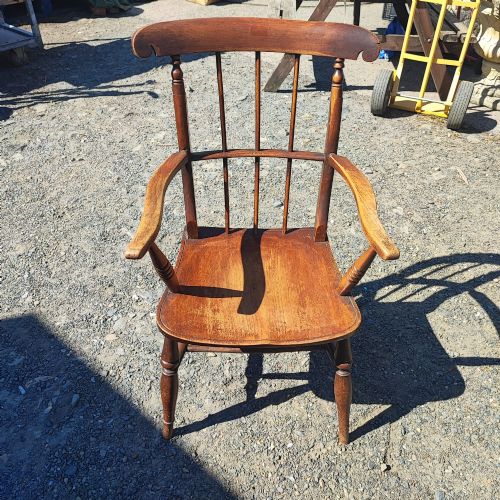
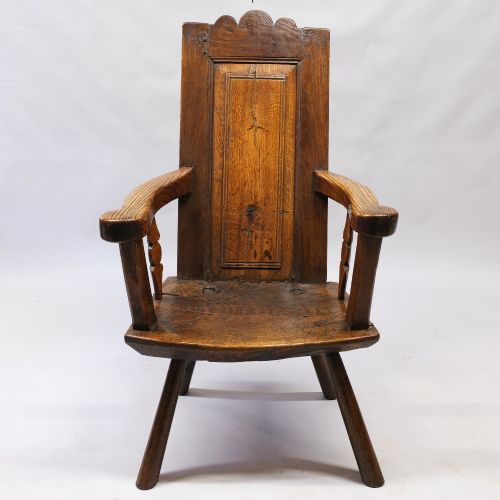
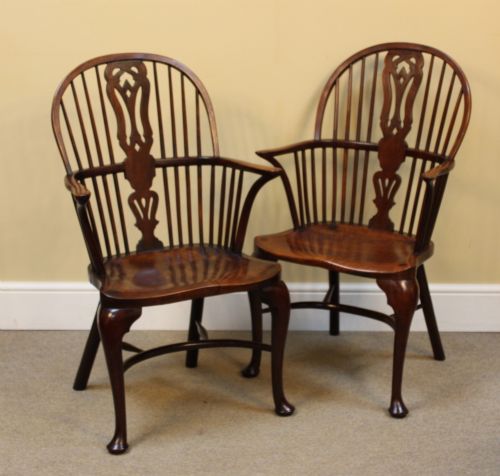
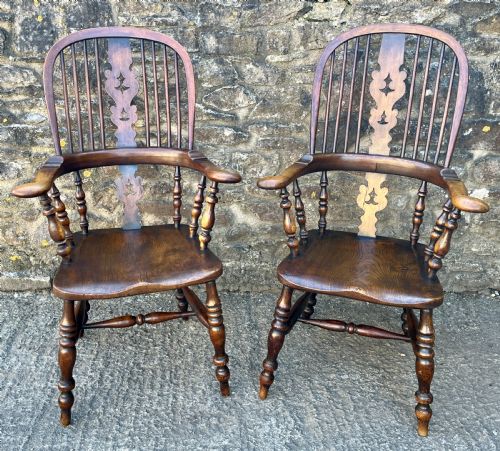
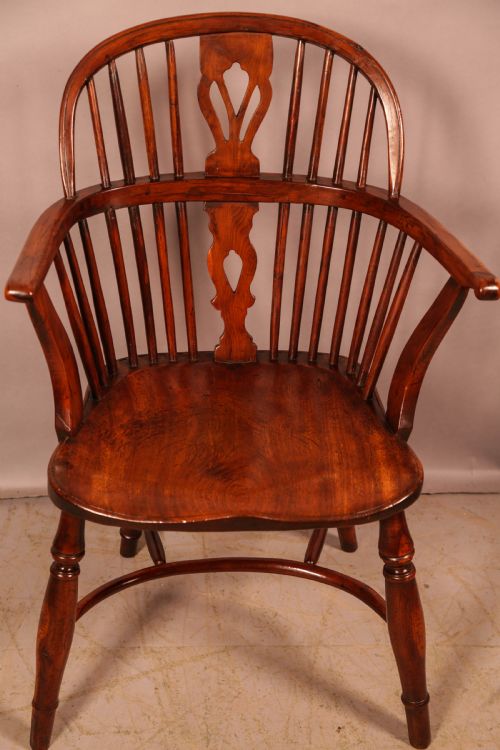
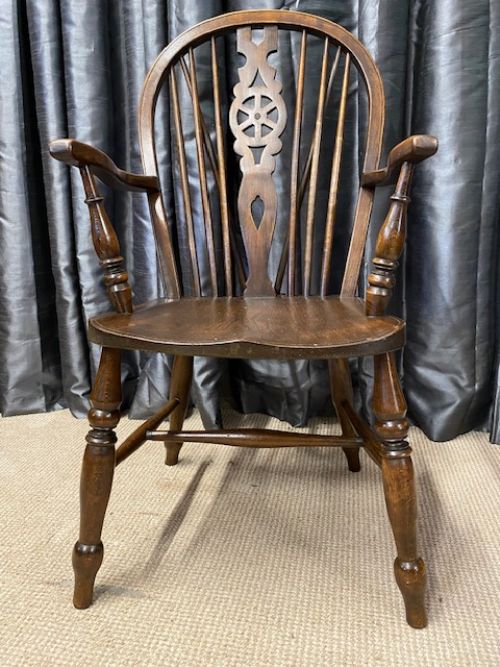
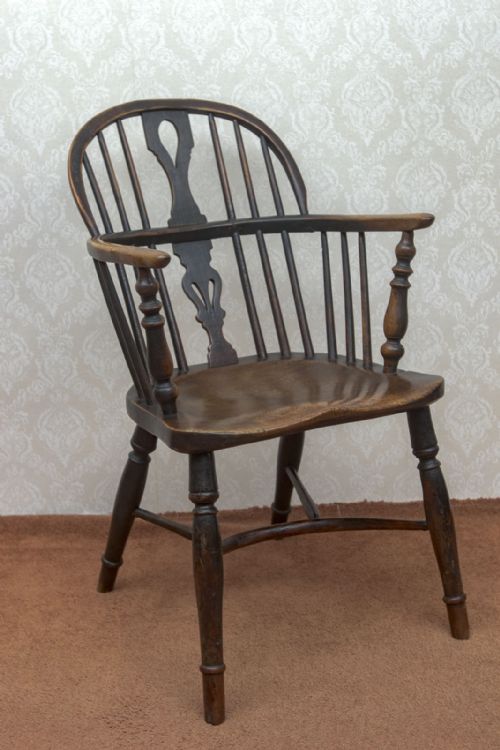
A georgian style windsor chair is a traditional timber seating piece defined by its stick-built construction, where spindles and legs are tenoned directly into a solid wooden seat. These chairs appear in forms such as armchairs, carvers, elbow-chairs, low-back models, panel-backed variants, and smaller children's seats.
The versions you are most likely to meet on this page hail primarily from the nineteenth century, alongside pieces attributed to the eighteenth century, the regency era, and the georgian period itself. They embody english country, vernacuar, and victorian country styles rather than urban formality.
Makers working within these traditions utilised local timber resources to shape functional seating for domestic interiors. The resulting pieces range from broad-arm formats to wheel-back designs that reflect regional British furniture-making habits.
How They Were Made
Makers constructed these chairs by combining contrasting native timbers, typically pairing dense yew or elm for seats and arms with ash or beech for spindles and legs. This selection harnessed the natural tensile strength and grain patterns of each wood to support the stress points of stick-built furniture.
Carpenters turned slender components on a lathe and shaped solid seats with an adze or scorp to create a comfortable, scooped contours. The joints relied on wedged tenons that locked the vertical members permanently into the heavy wooden base.
Georgian Style Windsor Chair Retail Price Guide 2026
Typical asking prices for georgian style windsor chair among the pieces listed under this phrase on Sellingantiques today, from the lower quarter to the upper quarter. They describe what is for sale here now, not the wider market.
Listings here feature elm, yew, ash, oak, and beech timbers across nineteenth century, regency, and eighteenth century periods.
What Varies in Quality
The distinction between ordinary examples and finer pieces rests on the choice and figure of the timber, particularly in the figuring of yew wood and the grain of the elm seat. Superior specimens exhibit harmonious pairing of woods across the arms, spindles, and legs rather than mismatched replacement components.
Proportion and the crispness of turned details also set examples apart, with better pieces maintaining balanced arm bows and well-sculpted saddle seats. Evidence of skilled hand-tooling elevates an armchair well beyond utilitarian workshop production.
Benjamin Gilling
The Georgian Style Windsor Chair Glossary
- Carver
- An armchair designed with scrolling or open elbows, often positioned at the head of a dining table. These pieces match the primary dining chairs in a set.
- Elm
- A tough, interlocking-grained timber frequently selected for solid Windsor seats because it resists splitting when nailed or pegged. This wood forms the heavy foundation of most country chairs.
- Yew
- A dense, highly figured softwood prized for its rich amber colour and decorative grain patterns. Makers used yew for prominent parts like arm bows and spindle backs.
- Vernacular
- Objects shaped by local traditions and practical utility rather than academic architectural rules. This approach defines regional British furniture making.
- Tenon
- A projecting tongue on the end of a leg or spindle designed to fit snugly into a mortise hole bored into the seat. Wedges often secure these joints from above.
Georgian Style Windsor Chair: Frequently Asked Questions
What is a georgian style windsor chair?
A georgian style windsor chair is a traditional wooden seating form characterised by a solid carved seat into which legs and back spindles are tenoned. These pieces draw on eighteenth and nineteenth century country vernacular designs.
They reflect regional British craft traditions, utilising native timbers like yew, elm, and ash to create durable seating for domestic life.
How were windsor chairs used originally?
These chairs served as practical everyday seating around dining tables, in parlours, and beside hearths in country homes. Their sturdy construction made them suitable for continuous daily use.
Smaller child's versions were also built to miniature proportions for domestic nurseries and family living spaces.
How do I live with a windsor chair?
Living with these chairs involves placing them in spaces where their timber character can anchor a room, whether around a modern table or as a single accent seat. They pair naturally with other wooden furniture.
Keep them away from direct heat sources and sudden temperature shifts to protect the historic timber and pegged joints from drying out.
How can I tell the period of a chair?
Dating relies on observing wood species, tool marks, and structural wear patterns that correspond to known manufacturing eras like the regency or victorian periods. Seat shapes and turning profiles evolved over time.
Comparing construction details against documented regional examples helps place a piece within its nineteenth or eighteenth century context.