
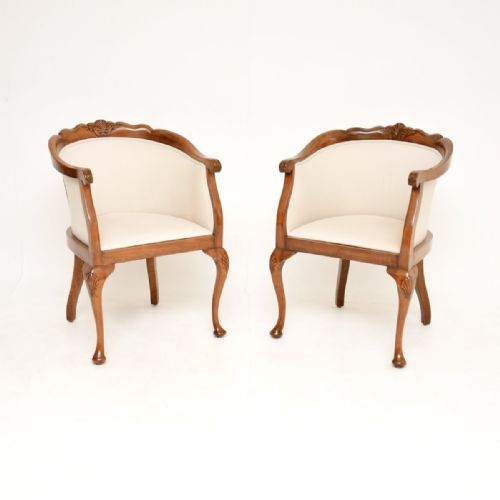


Georgian Style Walnut Chairs
Georgian style walnut chairs combine rich timber and traditional silhouettes, offering buyers both enduring structural form and period character for daily use.
Georgian Style Walnut Chairs
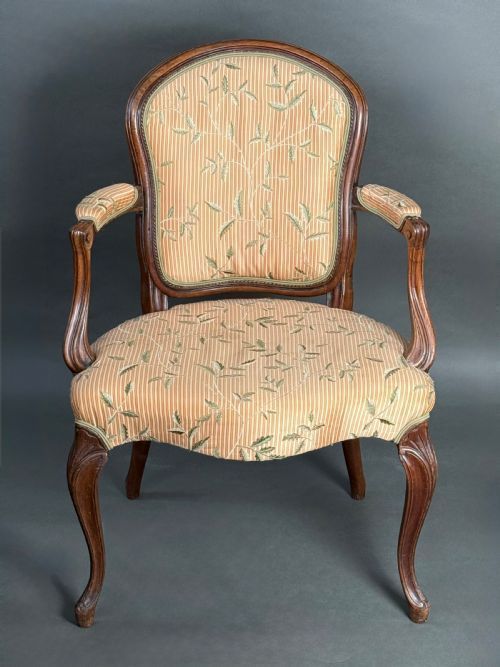
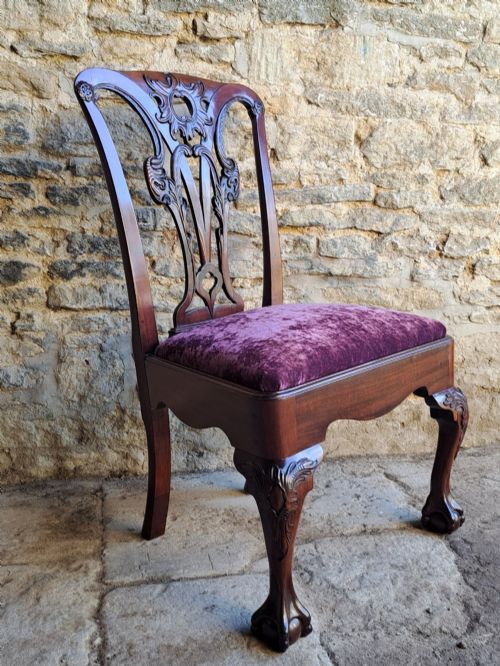
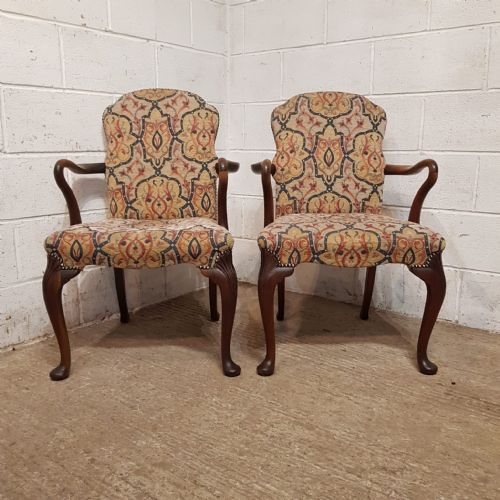
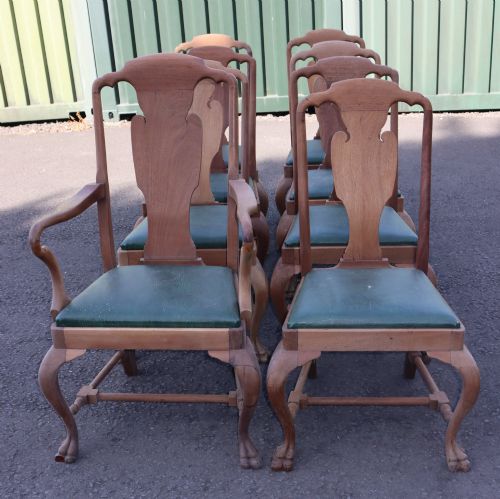
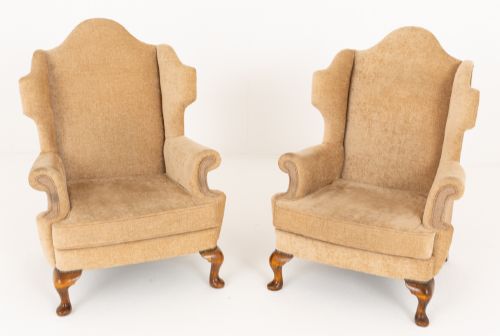
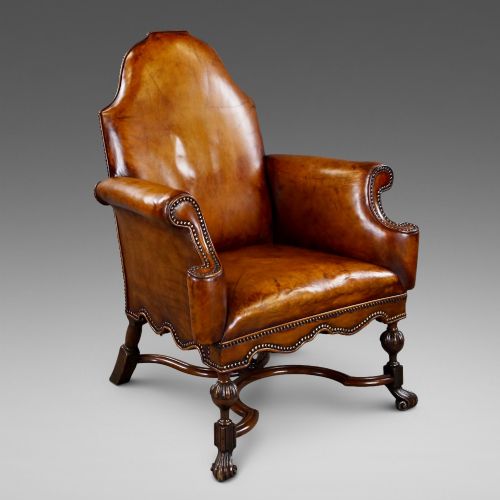
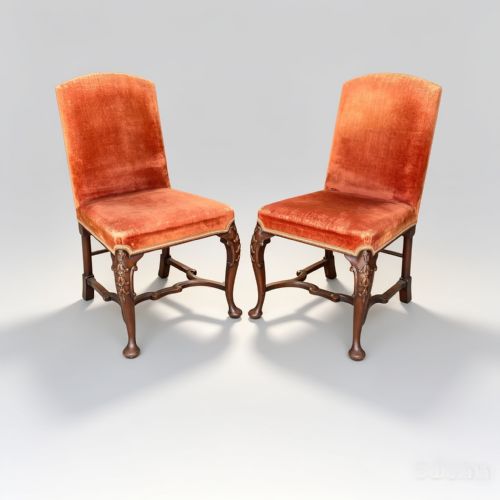
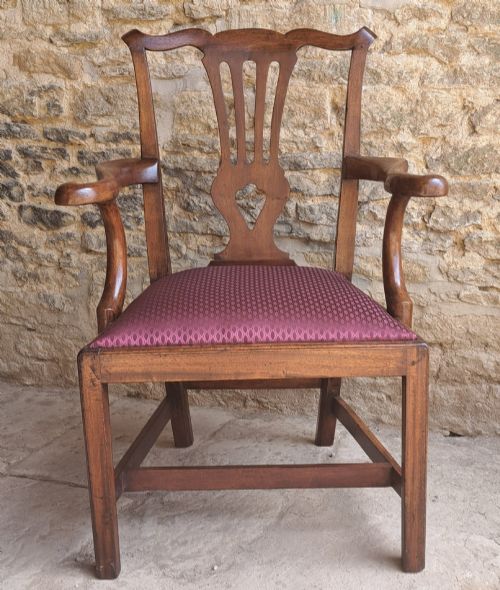
When seeking georgian style walnut chairs, buyers encounter a diverse range of seating forms spanning from dining chairs and side chairs to library armchairs, desk chairs, and wing chairs. These pieces appear in both authentic 18th-century configurations and later revival iterations produced through the 19th and early 20th centuries.
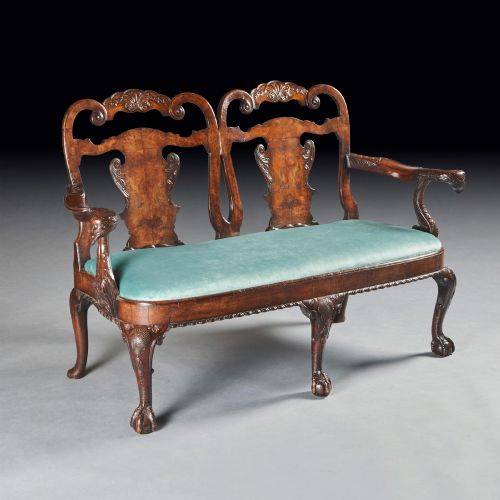
The selection frequently includes matching sets for dining tables alongside individual armchairs, side chairs, and settees suitable for specific rooms. Buyers also meet specialised regional or functional variations, including Irish red walnut side chairs, child chairs, and nursery chairs.
Materials and construction
The primary timber utilised is walnut, with burr walnut frequently chosen for decorative figuring on prominent surfaces. Workshops employed solid walnut alongside veneers to construct frames capable of supporting elaborate carved ornamentation.
Upholstery forms an integral part of the construction, utilising textiles such as silk, leather, velvet, and tapestry upholstery to cover seats, backs, and wing chair panels. Brass elements also appear in structural or decorative capacities on specific desk and library chairs.
Nursery chairs and child armchairs appear in miniature proportions, offering full adult craftsmanship scaled down for tiny occupants.
Distinguishing quality
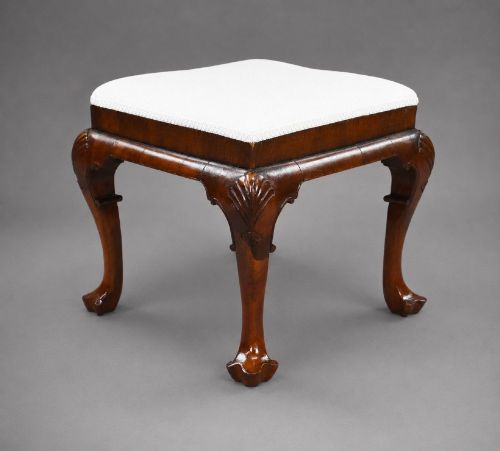
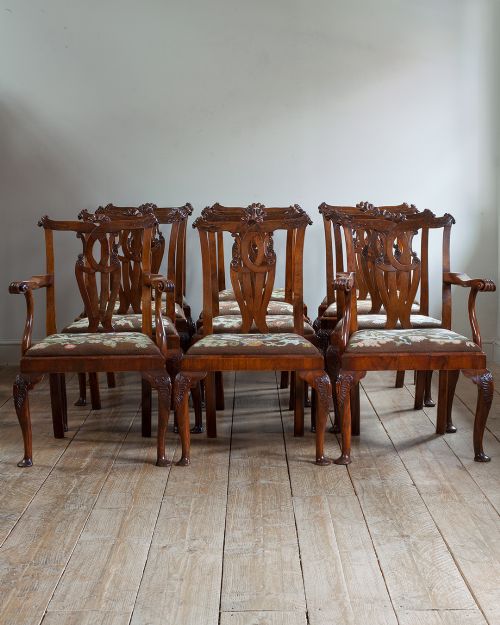
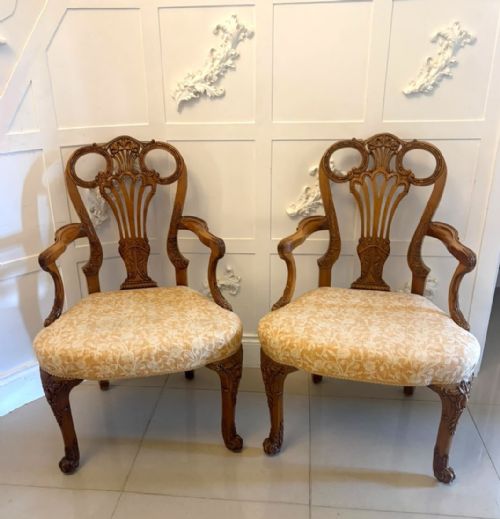
The calibre of carving on the walnut frames dictates the visual success of the piece, separating standard production from exceptional examples. Crisp execution in shell motifs, scrollwork, and claw and ball feet demonstrates superior artisan skill.
The choice and application of upholstery materials heavily influence the overall standard of a piece. High grade textiles, including specialist silks, aged leathers, and hand-worked tapestries, elevate the finished seating far above basic fabric coverings.
Spillman & Co·Colefax and Fowler·William Morris
The Georgian Style Walnut Chairs Glossary
- Walnut
- A dense, hard timber prized for its rich dark brown colour and varied grain patterns. It served as the principal wood for fine furniture during the 18th century and later revival periods.
- Burr walnut
- A specialised timber cut from tree growths that produces highly figured, swirling grain patterns. It was applied as veneer to high-status cabinet work and chair backs.
- Wing chair
- An upholstered armchair with side panels designed to shield the sitter from drafts. These chairs often feature prominent scroll arms and deep padding.
- Ribbon back
- A chair back design featuring carved splats that mimic flowing ribbons or intertwined foliage. This style became popular during the mid-18th century.
- Claw and ball
- A carved furniture foot representing a bird's talon clutching a ball. It is frequently found on the legs of George II period and revival seating.
Georgian Style Walnut Chairs: Frequently Asked Questions
How do I spot a true 18th century chair?
Authentic 18th century pieces exhibit traditional joinery methods, timber shrinkage consistent with age, and hand-cut elements beneath the frame. Examining the underside and interior blocks reveals the manual tooling characteristic of period workshops.
Revival pieces from later centuries often display machine-cut components or standardised modern fixings. Comparing the timber patination and construction details against documented period examples clarifies the actual date of manufacture.
Are these chairs suitable for daily dining?
Many dining chairs and sets are structurally robust enough for regular use around a dining table. Solid walnut frames provide the necessary strength for daily seating when the joints remain sound.
Armchairs and library chairs offer comfortable seating for living spaces and studies. Selecting pieces with durable upholstery materials like leather ensures the furniture withstands active everyday environments.
How should I care for walnut wood frames?
Walnut frames require protection from direct sunlight and excessive heat fluctuations to prevent timber cracking or veneer lifting. Regular dusting with a soft, dry cloth preserves the natural finish without building up residue.
Applying occasional specialist wax feeds the timber and maintains its natural lustre. Avoiding chemical cleaners ensures the historic surface patination remains undamaged over time.