
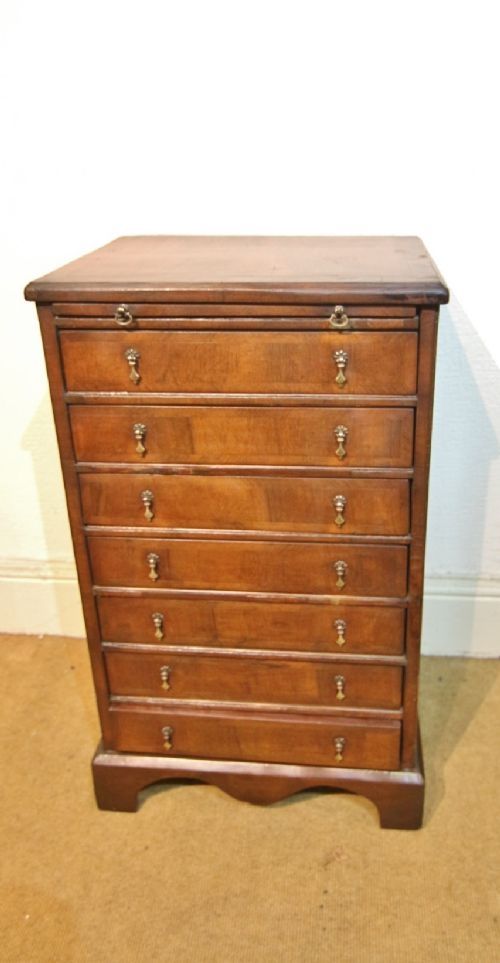
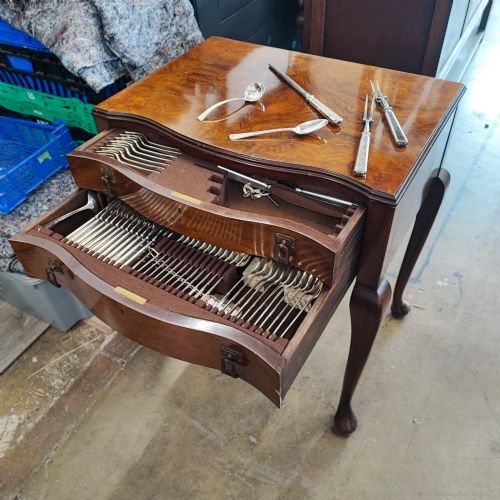

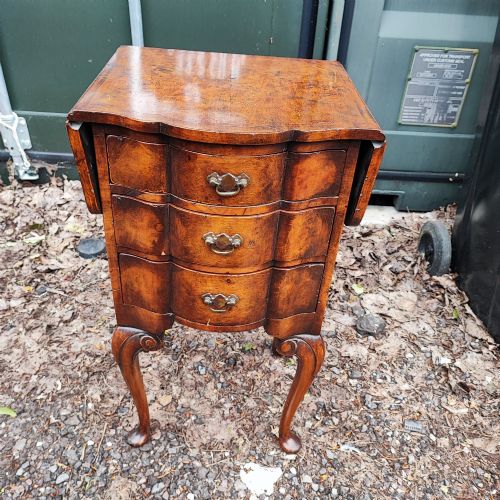
Georgian Style Walnut Cabinet
A georgian style walnut cabinet brings rich grain and classic proportions to a room, offering practical storage disguised as period elegance.
Georgian Style Walnut Cabinet
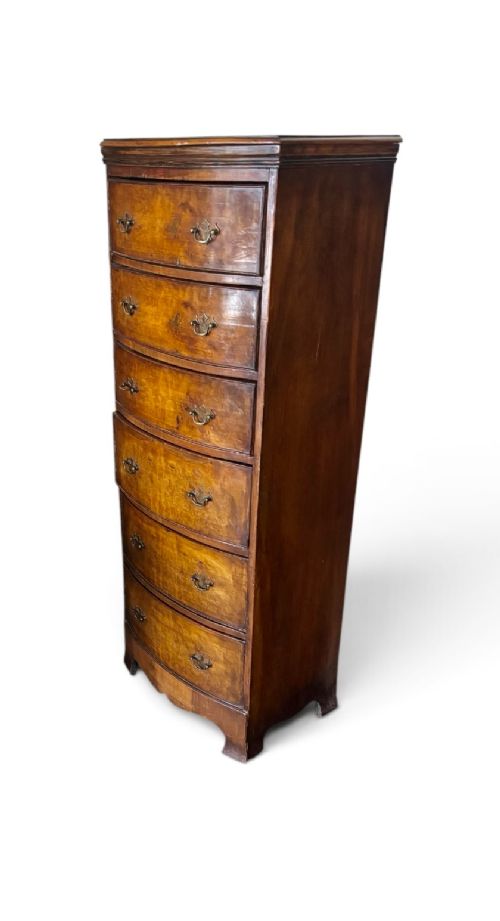
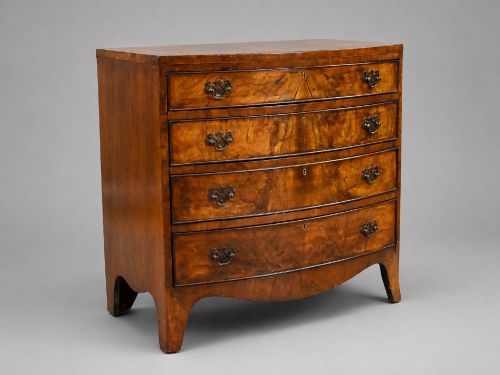
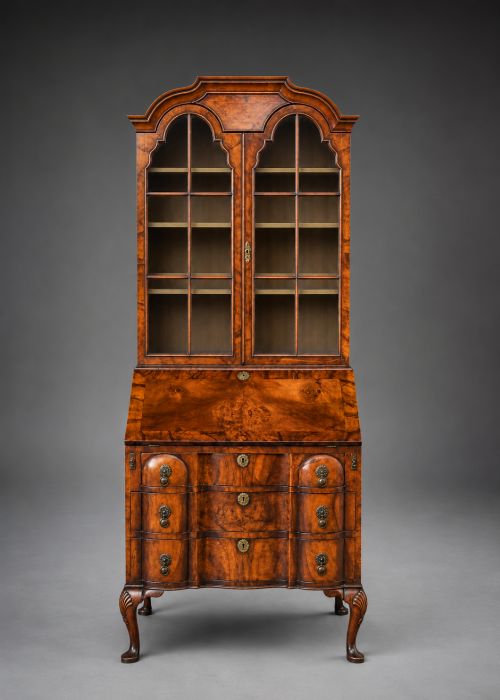
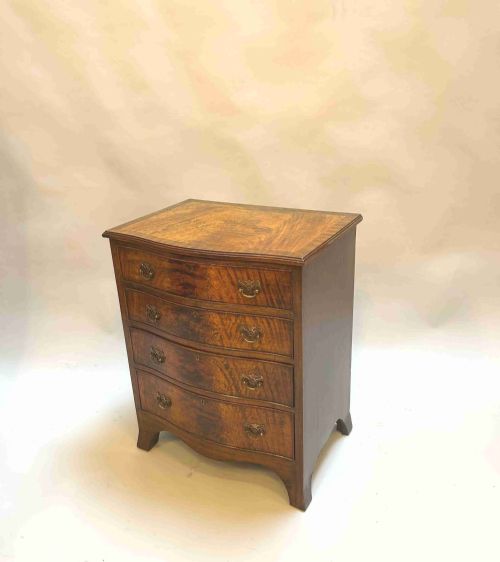
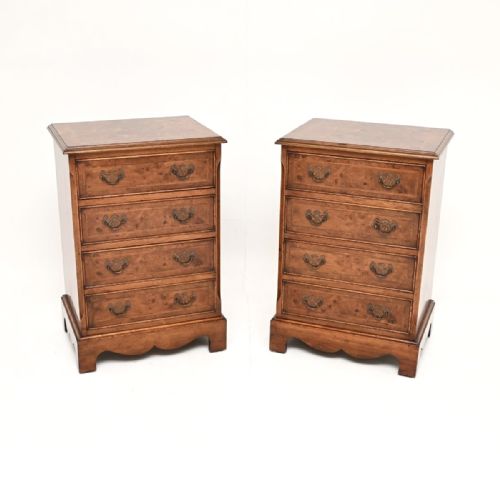
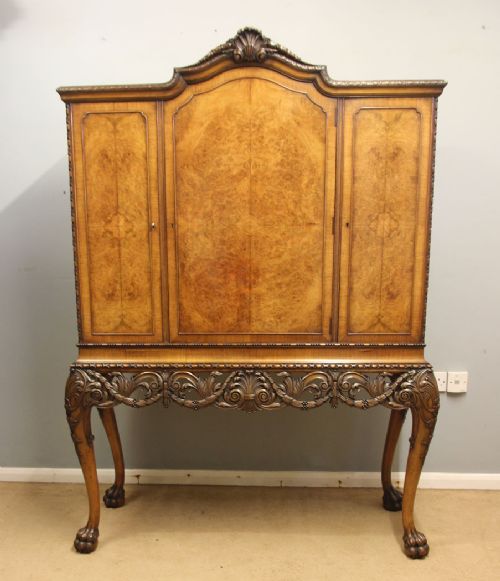
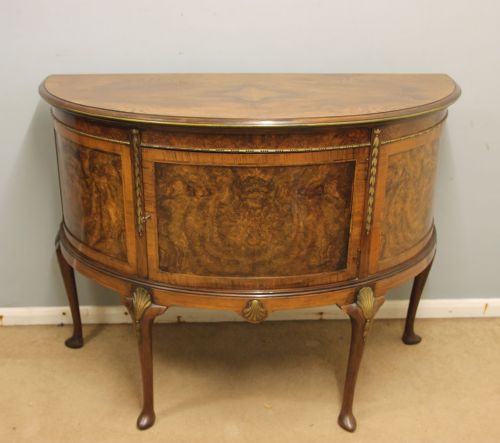
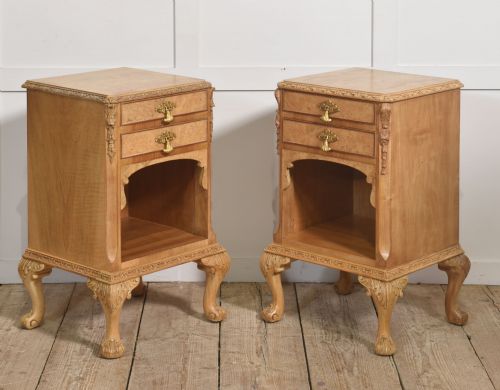
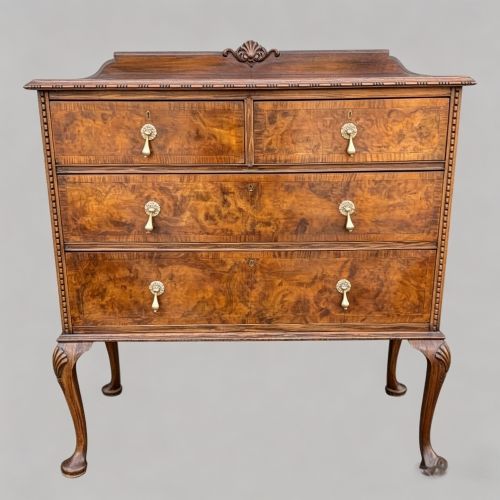
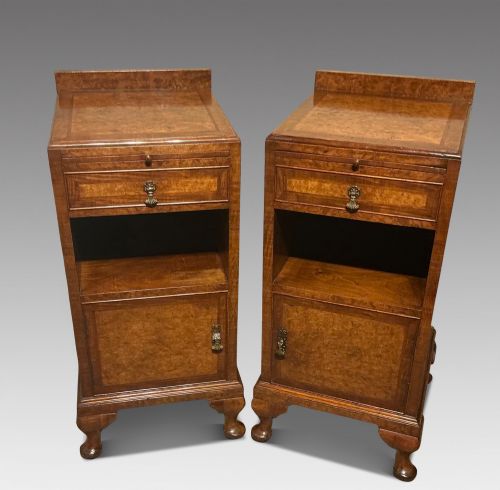
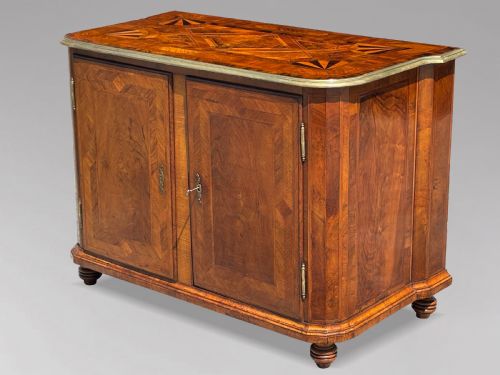
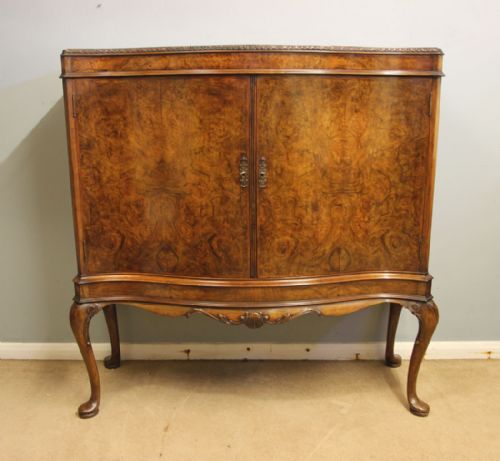
When you search for a georgian style walnut cabinet, you encounter a variety of forms built to solve storage needs with formal elegance. The selection ranges from tall bookcases and breakfront sideboards to bedside chests, side cabinets, and corner cupboards.
Most pieces seen here belong to the early twentieth century and the Edwardian era, when cabinetmakers revived eighteenth-century designs. Alongside these revival pieces, you find genuine eighteenth-century items and nineteenth-century interpretations sharing similar proportions and silhouettes.
How they were made
Makers utilised solid walnut alongside decorative veneers like burr walnut and figured walnut to create rich patterns across large surfaces. These woods were often combined with oak for internal carcases and drawers, while brass handles, escutcheons, and glass panels completed the construction.
Techniques such as crossbanding and feather banding framed the grain patterns on drawer fronts and tabletops. Cabinetmakers relied on traditional joinery to build sturdy corner cabinets, chests, and bookcases designed to endure.
Listings feature walnut, burr walnut veneer, oak, and brass across periods spanning the eighteenth century to the early twentieth century.
What varies in quality
The choice and matching of veneer set pieces apart, particularly how symmetrical and vivid the burr walnut grain appears across doors and drawer fronts. Superior pieces display thoughtful arrangement of timber patterns that flow naturally across the entire facade.
Construction details also define the tier of a piece, from the weight of the brass hardware to the thickness of the walnut used in drawer linings. Finer examples maintain precise alignment in doors and drawers, showing careful hand-finishing by the cabinetmaker.
Maple and Co
The Georgian Style Walnut Cabinet Glossary
- Burr walnut
- A prized veneer taken from the gnarled growths of a walnut tree, showing swirling patterns and intense grain movement. It was frequently applied to the principal surfaces of high-status cabinets and chests.
- Crossbanding
- A narrow strip of veneer laid around the border of a panel or drawer front with the grain running at right angles to the centre. This technique frames the primary wood and adds a neat visual boundary.
- Breakfront
- A piece of furniture where the central section projects forward from the flanking sections. This architectural arrangement creates depth and shadow on sideboards and bookcases.
- Tallboy
- A tall chest of drawers consisting of two sections, traditionally a smaller set of drawers stacked atop a larger base. They provide substantial vertical storage while occupying a compact floor footprint.
- Lowboy
- A small side table with drawers, typically standing on four legs. Eighteenth-century examples often serve as dressing tables or low serving surfaces.
Georgian Style Walnut Cabinet: Frequently Asked Questions
What is a georgian style walnut cabinet used for?
These cabinets serve multiple domestic purposes depending on their specific form, from displaying books and china to storing linen or serving as bedside storage. Their fitted shelves and drawers accommodate modern household items while maintaining a traditional aesthetic.
They function equally well as focal points in living rooms, dining spaces, and bedrooms. The enclosed cupboards and glazed doors keep possessions organised and protected from dust.
How do I distinguish revival pieces from eighteenth-century originals?
Revival pieces from the Edwardian era or the early twentieth century often display machine-cut dovetails and standardised interior fittings beneath their traditional exteriors. Examining the secondary woods inside drawers and behind panels reveals the characteristic construction methods of later decades.
Eighteenth-century examples show hand-cut joinery, timber shrinkage appropriate to great age, and specific patination on the surfaces. Cabinet construction hardware and screw types also help indicate the true period of manufacture.
How do I care for walnut furniture?
Walnut benefits from stable room temperatures and protection from direct sunlight, which can fade the warm tones of the timber. Regular dusting with a soft, dry cloth preserves the finish without requiring heavy polishes.
Applying a traditional beeswax occasionally helps nourish the veneer and maintain the natural lustre of the wood. Avoiding placement near direct heat sources prevents the timber and veneer from drying out.
What is the difference between burr walnut and figured walnut?
Burr walnut derives from the abnormal growths on walnut trees, resulting in dense, swirling cluster patterns that create dramatic visual movement. It was typically reserved for the most prominent display surfaces.
Figured walnut refers to timber cut from normal sections of the tree that exhibit strong, rippled grain variations rather than tight knots. Both types offer distinctive decorative qualities compared to plain straight-grained walnut.