

Georgian Style Serpentine Chest
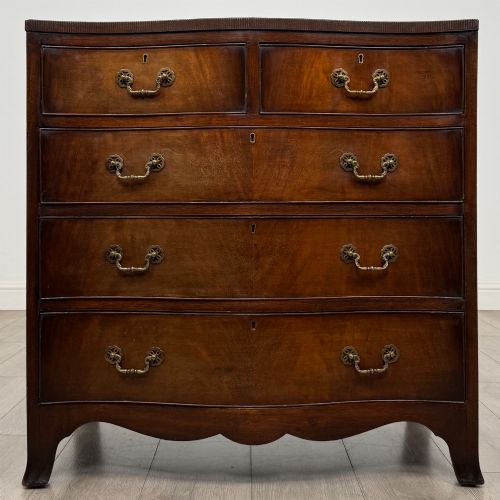
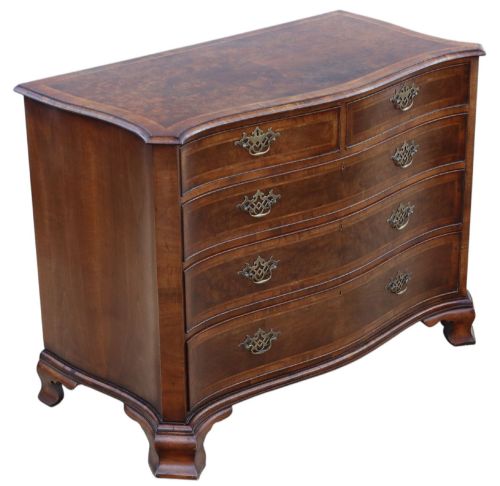
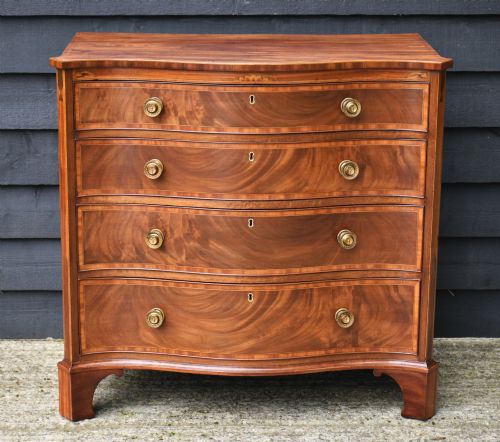
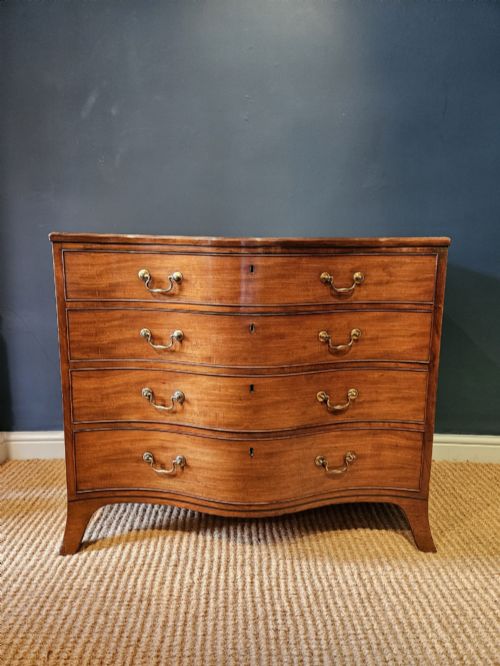
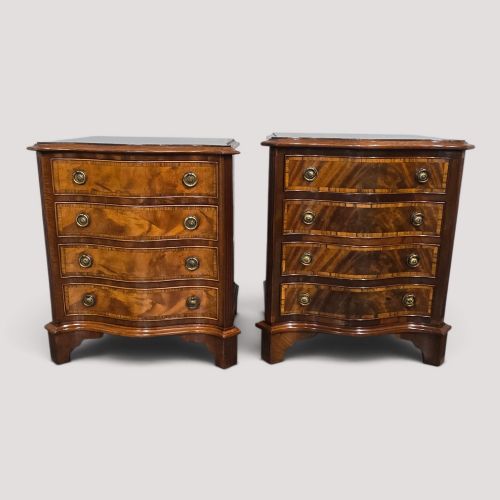
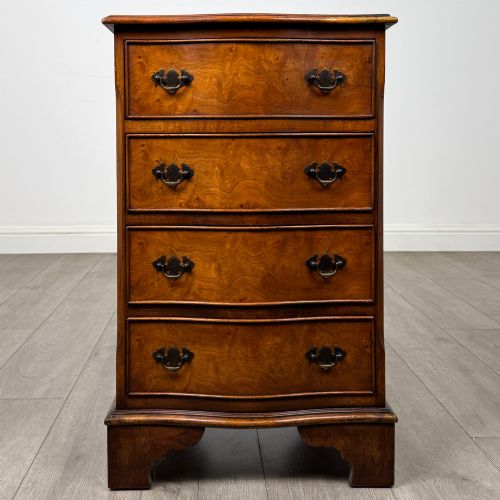
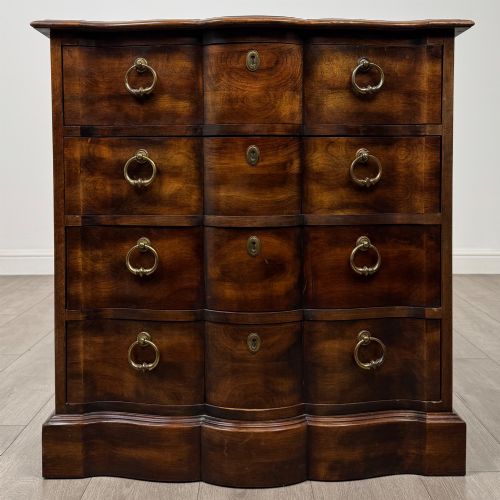
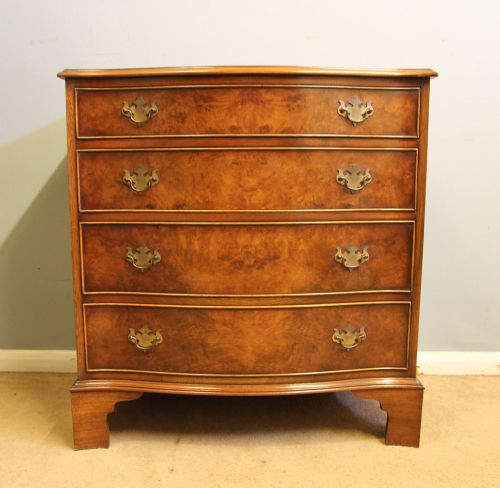
A georgian style serpentine chest brings sweeping movement and deep wood figures to a room, drawing the eye with its curved drawer fronts.
Georgian Style Serpentine Chest
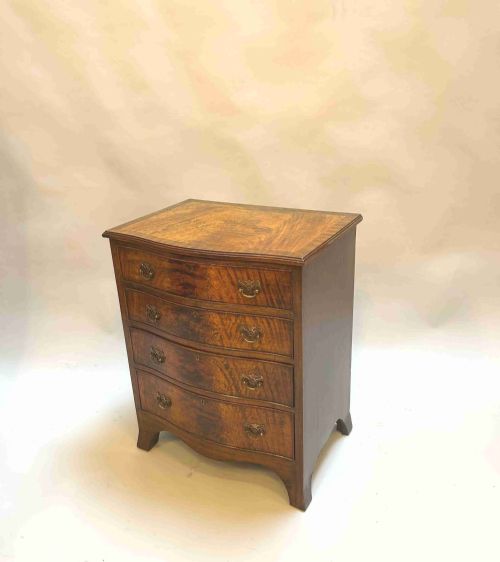
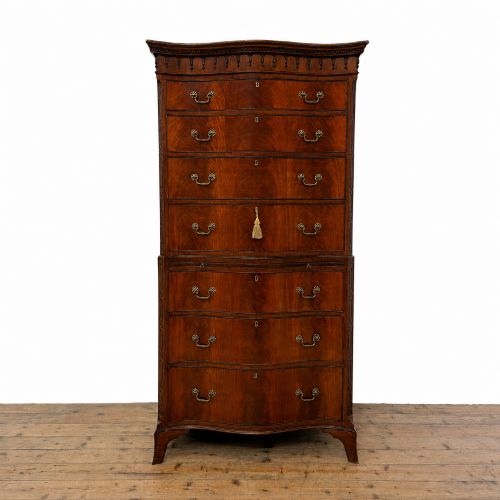
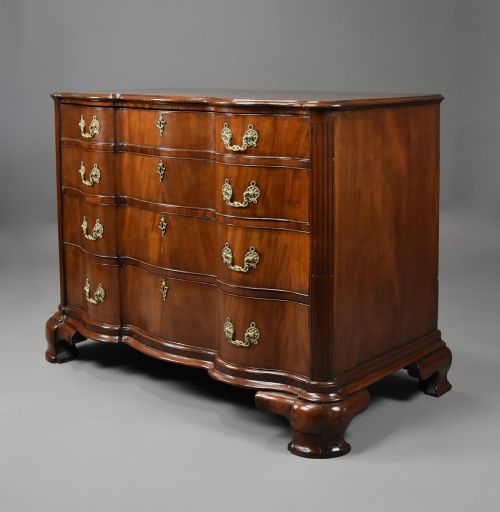
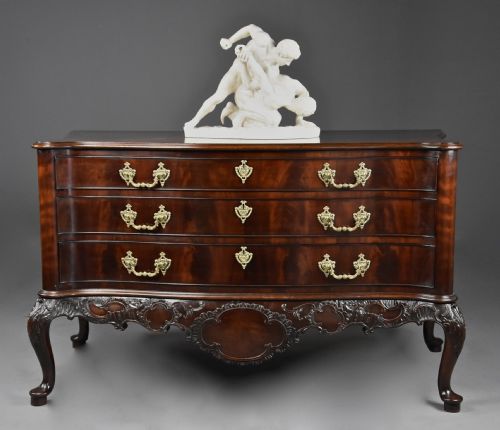
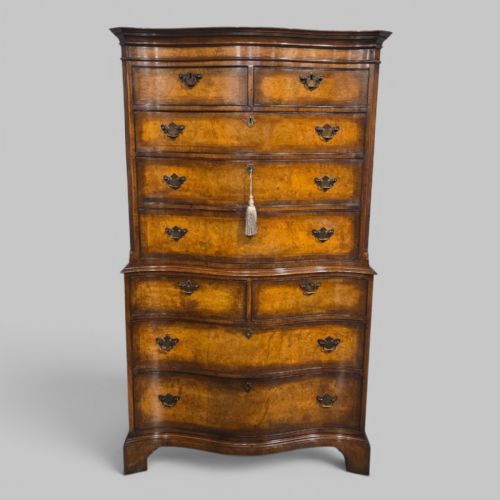
The versions met most frequently on this page span the original eighteenth-century period and the later revival eras of the nineteenth and twentieth centuries. These pieces appear in forms ranging from compact bedside lamp chests to large commodes and tall chests on chests.
How they were made
Cabinet makers constructed these curved forms primarily using solid timbers and applied veneers over supportive secondary woods. Mahogany and various cuts of walnut form the core structural and visual surfaces.
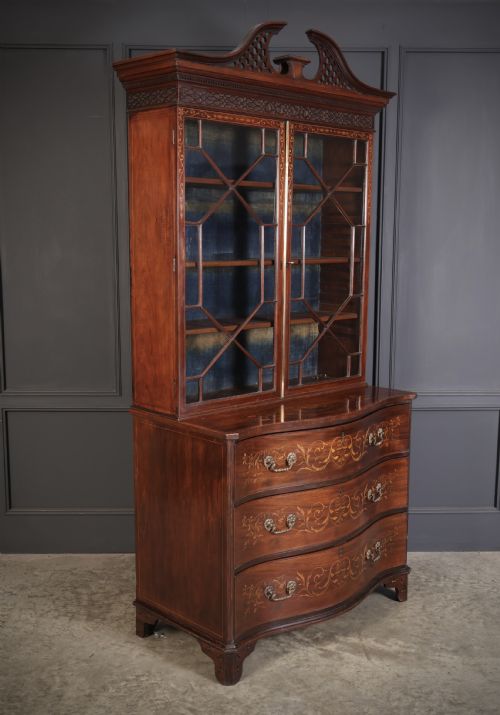
Detailed decoration relied on specialist techniques such as crossbanding, marquetry inlay, and carved wooden details to enhance the figured wood grains. Brass handles and escutcheons completed the drawer fronts.
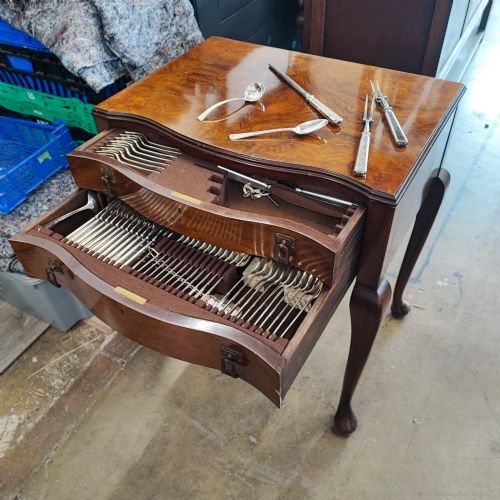
Object types vary from compact bedside lamp chests and side tables to large commodes and towering chests on chests.
What varies in quality
The skill of the timber selection dictates the visual impact, particularly where figured mahogany or burr walnut veneers flow symmetrically across the curved drawer fronts. Higher-grade examples maintain crispness in the carved mouldings and precision in the joinery of the serpentine curves.
Proportion and execution distinguish cabinet work, as maintaining a smooth and consistent sweep requires advanced carpentry. The integration of period-appropriate brass hardware and secondary woods further separates superior pieces from standard workshop output.
The Georgian Style Serpentine Chest Glossary
- Serpentine
- A furniture front shaped with a convex curve flanked by two concave curves, creating a wave-like profile. This undulating form requires precise carpentry to execute across multiple drawers.
- Commode
- A decorative chest of drawers or cabinet originating in France, often applied to grander Georgian and Continental pieces. These items typically sit lower and wider than standard tall chests.
- Crossbanding
- A decorative border of veneer laid around the perimeter of a drawer front or tabletop so the grain runs perpendicular to the central panel. This technique frames the primary wood figure.
- Marquetry
- The art of creating decorative patterns by fitting together small pieces of tinted woods, veneers, and shell. Craftsmen apply these intricate designs to the main surfaces of furniture.
- Tallboy
- A tall chest of drawers made in two sections, often combining a chest of drawers base with a smaller chest or linen press on top. This form maximises vertical storage capacity.
Georgian Style Serpentine Chest: Frequently Asked Questions
What is a serpentine chest?
A serpentine chest is a set of drawers featuring a front edge curved in a wave pattern, curving outward in the middle and inward at the sides.
Cabinet makers developed this shape during the eighteenth century to add visual depth and sculptural movement to domestic storage furniture.
How do I date a serpentine chest?
Dating relies on examining the secondary woods inside the drawers, the construction methods used on the carcass, and the style of the hardware.
Original eighteenth-century pieces display distinct hand-cut dovetails and timber characteristics that differ from later revival pieces made around nineteen-twenty.
Where should I place a serpentine chest?
These chests suit living rooms, hallways, or bedrooms where the curved front can be viewed without obstruction.
Placing the piece against a flat wall allows the undulating lines of the drawers to catch light and cast subtle shadows.
What woods were used for these chests?
Makers predominantly utilised mahogany, burr walnut, and satinwood for the visible exterior surfaces and decorative veneers.
Secondary timbers such as oak and pine commonly form the internal drawer linings and structural framing hidden from view.