


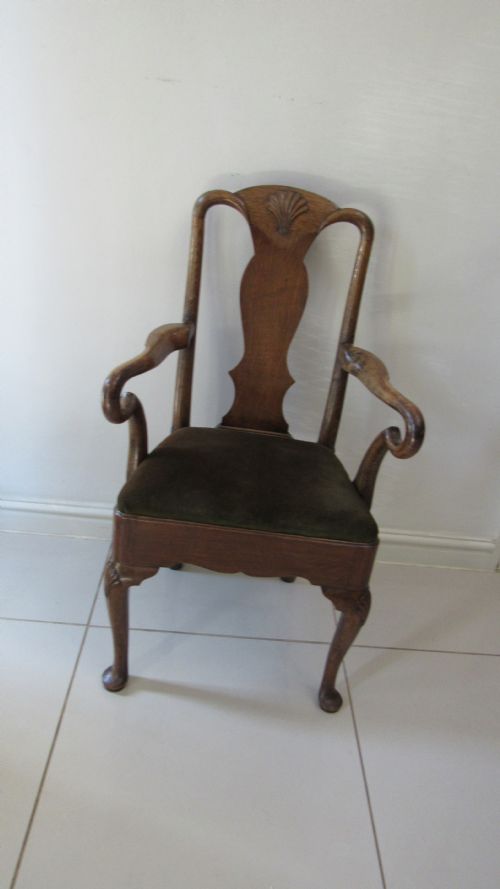


Georgian Style Nursery Seating
Georgian style nursery seating brings diminutive period craftsmanship into the home, offering miniature chairs designed for children with full-scale architectural dignity.
Georgian Style Nursery Seating
When you search for georgian style nursery seating, you encounter small-scale chairs made to accommodate children within domestic spaces of earlier centuries. The pieces on this page span the Georgian, Regency, and Victorian eras through to early twentieth-century revivals.
You are most likely to meet mahogany and walnut childs armchairs, rocking chairs, and high chairs carrying stylistic markers from the eighteenth and nineteenth centuries. These smaller forms replicate the prevailing furniture fashions of their parent eras, from Queen Anne style curves to Windsor construction.
The selection includes specific regional and workshop variations, such as childs windsors and corner chairs, alongside pairs of nursery chairs upholstered in tapestry textile or leather. Each piece demonstrates how historical cabinetmakers scaled down their main seating designs for younger occupants.
How georgian style nursery seating was made
Cabinetmakers constructed these miniature seats using sturdy hardwoods like mahogany, walnut, and oak, often incorporating cane or textile panels into the backs and seats. Timber selection mirrored full-sized furniture production, ensuring the small frames could withstand the daily use of a nursery.
Joinery methods relied on traditional mortise and tenon joints, turned spindles, and steam-bent components, particularly evident in childs windsors and rocking chairs. Upholstered examples employed period textiles, tapestry, and leather stretched over padded frames.
Some miniature rocking chairs spent more time entertaining restless infants than any full-sized armchair ever managed.
What varies in quality
The distinction between ordinary and exceptional pieces lies in the fidelity of proportion and the crispness of the carved details. A superior chair maintains the architectural integrity of its full-sized counterpart rather than appearing like a clumsy toy.
Material selection and timber figuring also drive the hierarchy, with burr walnut and dense mahogany framing achieving greater visual presence. Original surface patination and intact structural joinery separate well-preserved examples from those subjected to heavy alterations.
The Georgian Style Nursery Seating Glossary
- Windsor
- A chair built with a solid wooden seat into which the legs and back spindles are direct-tenoned. This vernacular method provides robust stability for domestic seating.
- Cabriole leg
- A furniture leg that curves out and then in, resembling an animal's curving leg. It typically terminates in a pad or claw foot.
- Spindle
- A cylindrical, turned wooden rod used to form the backs and structural supports of chairs. Turnings indicate the stylistic period of the piece.
- High chair
- An elevated childs chair mounted on a tall base or frame to reach table height. These functional pieces combined safety rails with miniature seating.
Georgian Style Nursery Seating: Frequently Asked Questions
Were these miniature chairs actually used by children?
Yes, these scaled-down seats served everyday domestic functions in nurseries and family rooms. They allowed children to sit at table height or rest in dedicated rocking chairs.
Over generations, many survived through careful familial preservation rather than heavy active service. Their durable hardwood construction ensured they could handle regular use by young occupants.
How do I identify a genuine period piece?
Examine the timber species, joinery techniques, and tool marks visible on the underside and structural joints. Period pieces display hand-cut joinery and natural patination accumulated over centuries.
Revival pieces from later decades often imitate earlier styles like Queen Anne or George II. Comparing the turning details and wood ageing helps clarify the date of manufacture.
What is the difference between nursery chairs and childs chairs?
Nursery chairs often refer to low-slung seating used by adults or children near the fireplace or nursery floor. Childs chairs specifically denote seating proportioned for younger occupants.
Both categories utilise similar stylistic vocabulary from the Georgian and Regency periods. The distinction usually rests on the specific height and intended ergonomics of the seat.
How should I care for antique wooden seating?
Keep wooden chairs away from direct sunlight and sudden temperature shifts to prevent timber splitting. Maintain stable indoor humidity levels to protect both the solid frames and any cane work.
Apply occasional microcrystalline wax to nourish the wood surface and preserve the historic finish. Avoid harsh chemical cleaners that strip the accumulated patination.