

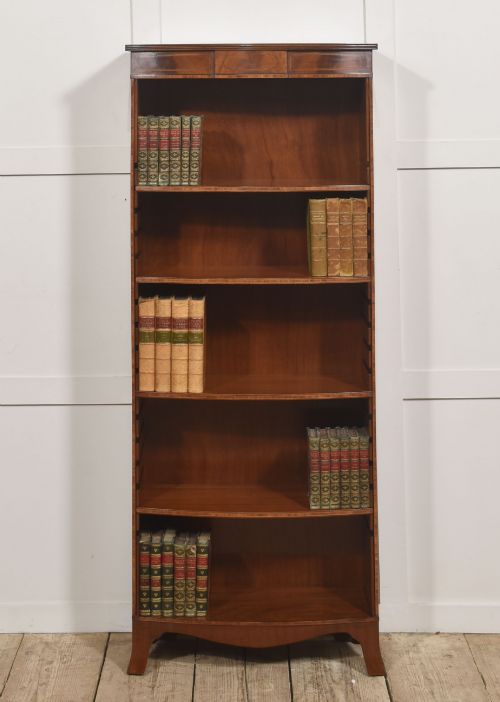


Georgian Style Narrow Shelves
Georgian style narrow shelves bring compact proportion and classic revival character to any room, offering versatile open storage for modest spaces.
Georgian Style Narrow Shelves
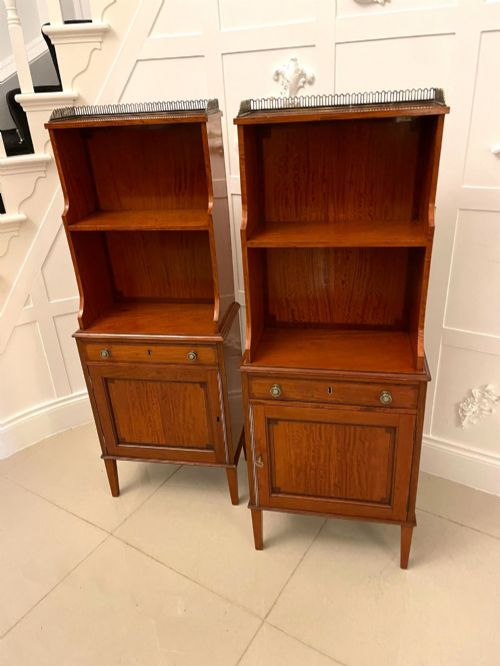
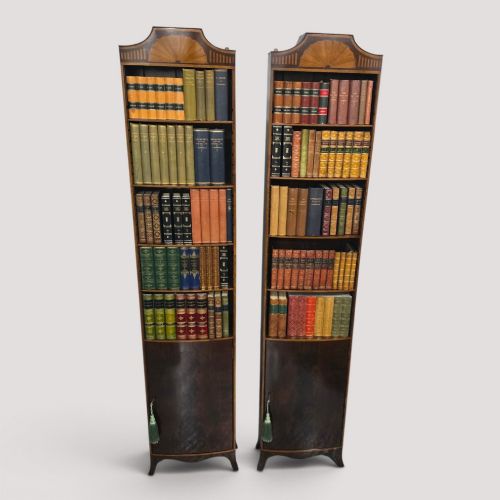
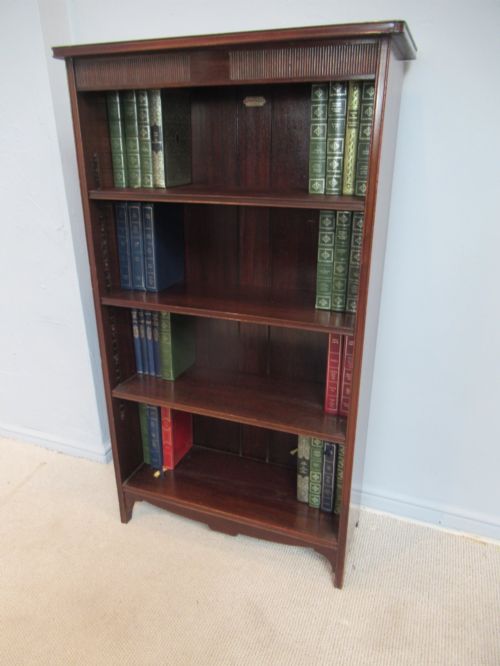
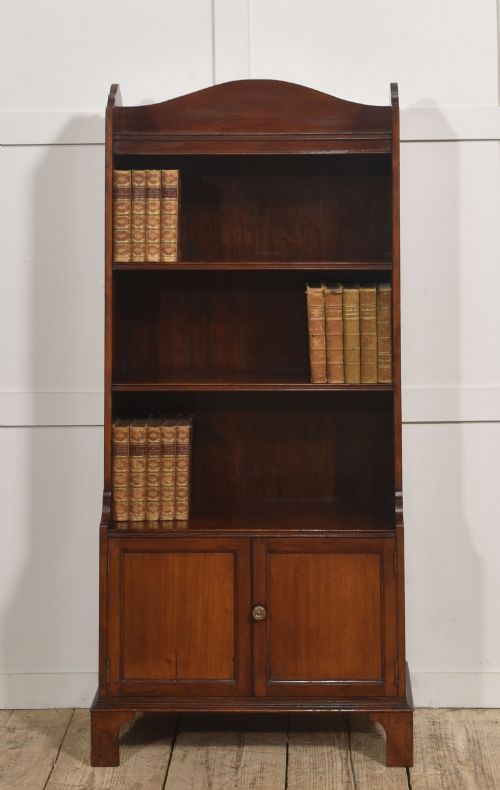
When you search for georgian style narrow shelves, you encounter slim open bookcases, compact corner cabinets and slender shelving units produced across the late nineteenth and twentieth centuries. These pieces reflect revival aesthetics including Edwardian, Georgian Revival, Sheraton Style, Sheraton Revival, Regency and Queen Anne Revival designs.
You are most likely to meet mahogany open bookcases and slim walnut or burr walnut shelving from the Edwardian period and around nineteen hundred. Makers and workshops utilised fine timbers and restrained proportions to create space-efficient storage suitable for smaller rooms and libraries.
How they were made
Cabinet makers constructed these narrow shelves primarily in solid mahogany, walnut, burr walnut, oak and yew wood, often applying decorative veneers and contrasting stringing. Satinwood inlay, boxwood and fruitwood inlay frequently embellish the surfaces of revival pieces.
Many examples incorporate adjustable shelving mechanisms supported by brass hardware, allowing flexibility within compact dimensions. Workshops paired traditional joinery with fine surface polishing to highlight the natural grain of the timber.
Georgian Style Narrow Shelves Retail Price Guide 2026
Typical asking prices for georgian style narrow shelves among the pieces listed under this phrase on Sellingantiques today, from the lower quarter to the upper quarter. They describe what is for sale here now, not the wider market.
Materials recorded on this page include mahogany, burr walnut, walnut, oak, yew wood, satinwood, boxwood, fruitwood and brass.
What varies in quality
The degree of refinement in the timber selection and inlay work separates simpler utility pieces from finer cabinetmaking. Richly figured burr walnut, select mahogany and intricate satinwood or boxwood inlay indicate greater workshop ambition.
Proportion and the handling of classical revival details distinguish superior examples. Slim corner cabinets and matched pairs demonstrate careful planning and balanced execution by skilled makers.
Gillows·Waring and Gillows
The Georgian Style Narrow Shelves Glossary
- Georgian Revival
- A decorative movement spanning the late nineteenth and twentieth centuries that reinterprets eighteenth-century furniture forms. Designers drew inspiration from Chippendale, Sheraton and Hepplewhite designs.
- Waterfall bookcase
- A tiered set of open shelves where each successive shelf steps back from the one below it. This stepped silhouette creates a cascading profile popular in Edwardian and early twentieth-century furniture.
- Inlay
- A technique where pieces of contrasting timber or metal are inserted into depressions within a solid wood base to form decorative patterns. Boxwood, fruitwood and satinwood are typical inlay materials found on revival bookcases.
- Burr walnut
- A prized timber harvested from the gnarled growth of a walnut tree, yielding rich, swirling grain patterns. It was frequently utilised for decorative veneer on high-quality cabinet doors and tabletops.
Georgian Style Narrow Shelves: Frequently Asked Questions
What periods do these narrow shelves come from?
The pieces listed across this page date from the late nineteenth century through the mid twentieth century. Most examples originate from the Edwardian era and the decades around nineteen hundred and nineteen ten.
Revival styles such as Sheraton, Regency and Queen Anne heavily influence the design vocabulary of this era. Makers continued interpreting these classical proportions well into the nineteen thirties and nineteen sixties.
Are these shelves adjustable?
Many of the open bookcases and slim shelving units feature adjustable shelf mechanisms. This practical design allows owners to alter shelf heights to accommodate books of varying sizes.
Pairs of open bookcases and single cabinets often combine adjustable internal space with compact footprints. This makes them particularly adaptable for modern room layouts.
What woods were used for these bookcases?
Mahogany remains the predominant timber across these listings, accompanied by walnut, burr walnut, oak and yew wood. Workshops frequently enhanced mahogany carcases with contrasting inlay.
Satinwood, boxwood and fruitwood appear regularly as stringing and decorative banding. These lighter timbers provide crisp visual contrast against darker primary woods.
How do I distinguish corner cabinets from bookcases?
Corner cabinets are specifically built with angled backs designed to fit neatly into room intersections. They often feature enclosed cupboard doors or glazed upper sections rather than purely open shelves.
Bookcases present flat rectangular profiles intended for placement against straight walls. Open shelving formats predominate among the narrow bookcase designs seen here.