



Narrow Mahogany Book Shelves
These narrow mahogany book shelves bring compact warmth and period character to tight spaces.
Narrow Mahogany Book Shelves
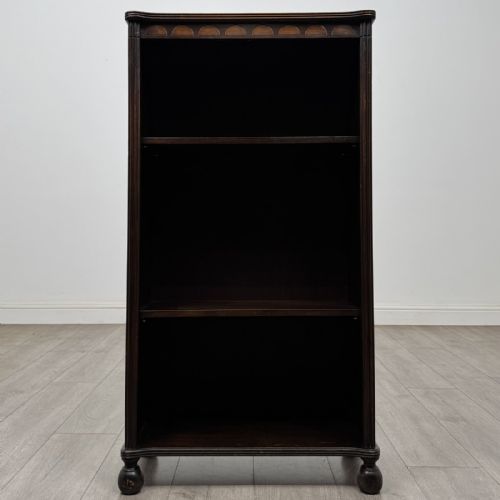
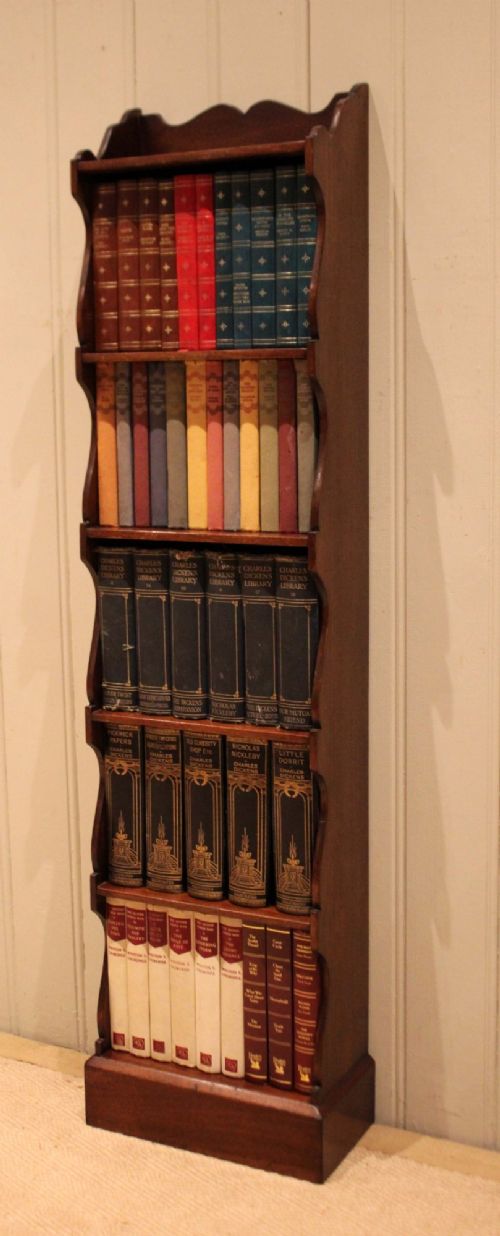
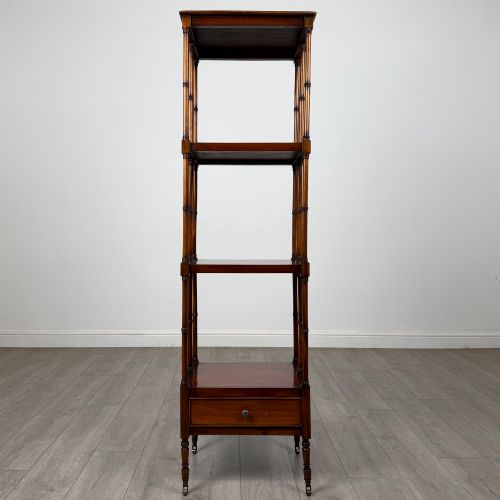
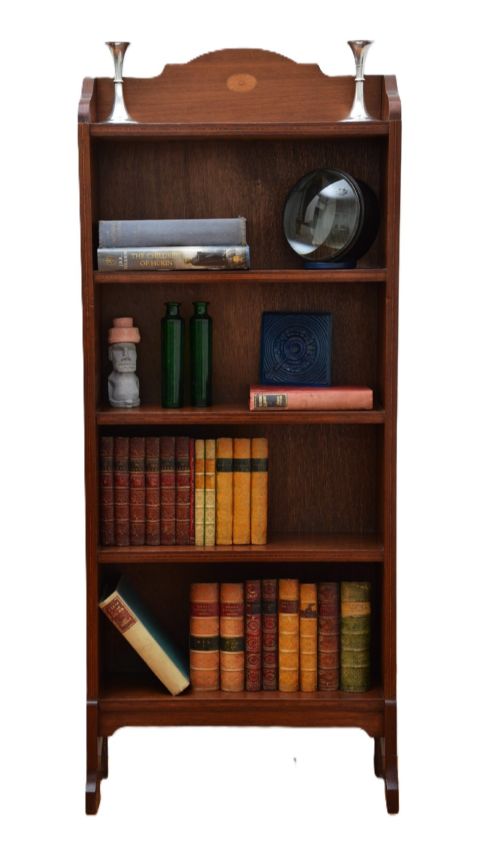
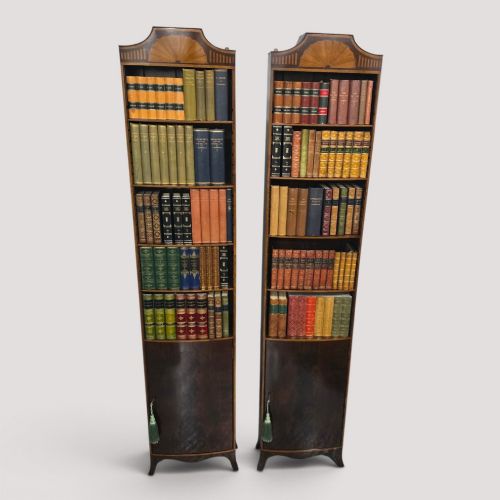
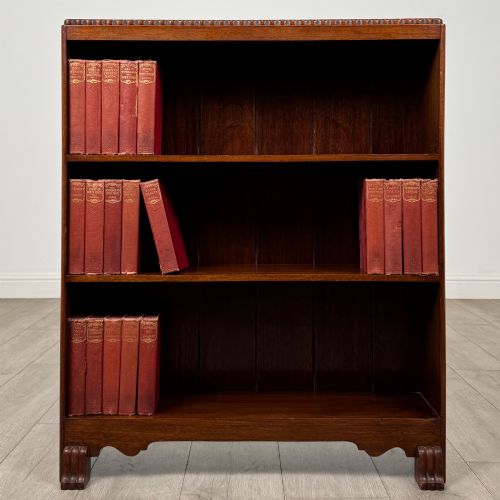
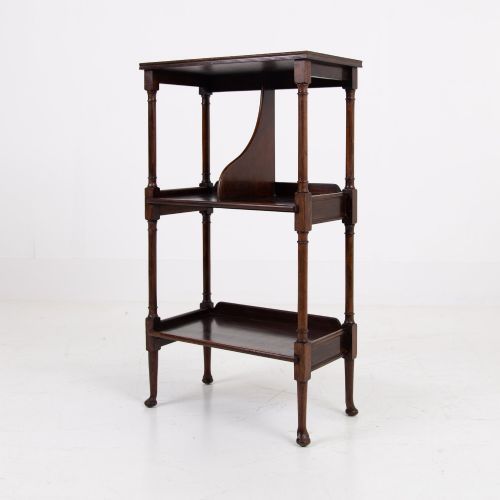
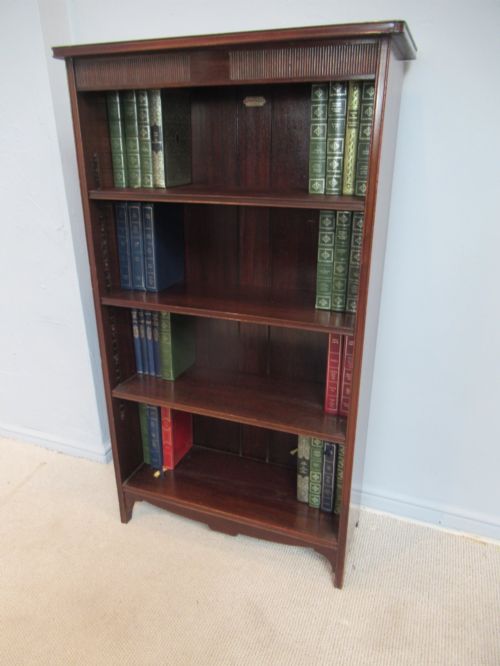
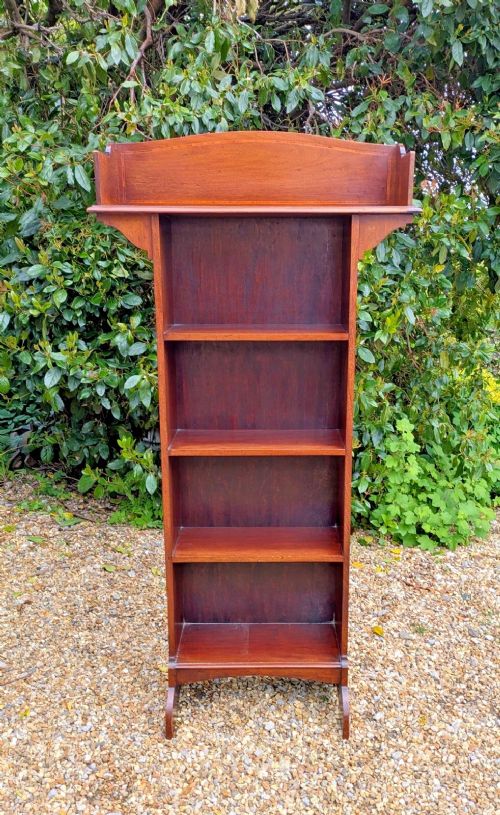
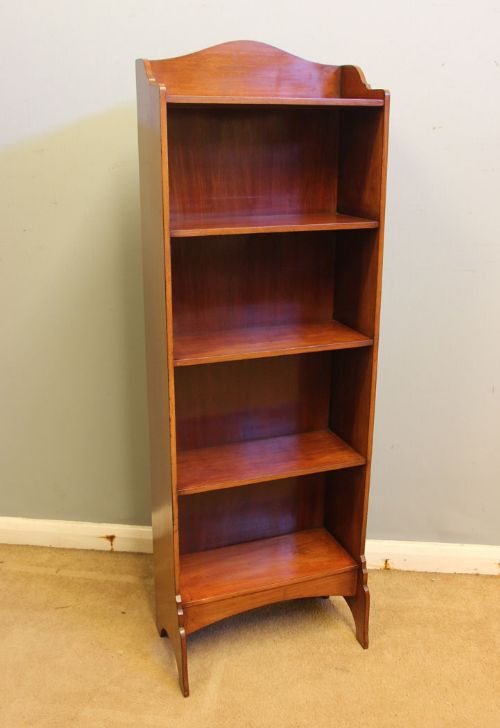
Buyers seeking narrow mahogany book shelves encounter compact storage solutions designed to fit restricted wall spaces without sacrificing elegance. These pieces primarily take the form of open library bookcases, whatnots, and corner cabinets originating from various periods.
Makers and designers from these eras utilised the slender proportions to serve studies, drawing rooms, and modest sitting rooms. Buyers are most likely to meet Edwardian and early twentieth-century interpretations alongside nineteenth-century antecedents.
How they were made
Makers built these narrow mahogany book shelves using solid mahogany and mahogany veneers, frequently incorporating satinwood inlay to add decorative contrast. The timber provides a deep, warm grain that defines the visual presence of each cabinet.
Metal elements such as brass and ormolu mounts appear on select pieces to accent the woodwork, particularly on Revival and French Empire influenced items. Construction methods focus on adjustable open shelving or enclosed cupboard lower sections to balance utility with decorative refinement.
Narrow Mahogany Book Shelves Retail Price Guide 2026
Typical asking prices for narrow mahogany book shelves among the pieces listed under this phrase on Sellingantiques today, from the lower quarter to the upper quarter. They describe what is for sale here now, not the wider market.
The listings on this page span from eighteen eighty through nineteen thirty, covering Victorian, Edwardian, and early twentieth-century eras in mahogany.
What varies in quality
Quality in these items is determined by the crispness of the cabinetwork and the subtlety of the decorative details, such as delicate satinwood inlay or cast ormolu mounts. Finer examples display superior timber selection with consistent grain patterns across the visible surfaces.
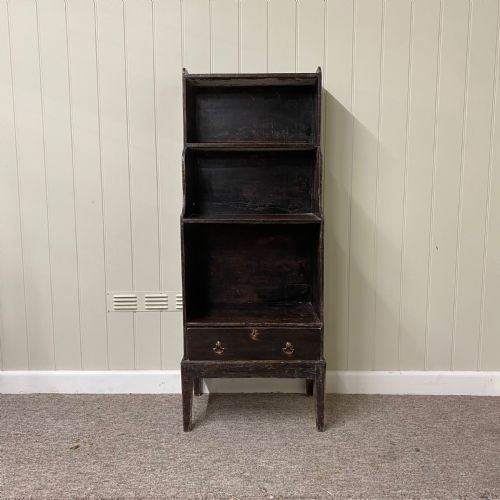
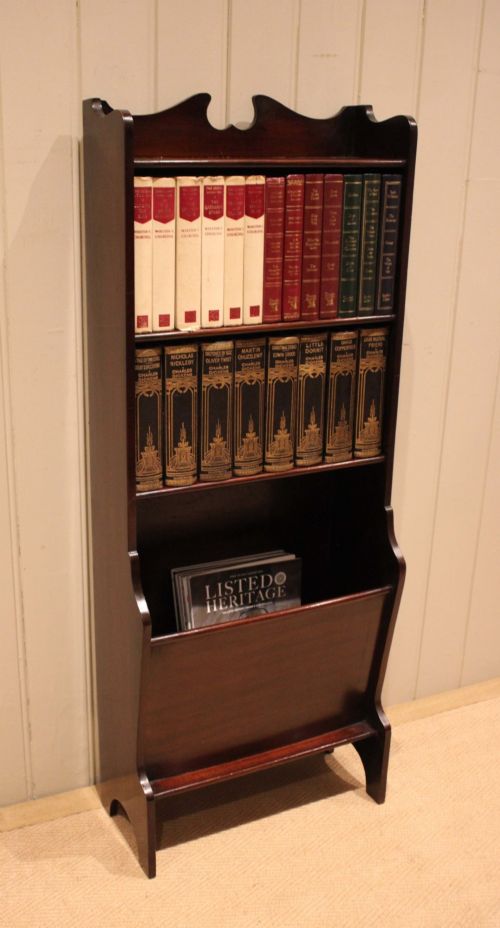
The sophistication of the Revival style employed, whether capturing Regency elegance or Sheraton delicacy, dictates the overall refinement of the piece. Proportion and structural cleverness, such as integrated magazine racks or waterfall tiers, further distinguish exceptional pieces from standard utility items.
Waring and Gillows
The Narrow Mahogany Book Shelves Glossary
- Mahogany
- A durable tropical hardwood known for its rich reddish-brown colour and fine grain. It forms the primary structural and visual basis for these bookcases.
- Satinwood Inlay
- Decorative contrasting wood work inserted into the mahogany surface to create geometric or floral patterns. This technique highlights the craftsmanship of Sheraton Revival pieces.
- Whatnot
- A piece of furniture consisting of a set of open shelves for displaying small objects or books. These often double as side tables or corner units.
- Ormolu
- Gilded bronze applications mounted onto furniture for decorative effect. It appears on select nineteenth-century pieces to accentuate the Regency or French Empire aesthetic.
- Waterfall Bookcase
- A stepped set of open shelves where each tier is narrower than the one below. This design originates in the Regency period and offers a cascading profile.
Narrow Mahogany Book Shelves: Frequently Asked Questions
Where do I put a narrow bookcase?
These compact pieces fit easily into alcoves, narrow hallways, or small study spaces where standard furniture overwhelms the room. Their slender footprints allow for practical book storage without sacrificing floor space.
Positioning them beside a fireplace or between windows makes the most of awkward corners while adding period character to the interior.
How do I adjust the shelves?
Many period bookcases feature adjustable shelving supported by traditional wooden racks or metal pins. This allows you to alter the shelf heights to accommodate volumes of varying sizes.
Take care when moving the shelves not to force tight wooden grooves, ensuring the internal linings remain undamaged.
What is a whatnot?
A whatnot is a multi-tiered piece of furniture designed for displaying books, ornaments, or small items. In narrow formats, they function as versatile side tables with open vertical storage.
Victorian and Edwardian makers favoured them for adding display space to drawing rooms and parlours.
How do I identify a Regency Revival piece?
Regency Revival items draw upon the classical motifs and clean lines of the early nineteenth century, though they were typically manufactured around nineteen hundred. Look for balanced proportions, restrained decorative mounts, and graceful upright supports.
These pieces combine earlier aesthetic ideals with the practical requirements of Edwardian homes.