
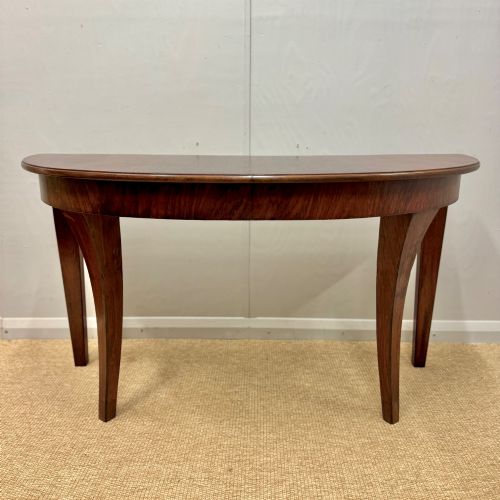


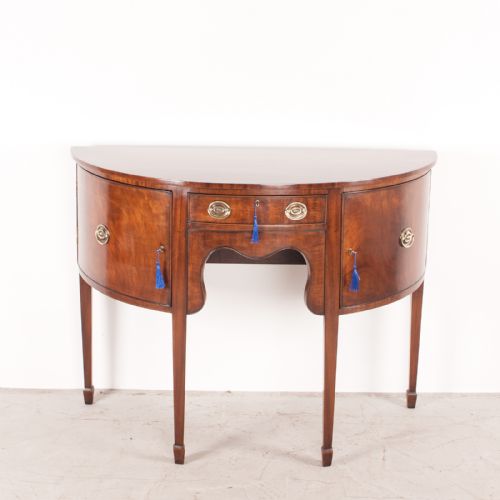


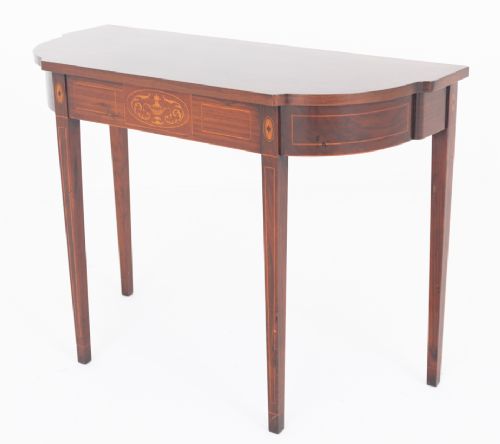

Georgian Style Demilune
A georgian style demilune is a semicircular table built to stand flat against a wall, combining elegant curved geometry with practical surface space.
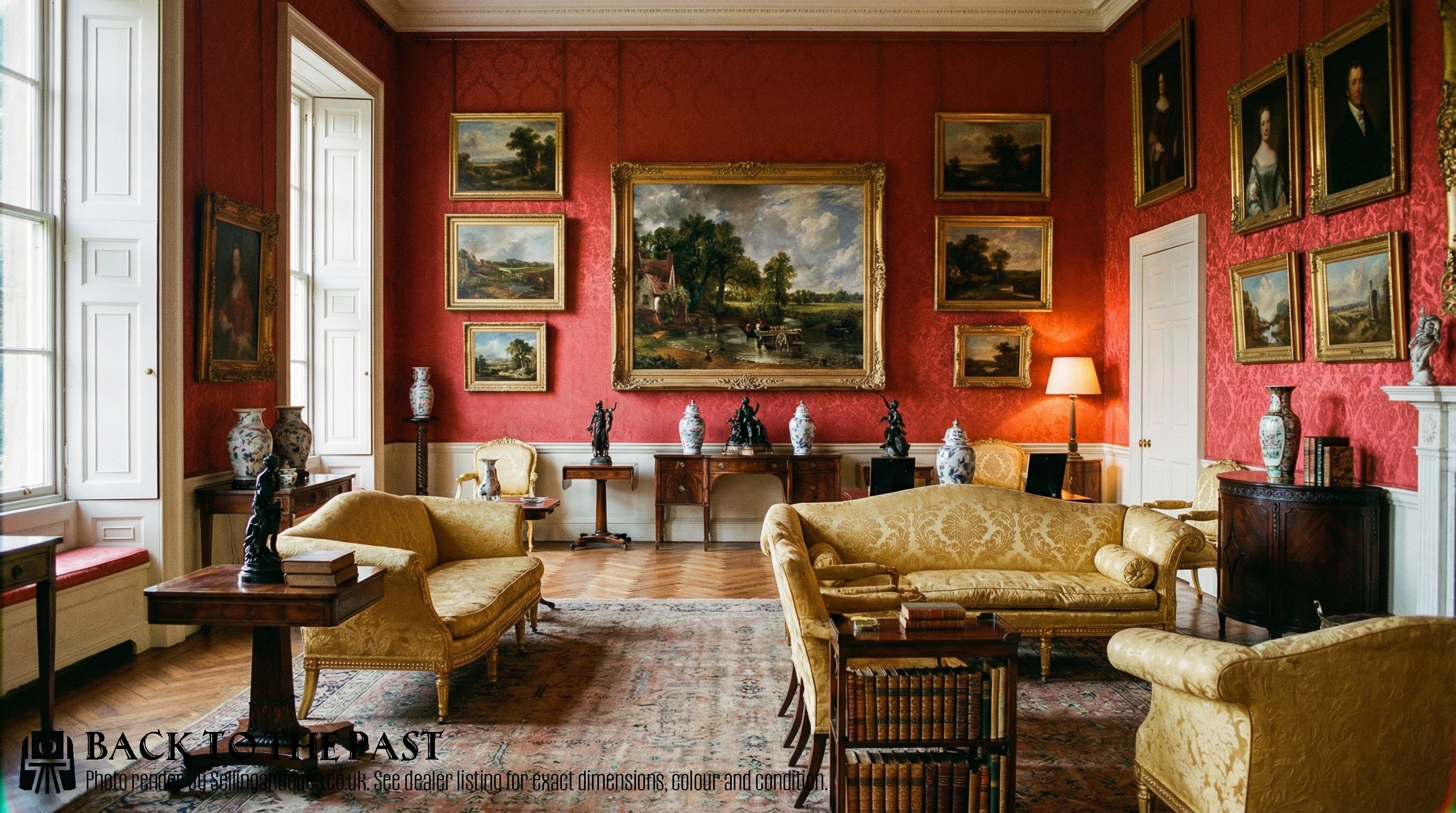
Georgian Style Demilune
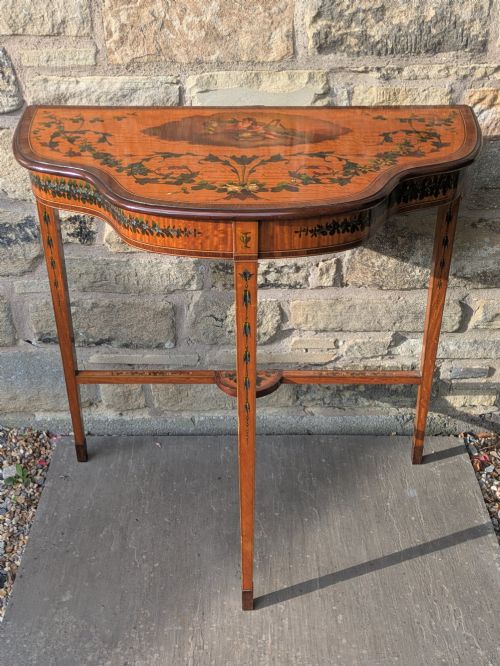
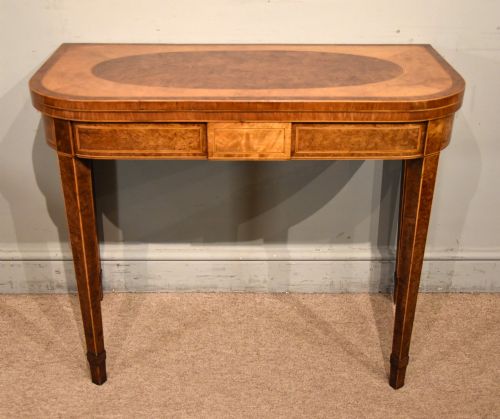
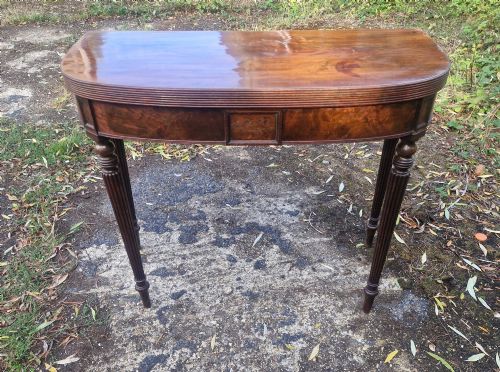
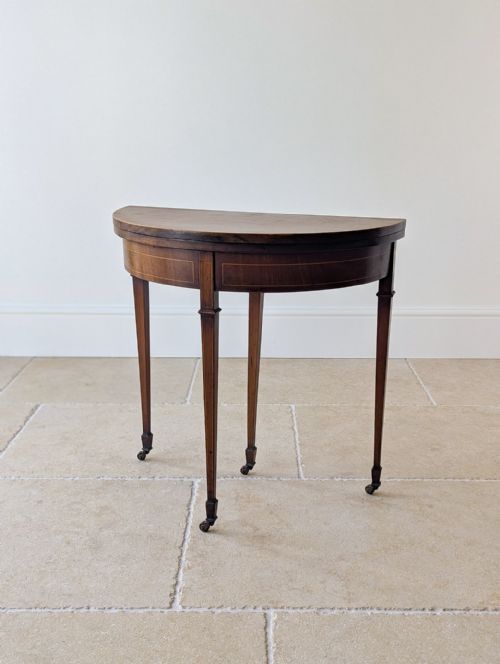
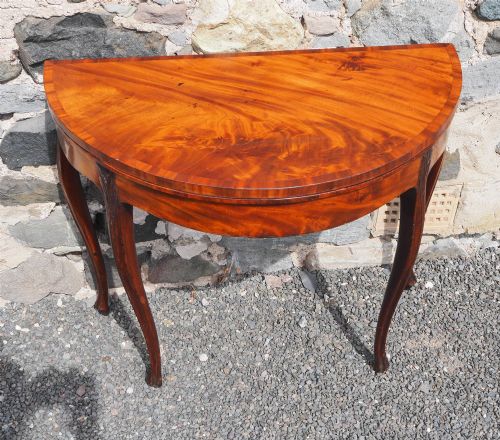
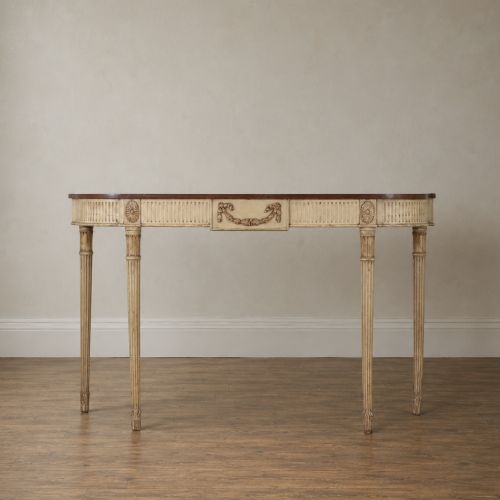
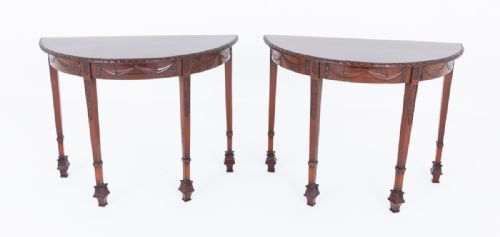
A georgian style demilune typically takes the form of a console, card, or side table featuring a flat straight back edge that sits flush against a wall and a curved front. The selection includes genuine pieces from the eighteenth and nineteenth centuries alongside later revivals from the Edwardian era and the early twentieth century.
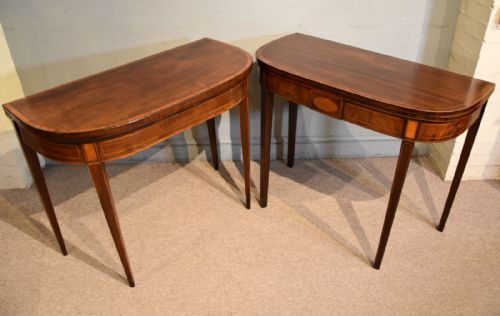
Card and games tables predominate among the surviving examples, often designed with fold-over tops that double their surface area when opened. Console tables and side cabinets also appear frequently, serving functional roles in halls and principal rooms.
Materials and construction
Mahogany forms the primary structural timber across the majority of these tables, frequently enhanced by contrasting veneers of satinwood, rosewood, and burr walnut. Inlays of boxwood and decorative crossbanding define the curved edges and perimeters of the top surfaces.
Secondary woods provide stability beneath the decorative veneers, while specialised techniques allow timber to follow the tight curves of the semicircular frame. Brass hinges and subtle hardware secure the folding mechanisms on card table variants.
Listings span the eighteenth, nineteenth, and early twentieth centuries, featuring wood varieties such as mahogany, satinwood, and burr walnut.
Distinctions in craftsmanship
Finer examples distinguish themselves through the precision of their timber selection, utilising figured burr woods and intricate satinwood banding that align harmoniously across the curved apron. The execution of inlaid details reveals the underlying skill of the cabinetmaker.
Structural integrity in the legs and folding mechanisms separates standard production from superior workshops. Tables that retain their original timber surfaces and patination without excessive restoration command greater appreciation from collectors.
The Georgian Style Demilune Glossary
- Demilune
- A half-moon or semicircular shape utilised in the design of console and card tables. This profile allows the furniture to occupy minimal depth in narrow hallways.
- Crossbanding
- A decorative border of veneer laid around the perimeter of a table top with the wood grain running perpendicular to the central panel. This technique frames the primary timber.
- Card table
- A specialised folding table designed for evening entertainment and gaming. The hinged top opens to reveal a baize-lined playing surface.
- Console table
- A wall-mounted or freestanding table supported by legs at the front, designed to stand flat against a partition. They frequently feature decorative painted or carved aprons.
- Satinwood
- A durable tropical timber known for its yellowish colour and lustrous, reflective grain. It was favoured by eighteenth-century cabinetmakers for detailed marquetry and banding.
Georgian Style Demilune: Frequently Asked Questions
How were demilune tables used originally?
These semicircular tables served primarily as decorative serving surfaces in hallways and drawing rooms, positioned flat against the wall to save space.
Card table variants were brought into the centre of the room during evenings to accommodate guests for games and social gatherings.
How do I distinguish an 18th-century piece from an Edwardian copy?
Eighteenth-century examples display the natural oxidation, hand-cut joinery, and wear patterns characteristic of active use over centuries.
Edwardian revivals often exhibit standardised machine-cut elements and different secondary woods beneath the mahogany or satinwood veneers.
Where is the best place to position a demilune table at home?
The flat back edge makes these tables ideal for narrow entryways, corridors, or tight spaces behind sofas where rectangular furniture protrudes too far.
Fold-over card tables also function effectively as console surfaces against a wall until opened for dining or games.