


Georgian Style Bedroom Furniture
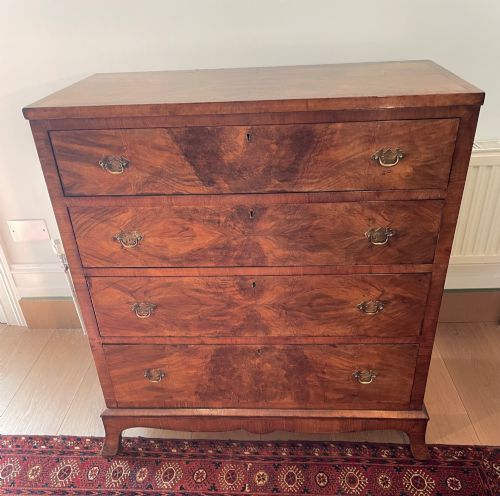
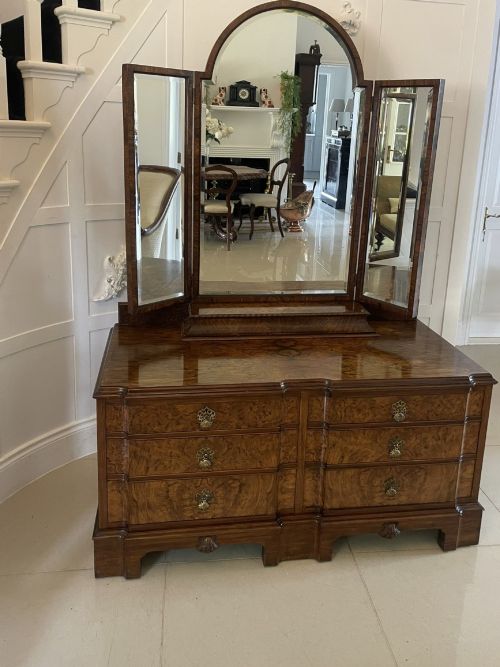
Georgian style bedroom furniture brings classical proportion and figured timbers to domestic chambers through chests, dressers and washstands.
Georgian Style Bedroom Furniture
Georgian style bedroom furniture covers pieces designed for sleeping quarters, drawing heavily on eighteenth-century forms such as chests of drawers, tallboys, bedside cabinets and dressing tables. Buyers searching this phrase meet a mix of genuine eighteenth-century examples alongside later revival pieces produced across the Victorian, Edwardian and early twentieth-century periods.
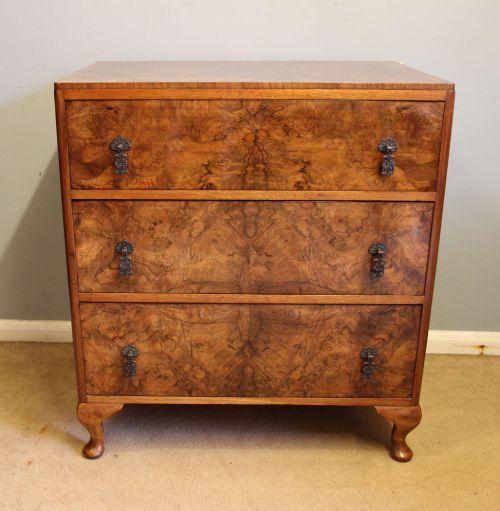
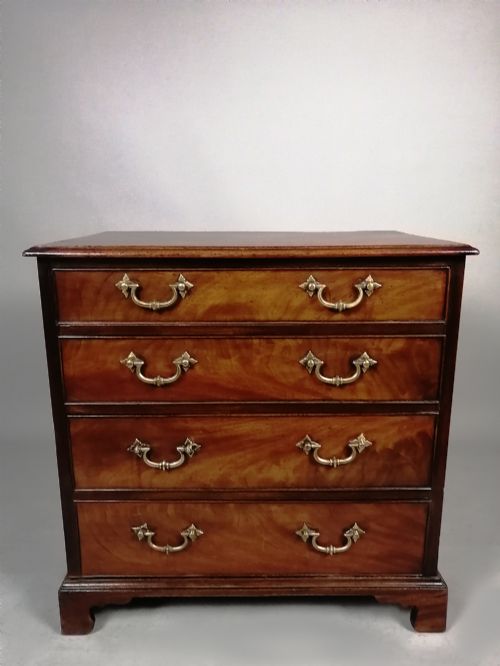
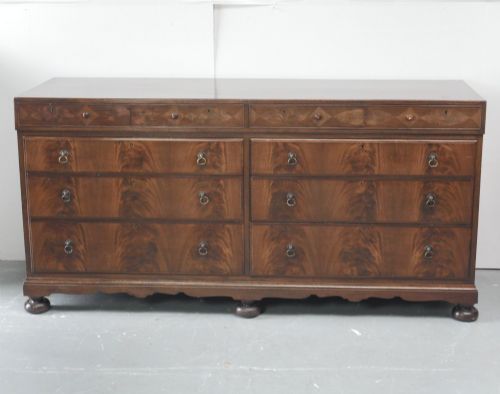
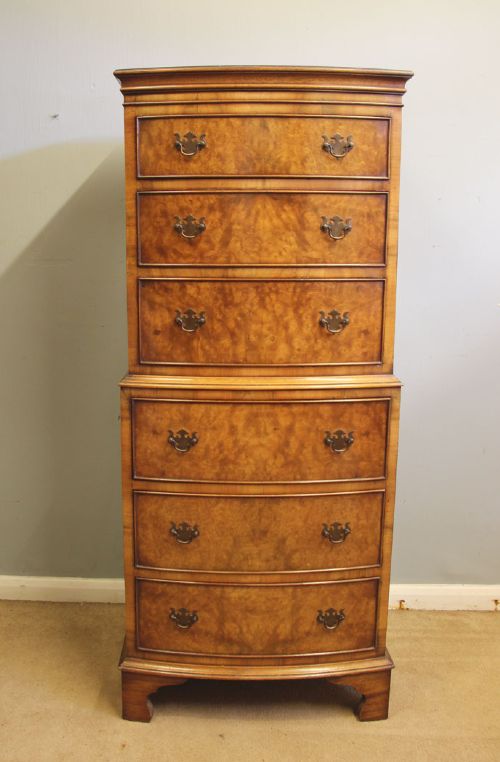
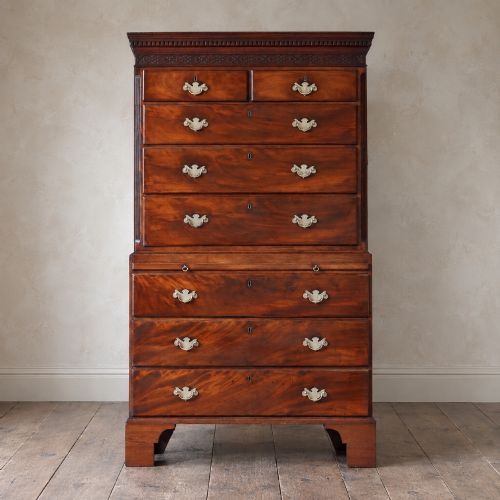
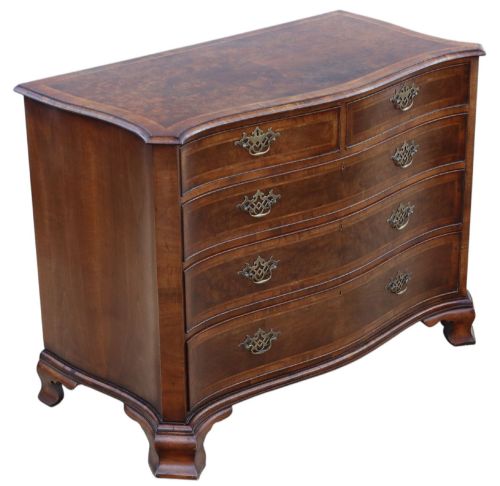
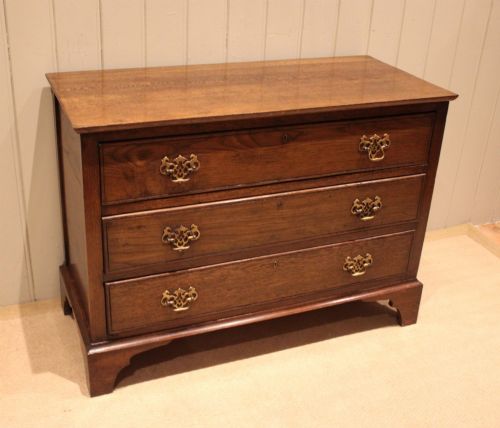
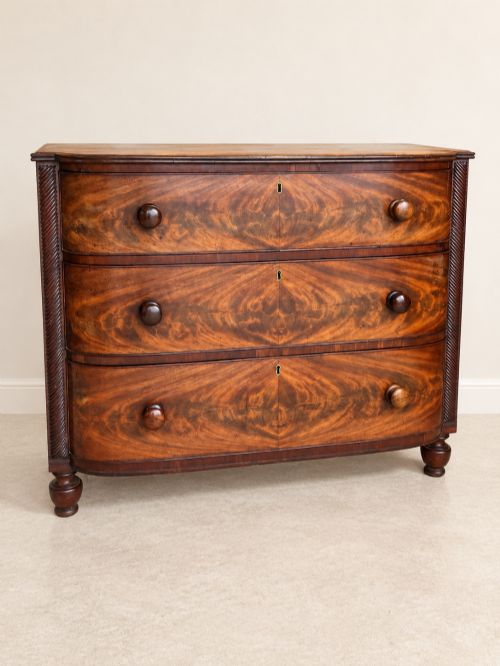
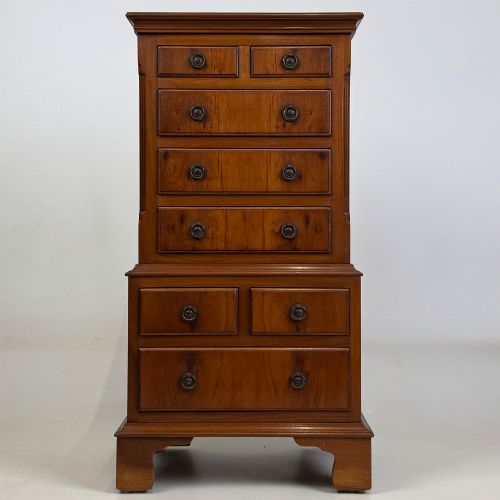
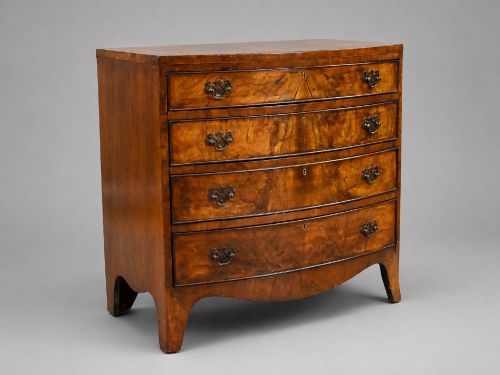
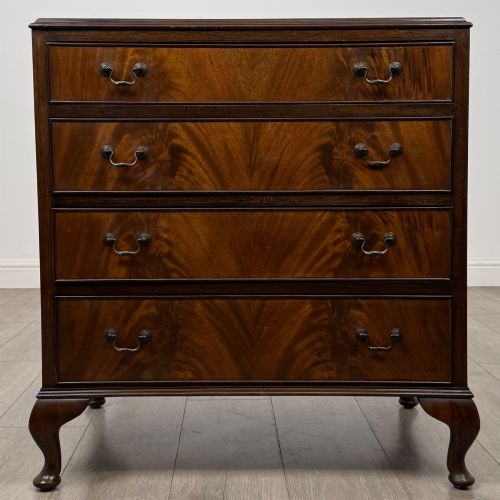
The predominant forms found on this page are chests of drawers, varying from small proportions and bow fronts to large chests on chests and serpentine commodes. Alongside these sit washstands, bedside tables and dressing tables, offering functional storage with classical lines.
Origins span provincial British workshops to Continental makers, with cabinetmakers utilising traditional forms like the George III style, Hepplewhite style and Chippendale influences. These pieces reflect enduring design principles adapted for bedrooms over successive centuries.
Materials and construction
Cabinetmakers relied heavily on figured hardwoods, notably mahogany, burr walnut and oak, often enhanced with flame mahogany veneer, crossbanding or satinwood inlay. These timbers were selected for grain pattern and rich natural colour, providing decorative surfaces for domestic chambers.
Construction involved traditional joinery techniques such as dovetailed drawer boxes and panelled frames, paired with brass handles and escutcheons. Secondary timbers supported primary decorative veneers on chests, tallboys and bedside commodes.
Concealed security meets bedroom storage in a nineteenth-century chest featuring five standard drawers plus two secret compartments.
Qualities of distinction
Distinction across these pieces lies in the selection of timber veneers and the precision of cabinetwork. The finest examples display matched burr walnut or figured mahogany grains across multiple drawers, with harmonious crossbanding and intact original brass hardware.
Proportion and execution set individual items apart, from serpentine and bow-front outlines to well-integrated brushing slides and secret drawers. Superior pieces demonstrate disciplined carving and balanced scale that elevate standard utilitarian forms.
Whytock & Reid·Druce & Co
The Georgian Style Bedroom Furniture Glossary
- Chest on chest
- A tall storage unit comprising one chest stacked directly upon another, often called a tallboy. This form maximises vertical capacity while maintaining classical proportions.
- Brushing slide
- A pull-out shelf integrated into the upper section of a chest of drawers or desk. It provided a temporary surface for grooming or sorting items without opening the main drawers.
- Serpentine
- A front outline characterised by a convex centre flanked by concave curves. This contour requires advanced woodworking skill to shape drawer fronts and frames.
- Crossbanding
- A decorative border of veneer laid around the perimeter of a drawer front or tabletop so that the grain runs perpendicular to the main panel. It frames the central timber.
- Washstand
- A dedicated piece of furniture designed to hold a basin and pitcher for personal hygiene before plumbed bathrooms. Surviving examples often feature corner or cupboard configurations.
Georgian Style Bedroom Furniture: Frequently Asked Questions
What is a tallboy chest of drawers?
A tallboy is a vertical storage unit formed by stacking one chest of drawers upon another. It provides generous drawer capacity while occupying a compact floor footprint.
Cabinetmakers utilised this form in walnut and mahogany to create commanding bedroom storage with balanced classical proportions.
What was a brushing slide used for?
A brushing slide is a pull-out wooden shelf integrated above the top drawer of a chest or tallboy. Historically, it served as a temporary surface for folding garments or grooming.
In modern rooms, it adds a functional shelf that tucks away flush when not in use, showcasing the ingenuity of period cabinetmaking.
Where were bedside cabinets placed?
Bedside cabinets and cupboards were designed to stand beside sleeping quarters to hold small personal items or washing equipment. Pairs often matched the broader bedroom suite in timber and inlay.
These compact cupboards provide concealed storage and surface space suited to modern bedside use.