
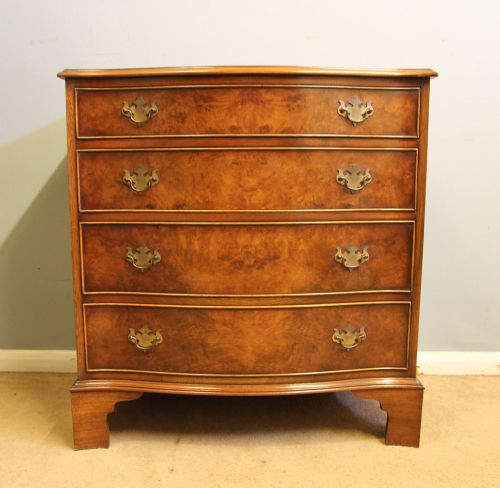
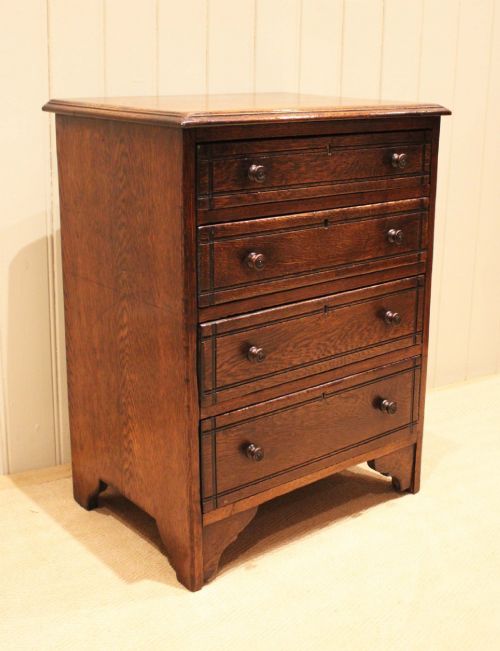
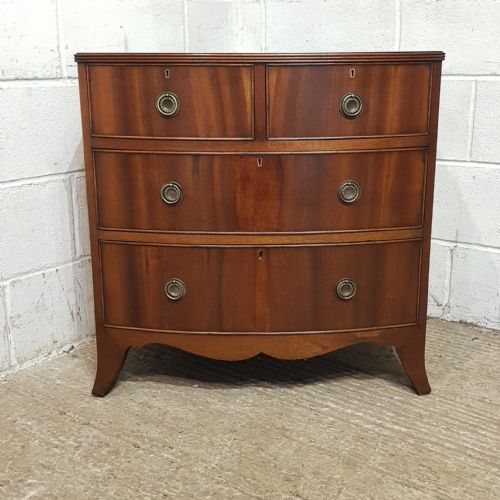
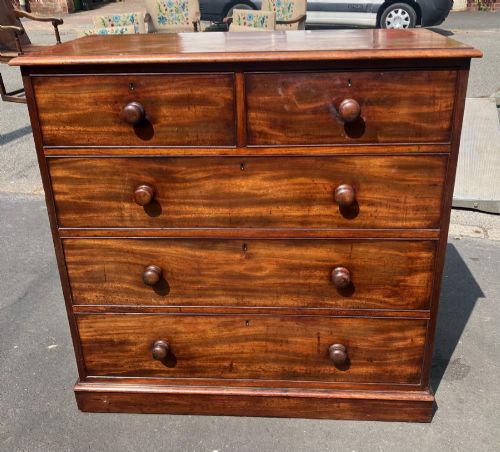
Georgian Style Bedroom Dresser
A georgian style bedroom dresser offers classic storage, bringing structured mahogany and oak proportions directly into your sleeping quarters.
Georgian Style Bedroom Dresser
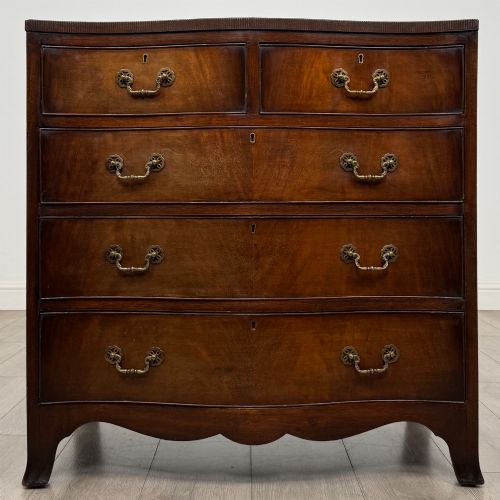
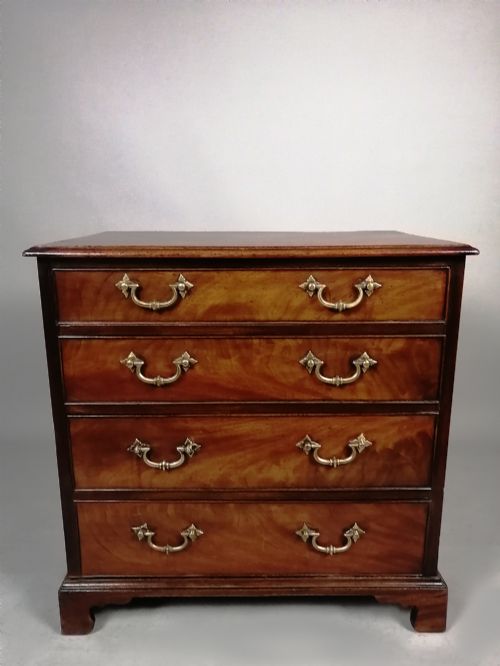
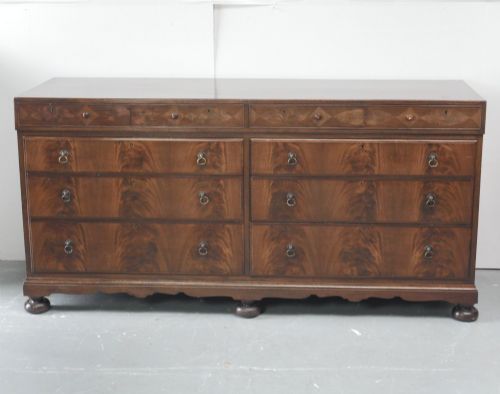
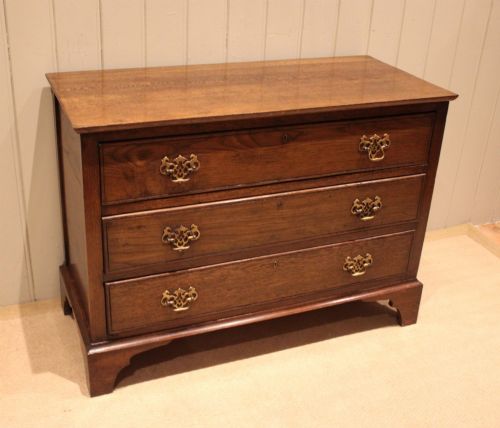
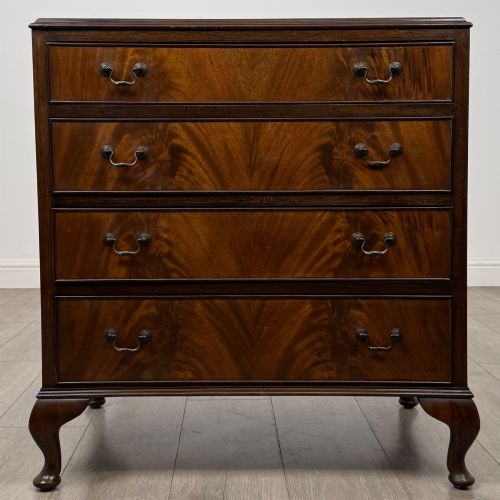
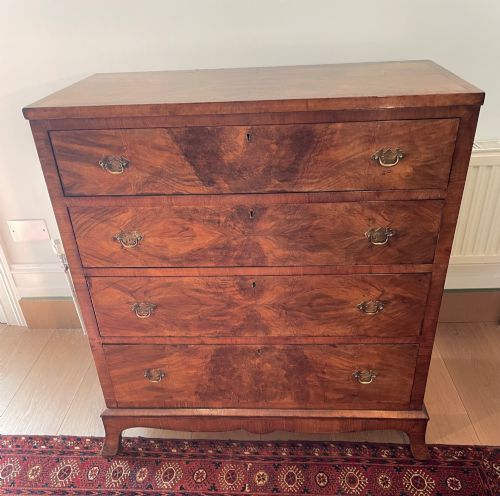
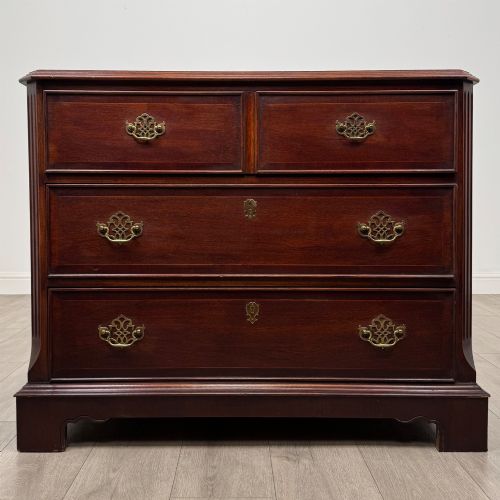
A georgian style bedroom dresser most frequently appears on this page as a chest of drawers, spanning forms from the 18th century through to 20th-century revivals.
Makers produced these storage pieces in periods ranging from original Georgian and Regency eras to Edwardian reproductions and 1930s interpretations.
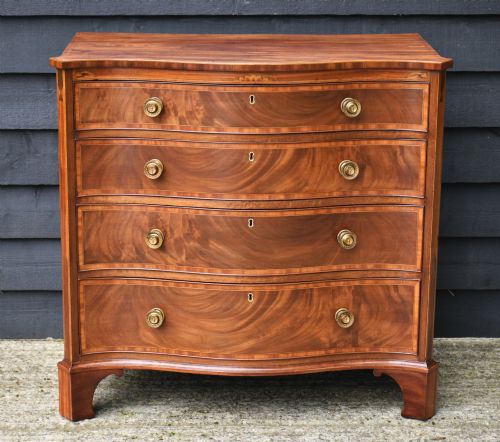
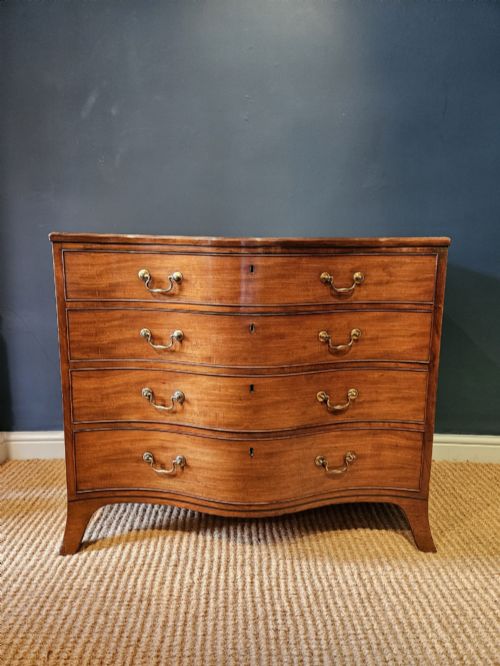
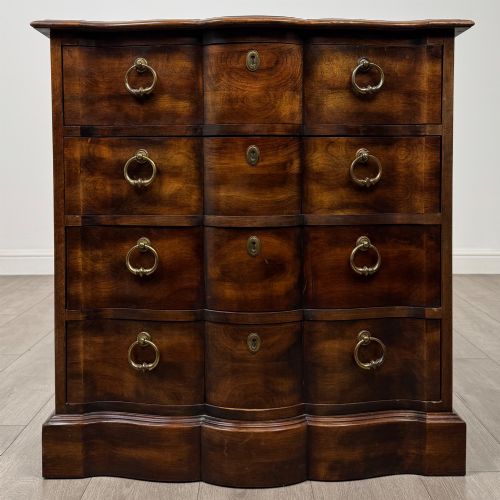
The selection includes straightforward rectangular carcases alongside bow front and serpentine variations executed in solid timbers and veneers.
Materials and Construction
Cabinet makers utilised primary timbers such as mahogany, oak, walnut, and burr walnut, often applying flame mahogany or satinwood veneers to prominent surfaces.
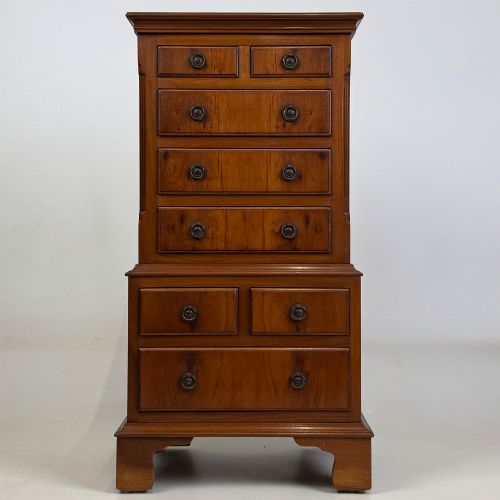
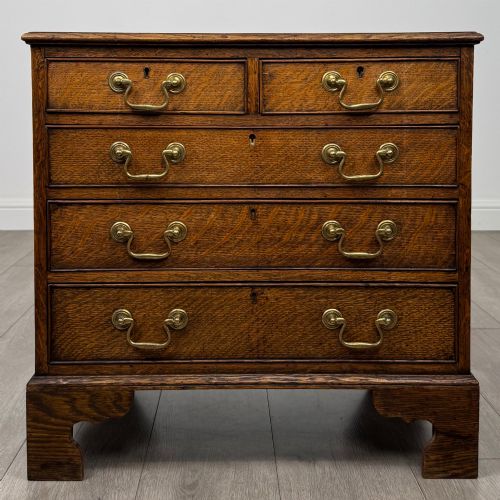
Details include brass handles, inlay work, and specialised forms such as tallboys and bachelors' chests constructed with multiple drawer heights.
Listings span periods from the 18th century through the Regency era, Edwardian period, and into the 1930s.
Distinction in Craft
The standard of execution shifts between modest Edwardian interpretations and ambitious 18th-century pieces, depending on the selection of timber and subtlety of curve.
Serpentine and bow front profiles require precise handling of veneers and solid wood to maintain structural harmony across the drawer fronts.
Whytock & Reid·Druce & Co·Waring & Gillow
The Georgian Style Bedroom Dresser Glossary
- Serpentine
- A front contour characterised by a gentle convex centre flanked by concave curves. This shape demands expert woodworking skill.
- Bow Front
- A convex curved cabinet front popular during the Georgian and Regency periods. It softens the room while expanding internal storage space.
- Tallboy
- A tall chest of drawers, often comprising a smaller chest stacked upon a larger base. It maximises vertical capacity in modest bedchambers.
- Bachelors Chest
- A compact drawer unit traditionally equipped with a folding top surface for writing. These pieces serve multiple domestic functions.
- Flame Mahogany
- Timber cut to reveal a flickering, flame-like grain pattern. Cabinet makers prize this figure for principal drawer faces.
Georgian Style Bedroom Dresser: Frequently Asked Questions
Where should I place a chest in the bedroom?
Position the piece against a principal wall where its proportions balance surrounding furniture. Ensure adequate clearance for drawers to extend fully.
Lower bow front variants function well beneath windows or mirrors, while taller formats anchor larger blank wall spaces effectively.
How do I distinguish 18th century from revival pieces?
Examine the secondary timbers inside the drawer linings and the method of joint construction. Original 18th-century examples show hand-cut dovetails and period timber oxidation.
Revival pieces from the Edwardian era or 1930s typically display machine-sawn elements and cleaner interior surfaces despite adopting historical styles.
What is the difference between a dresser and a chest?
In this context, the search phrase refers specifically to chests of drawers used for clothing storage in bedrooms. Traditional dressers often include plate racks or upper shelving.
These pieces rely entirely on drawer capacity, ranging from four heights up to five-plus-two secret drawer configurations.
How do I care for mahogany and walnut surfaces?
Maintain the polished wood by dusting regularly with a soft cloth and avoiding direct sunlight. Excessive heat causes timber and veneer to dry out.
Apply occasional appropriate wax treatments to nourish the grain without building up a heavy, cloudy residue on the antique finish.