
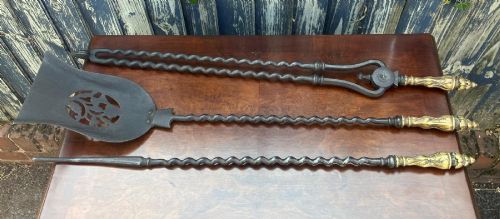


Georgian Steel Fireplace Tools
Georgian steel fireplace tools are heavy hearth implements forged to tend open coal fires, combining functional ironwork with polished metal elegance.
Georgian Steel Fireplace Tools
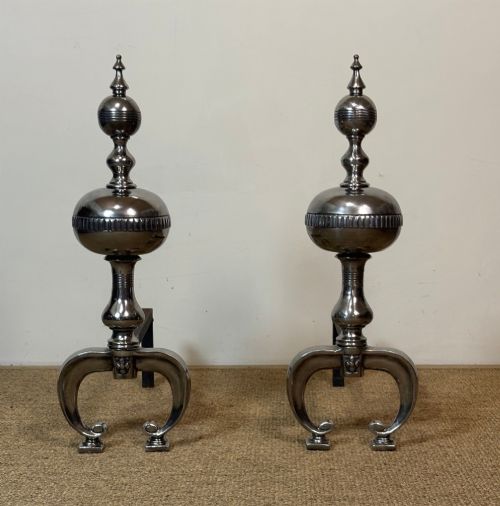
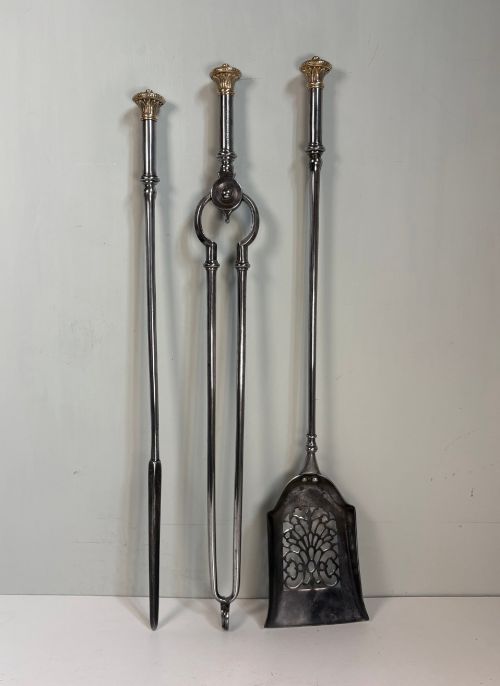
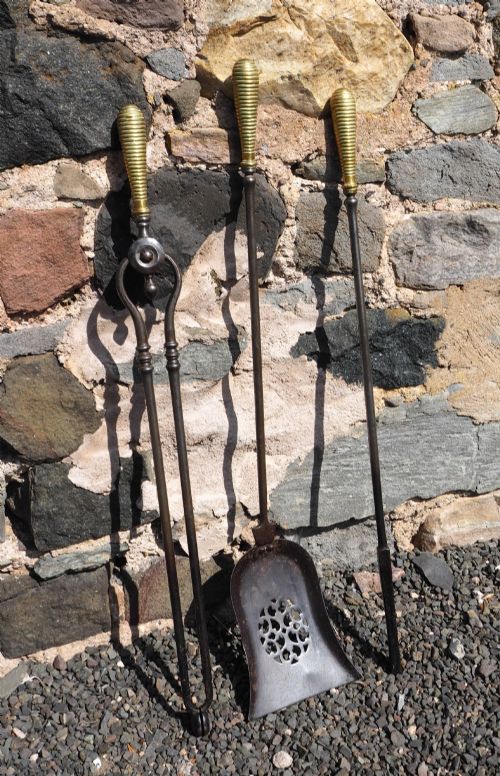
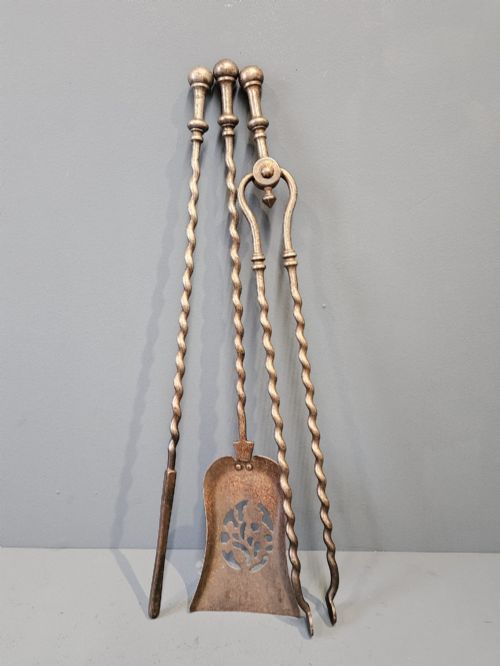
Georgian steel fireplace tools comprise sets of companion items and pairs of fire dogs designed to manage hearth fires during the eighteenth and nineteenth centuries. Buyers searching for georgian steel fireplace tools encounter complete sets of fire irons alongside specialised ember tongs, pipe fire lighters, and triple companion tools.
The objects appearing on this page span the Georgian, Regency, and George IV periods, extending into early nineteenth-century production. These metal implements reflect the domestic requirements of period hearths, utilising robust iron and steel construction shaped for daily use.
Materials and construction methods
Makers shaped these hearth accessories primarily from steel, iron, and wrought iron, frequently combining them with brass and gilt brass details. The metalwork relies on traditional forging techniques to produce durable shafts and handles suited for sustained heat exposure.
Finishes range from standard steel and iron to polished steel and burnished steel surfaces. These reflective treatments highlight the metallic grain and provide a decorative contrast against brighter brass mounts.
Markers of quality and execution
Quality in these hearth implements rests on the precision of the forging and the consistency of the surface finish. Pieces finished with burnished or polished steel show a higher degree of initial workshop attention than plain iron examples.
The integration of brass and gilt brass elements introduces a tier of refinement, where decorative mounts are securely fitted to the steel shafts. Complete sets sharing matching handles and uniform metal treatment demonstrate superior workshop cohesion compared to assembled groupings.
The Georgian Steel Fireplace Tools Glossary
- Fire irons
- Implements used for tending a coal or wood fire, typically including tongs, a poker, and a shovel. These pieces are often mounted on a matching stand or resting on fire dogs.
- Fire dogs
- Support irons placed inside the hearth to keep logs elevated for better air circulation. They frequently share material and decorative traits with companion fire tools.
- Burnished steel
- Metal treated with a mechanical polishing process to produce a bright, reflective finish. This surface treatment was favored in Regency and Georgian interiors for its brilliant sheen.
- Ember tongs
- Specialised smaller tongs designed for handling individual hot coals and lighting pipes. They represent a more specific domestic implement than standard hearth tongs.
Georgian Steel Fireplace Tools: Frequently Asked Questions
What tools come in a set?
Standard sets typically comprise a shovel, a poker, and tongs designed to manage burning fuel. Some configurations also incorporate specific pipe fire lighters or ember tongs.
These companion items were often housed together on the hearth or supported by matching fire dogs.
How do I clean polished steel?
Polished and burnished steel surfaces require careful maintenance to prevent oxidation in damp environments. Gentle cleaning with dry cloths or specialised metal preservers helps maintain the reflective finish.
Avoid abrasive compounds that can strip the historic surface treatment from the metal.
Were brass and steel mixed?
Many period hearth pieces combine steel shafts with brass or gilt brass handles and mounts. This dual-metal construction provided a decorative contrast that suited formal Georgian and Regency drawing rooms.
The materials were joined mechanically during the manufacturing process.
How do I date these pieces?
Dating relies on stylistic markers, handle profiles, and the specific metal finishes typical of the Georgian, Regency, and George IV eras. Plain wrought iron forms often suggest earlier dates, while highly polished and burnished finishes frequently align with Regency taste.
Comparing the manufacturing technique against known period examples clarifies the timeline.