


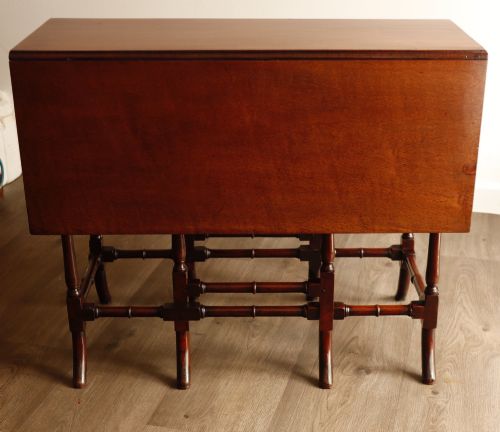
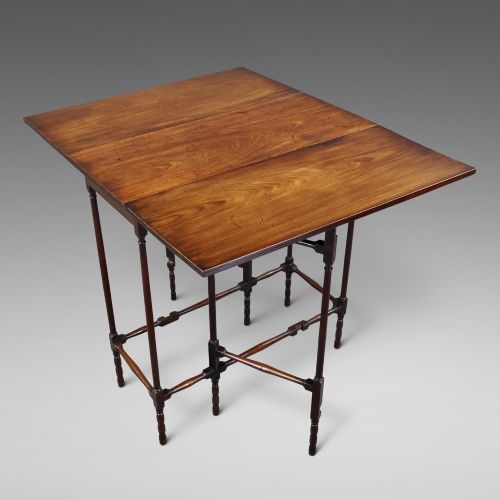


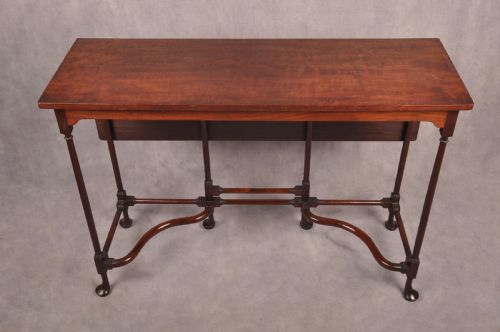


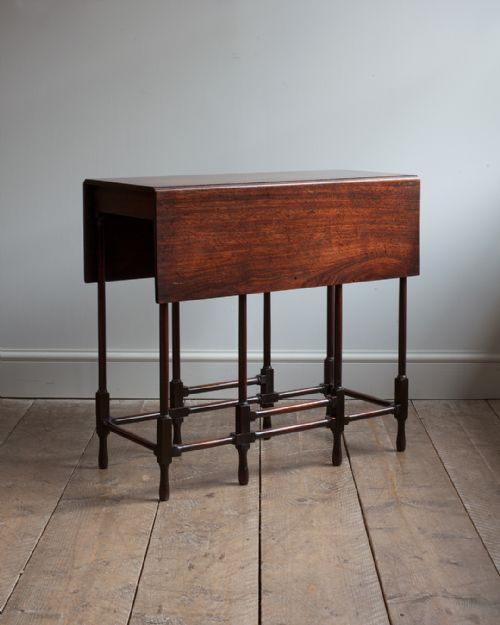

Georgian Spider Table
These slender georgian spider table designs offer delicate form and sturdy timber in one compact piece.
Georgian Spider Table
A georgian spider table is a slender, lightweight piece built for holding small items like tea services or lamps without crowding a room. These tables combine a remarkably delicate silhouette with practical drop-leaf or gateleg mechanisms that allow the surface to fold away when not in use.
Most examples found here date from the eighteenth century, often attributed to the Georgian and George III periods, though later Victorian, Edwardian, and twentieth-century interpretations also appear. The dominant form is the drop-leaf occasional table supported by remarkably thin turned legs linked by fine stretchers for stability.
Materials and construction
Cabinetmakers relied heavily on rich mahogany for these frames, utilising its dense grain to fashion legs thin enough to earn the spider descriptor without snapping under moderate weight. Timber selection was crucial for the slender spindles, which required straight, strong stock to support hinged leaves safely.
Makers integrated brass hinges and occasional iron fittings to join the drop leaves and gateleg supports, ensuring smooth movement. The overall construction balances minimalist vertical supports with traditional joinery to keep the light frame rigid.
Georgian Spider Table Retail Price Guide 2026
Typical asking prices for georgian spider table among the pieces listed under this phrase on Sellingantiques today, from the lower quarter to the upper quarter. They describe what is for sale here now, not the wider market.
Listings feature mahogany as the primary timber alongside occasional brass and iron hardware across eighteenth-century to twentieth-century periods.
Understanding quality
Quality rests in the crispness of the leg turnings and the precision of the stretcher joints, where finer workshops achieved rigid stability despite extreme thinness. Superior examples maintain tight hinges and flat, well-matched timber leaves that do not warp or sag when extended.
The sophistication of the period styling dictates the tier of the piece, with George III and Chippendale iterations showing greater attention to proportion and carving detail compared to later revivals.
The Georgian Spider Table Glossary
- Spider leg
- A very thin, delicate turned table leg supported by fine stretchers. This slender upright gives the table its distinctive name and light appearance.
- Drop leaf
- A table top with hinged flaps on the sides that fold down. These flaps allow the surface area to expand or contract as needed.
- Gateleg
- A table with legs hinged to swing out like a gate and support the drop leaves. This mechanism provides sturdy reinforcement underneath extended flaps.
- Stretchers
- Horizontal wooden rods connecting the legs of a table near the base. They add structural rigidity to prevent slender legs from bowing outward.
Georgian Spider Table: Frequently Asked Questions
What is a spider table used for?
These tables served primarily as light tea tables or occasional surfaces for holding small decorative items and lamps. Their compact footprint made them easy to move around a drawing room.
Because the leaves fold down, they could sit unobtrusively against a wall when not in use.
How do I identify an eighteenth century piece?
Eighteenth-century examples typically display dense mahogany timbers with patination gained over centuries of use. The hand-turned spider legs show precise lathe work and subtle irregularities absent in mass-produced later copies.
Joinery details like hand-cut joints on the frame also point toward the Georgian origin.
Are these tables sturdy enough for daily use?
Despite their fragile appearance, the networked stretchers provide surprising lateral strength when the piece is placed on a level floor. They handle light items like books or cups easily.
Users should avoid leaning heavily on the hinged drop leaves to protect the pivot joints.
What is the difference between Georgian and Edwardian versions?
Georgian versions rely on eighteenth-century cabinetmaking traditions with rich mahogany surfaces and hand-turned spindle work. Edwardian pieces are later revivals built around the early twentieth century.
The later iterations often replicate the earlier aesthetic but lack the same depth of timber patination.