








Georgian Specimen Table
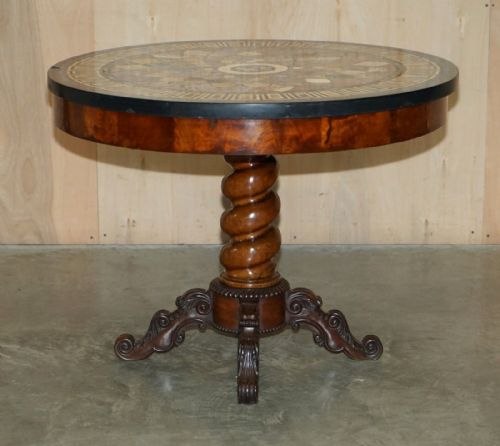
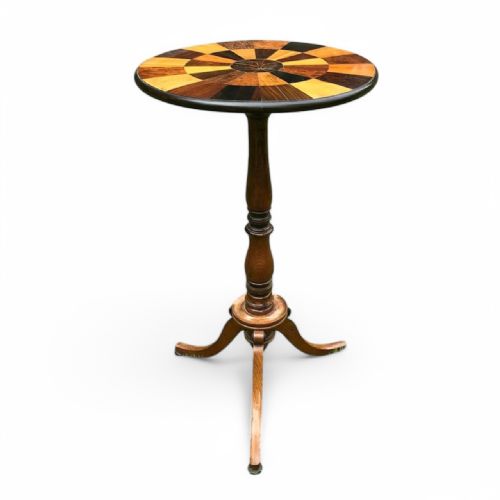
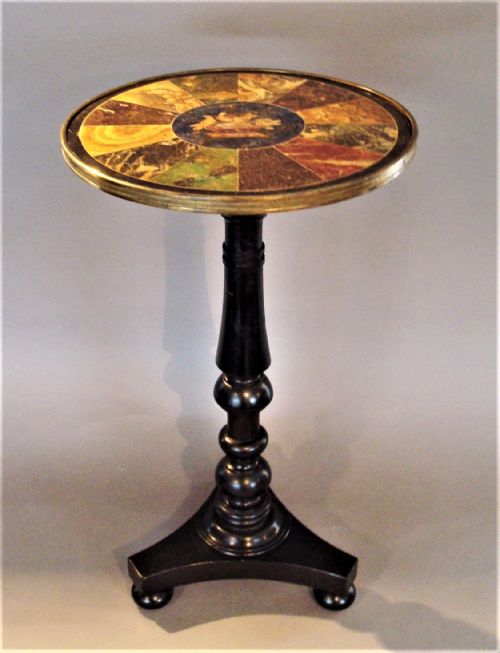
A georgian specimen table brings together meticulous stonework and figured timbers to create a display surface with unmatched visual complexity.
Georgian Specimen Table
A georgian specimen table combines the architectural forms of the late eighteenth and early nineteenth centuries with geometric or pictorial tabletops composed of diverse marbles and timber veneers. Buyers examining this page will find centre tables, side tables, and occasional tables originating across the Georgian, Regency, and early Victorian eras.
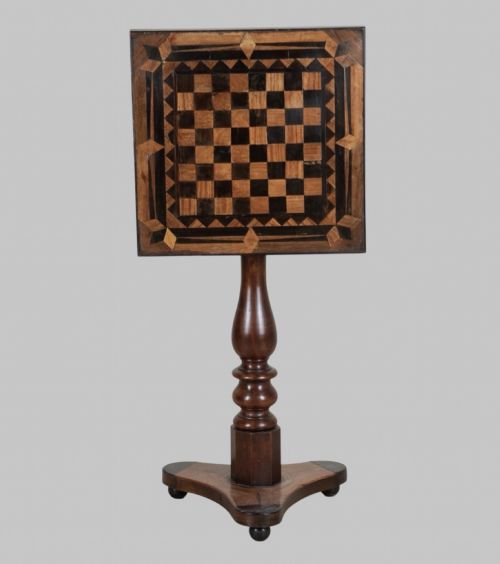
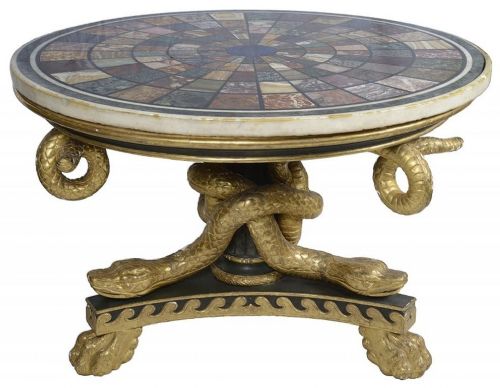
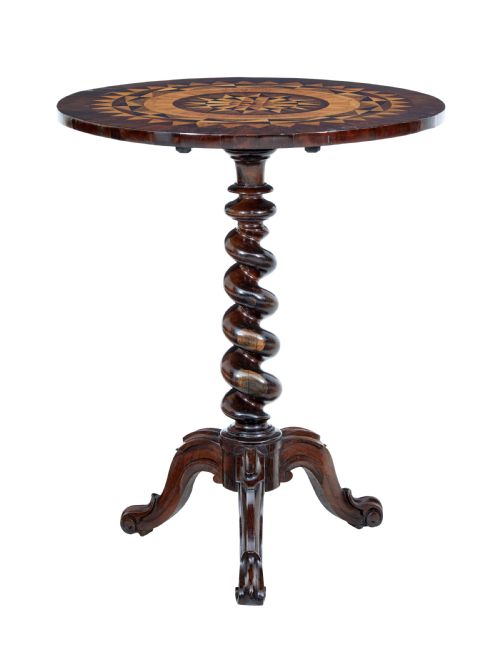
The category encompasses circular occasional tables, games tables with inlaid surfaces, and grander centre tables featuring circular tops resting on substantial pillar and base supports. Variations span from austere mahogany frames to giltwood and ebonised structures carrying intricate pietra dura or sunburst veneer arrangements.
While most examples date from the Regency period through to the mid-nineteenth century, the construction reflects an enduring appetite for polished mineral surfaces and complex woodwork. These pieces served primarily as display furniture in reception rooms, designed to showcase the collector's taste for natural materials.
Assessing Quality and Execution
Quality rests heavily on the precision of the top surface, whether executed in varied specimen timbers or shaped marble. Tighter joints between individual stone segments and sharper geometric alignment in wood veneers distinguish superior tables from simpler workshop productions.
The execution of the base architecture, from turned pedestals to carved giltwood or ebonised supports, dictates the overall refinement of the piece. Heavier, dense timbers and well-proportioned pillar structures indicate a higher standard of period craftsmanship.
Georgian Specimen Table Retail Price Guide 2026
Typical asking prices for georgian specimen table among the pieces listed under this phrase on Sellingantiques today, from the lower quarter to the upper quarter. They describe what is for sale here now, not the wider market.
Some nineteenth-century makers doubled their functional output by hiding needlework compartments beneath elaborate specimen wood folding tops.
The Georgian Specimen Table Glossary
- Specimen Wood Veneers
- Thin slices of various decorative woods applied to a primary surface to create geometric patterns or pictorial designs. This technique allowed makers to exhibit multiple timber species on a single tabletop.
- Pietra Dura
- An artistic technique using cut and fitted, highly-polished coloured stones to create images or geometric ornamentation. The method requires extreme precision to ensure tight, seamless joints between mineral segments.
- Parquetry
- A geometric mosaic of wood pieces used for decorative floors and tabletops. Similar to marquetry, it relies on angular, repeating shapes rather than curved pictorial motifs.
- Centre Table
- A freestanding table designed to be viewed from all sides, placed in the middle of a room rather than against a wall. These frequently feature circular marble or parquetry tops supported on a central pillar.
- Sunburst Top
- A decorative veneering pattern radiating outwards from a central point to resemble the rays of the sun. Makers utilised the natural grain variation in timbers like mahogany or yew to enhance the optical effect.
Georgian Specimen Table: Frequently Asked Questions
What is a specimen table?
A specimen table is a piece of furniture featuring a tabletop composed of many different types of marble, stone, or wood arranged in geometric or pictorial patterns.
These tables were produced to showcase the natural variety and colour of polished minerals and exotic timbers for collectors.
How do I tell a Regency table apart from a Victorian one?
Regency tables typically display leaner classical proportions, cleaner lines, and restrained application of brass or carved detail, often influenced by ancient Roman and Greek forms.
Victorian pieces from the mid-nineteenth century tend towards heavier proportions, darker walnut or rosewood timbers, and more exuberant carved ornament.
Where were these tables placed in a home?
Centre tables sat unanchored in the middle of principal reception rooms to display decorative objects, books, or collections. Occasional and side tables stood against walls or beside seating to provide functional surface area.
Their decorative tops meant they functioned as visual focal points within the interior scheme.
What is pietra dura?
Pietra dura is an inlay technique involving precise arrangement of finely cut coloured stones. Artisans ground and fitted mineral slabs like marble and jasper to produce smooth, flush decorative scenes.
This labor-intensive craft appears frequently on the most ambitious nineteenth-century display tables.