





Georgian Smelling Salts Box
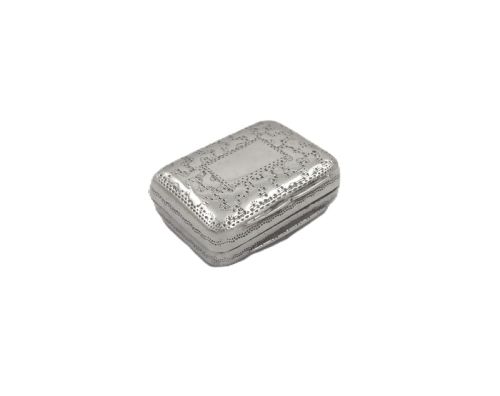
These georgian smelling salts box pieces, known as vinaigrettes, are small silver containers designed to hold a fragrant, ammonia-soaked sponge for reviving the senses.
Georgian Smelling Salts Box
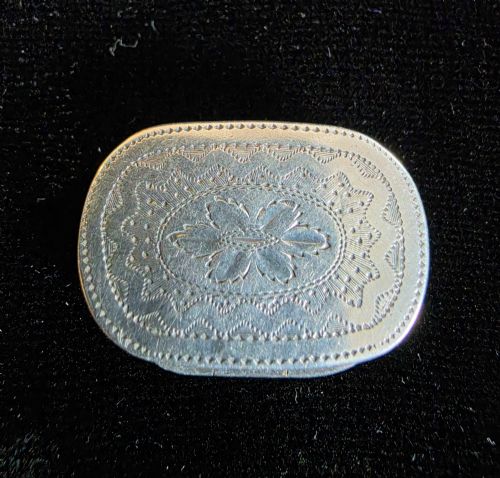
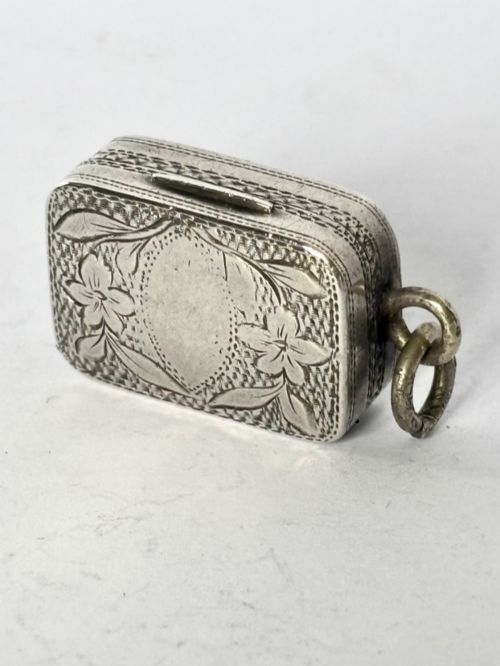
A georgian smelling salts box is fundamentally a small personal container, most frequently encountered here in the form of a vinaigrette or small silver box dating from the Georgian, Regency, and William IV periods. These pocket-sized objects were carried by ladies and gentlemen to counter unpleasant odours or faintness in crowded rooms.
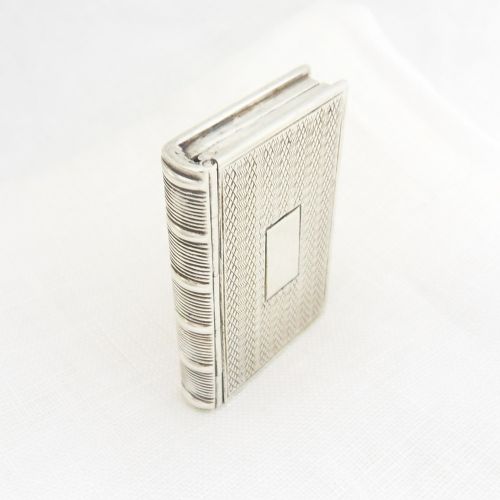
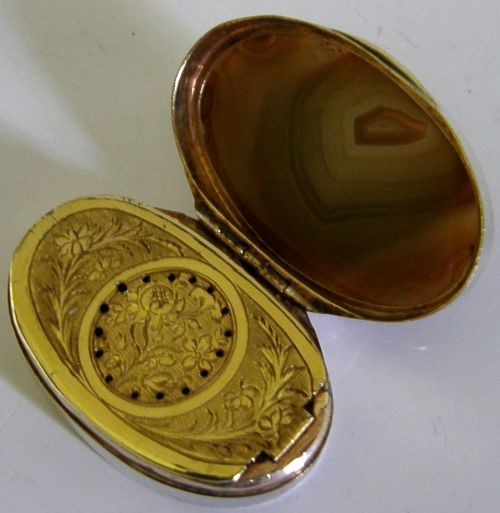
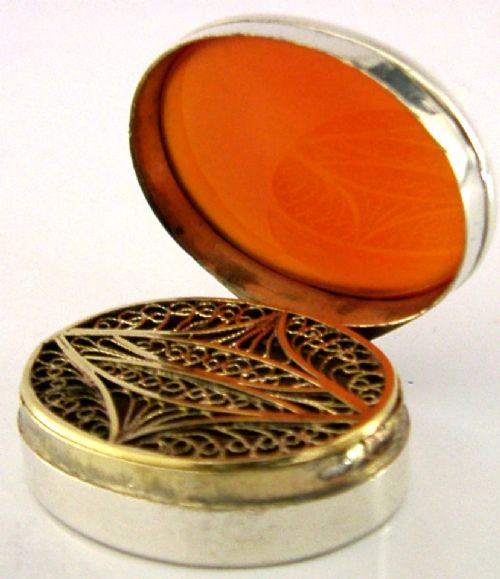
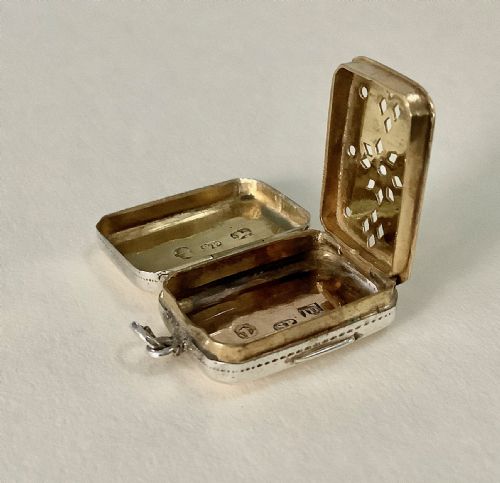
The selection ranges from standard rectangular and book-shaped silver boxes to novelty forms such as articulated fish, alongside panels set with polished stones like orange agate or cowrie shell. Most examples originate from early nineteenth-century Birmingham and Edinburgh workshops, featuring hinged lids that reveal pierced internal grilles.
Materials and construction
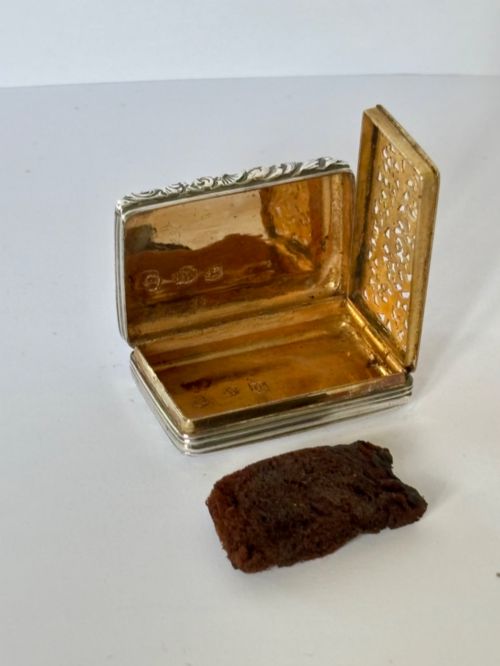
These pieces rely on sterling silver as the primary structure, frequently enhanced with gold gilt or silver-gilt interiors to protect the base metal from the corrosive nature of chemical salts. Master metalsmiths combined these silver bodies with natural materials, mounting polished slices of agate or cowrie shell directly into the lids.
The defining internal feature is the pierced grille, which was hand-engraved or pierced with floral, geometric, or foliate patterns to allow the scent to escape while holding the original sponge securely in place.
Georgian Smelling Salts Box Retail Price Guide 2026
Typical asking prices for georgian smelling salts box among the pieces listed under this phrase on Sellingantiques today, from the lower quarter to the upper quarter. They describe what is for sale here now, not the wider market.
Quality and craftsmanship
Quality rests upon the crispness of the hand-engraving on the exterior and the intricacy of the piercing within the internal grille. Superior examples display tight hinges, secure closures, and clear hallmarks stamped directly into the silver.
The inclusion of rarer natural materials like orange agate or specialised novelty shapes such as fish elevates the piece, as does the presence of fitted original leather cases.
Joseph Willmore·Nathaniel Mills·Taylor and Perry·Samuel Pemberton·Jacob Amyand·John Bettridge
The Georgian Smelling Salts Box Glossary
- Vinaigrette
- A small ornamental box containing a sponge soaked in aromatic vinegar or smelling salts. These containers superseded larger pomanders in the eighteenth century.
- Silver-gilt
- Sterling silver that has been coated with a thin layer of gold on the surface. This technique protected the interior silver from the corrosive properties of acidic vinegars.
- Grille
- A pierced and engraved internal metal plate that covers the sponge compartment. Grilles are often decorated with floral or abstract pierced motifs.
- Hallmark
- A series of official marks stamped on precious metals indicating the maker, standard of purity, assay office, and year of production. They provide the definitive date for these objects.
- Agate
- A cryptocrystalline variety of quartz displaying coloured bands or cloudy inclusions. Cabinet makers and silversmiths prized it for decorative lid panels.
Georgian Smelling Salts Box: Frequently Asked Questions
What are smelling salts boxes used for?
These boxes held a small sponge saturated with scented vinegar or ammonium carbonate solution. Users opened the hinged lid to inhale the pungent vapours when feeling faint.
In the Georgian era, poor sanitation and close quarters made such portable deodorisers essential social accessories for both men and women.
How do I clean a silver vinaigrette?
Silver vinaigrettes require careful handling to preserve the delicate gilt interiors and original interior sponges. Gentle dusting with a soft cloth is usually sufficient for the exterior.
Avoid liquid silver dips, as harsh chemicals can damage the gilt finish and harm inset stones like agate or shell.
Are the internal sponges original?
Some surviving examples retain their original vintage sponges tucked beneath the pierced silver grille. Over two centuries, many original sponges have naturally disintegrated or been replaced.
The presence of an original sponge or a fitted leather case adds notable historical completeness to the piece.
How can I date a Georgian silver box?
Dating relies upon the stamped hallmarks, which typically include a maker's mark, a lion passant for sterling silver, a city assay mark, and a date letter. Birmingham and Edinburgh were primary production hubs during the early nineteenth century.
Stylistic shifts from plain Regency forms to ornate William IV book shapes also help narrow down the manufacturing decade.