

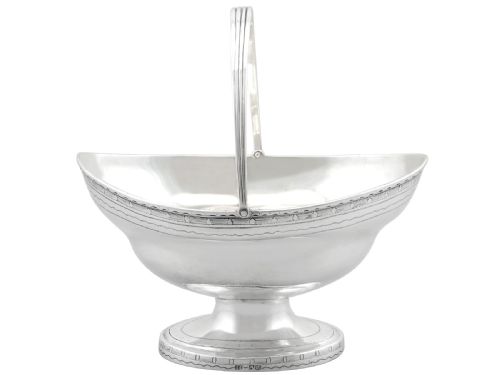


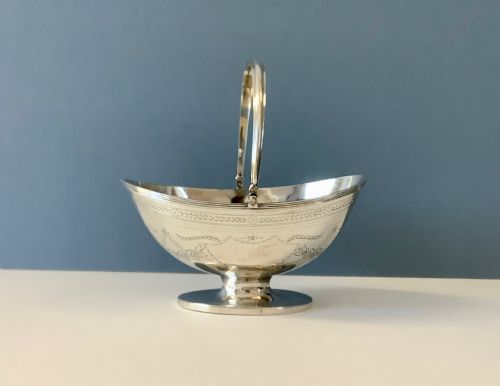
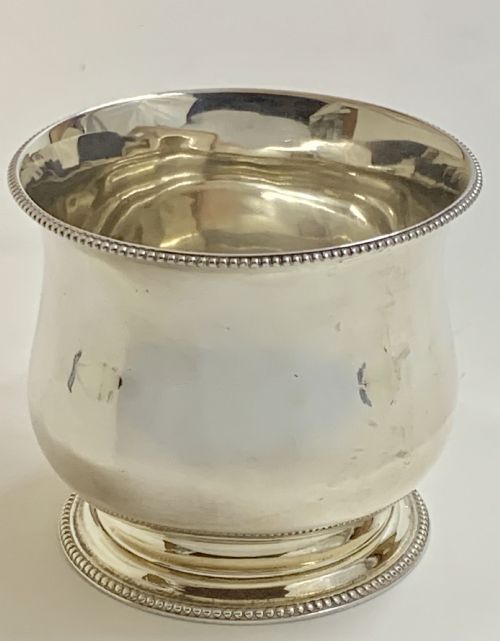
Georgian Silver Sugar Dish
A georgian silver sugar dish is a delicate tabletop basket or bowl meant for serving sweet lumps, shaped by Georgian, Victorian and Edwardian silversmiths.
Georgian Silver Sugar Dish
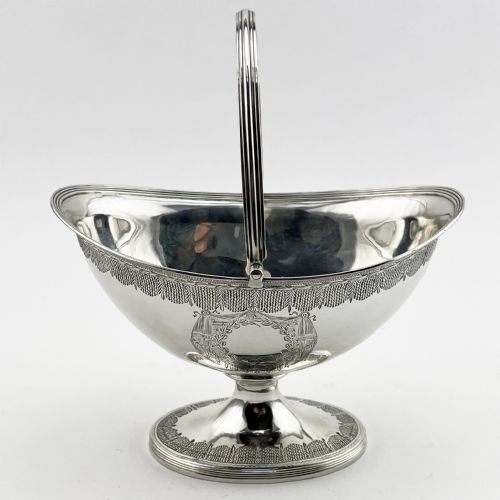
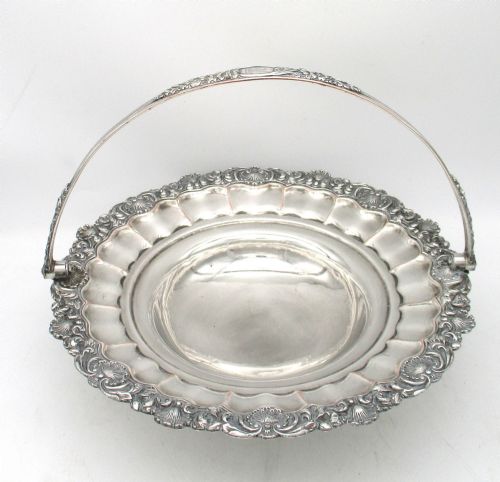
When you search for a georgian silver sugar dish, you encounter open baskets, bowls and sweetmeat dishes designed for the tea table. These pieces emerge primarily in Georgian styles, alongside later Victorian, Edwardian and interwar interpretations.
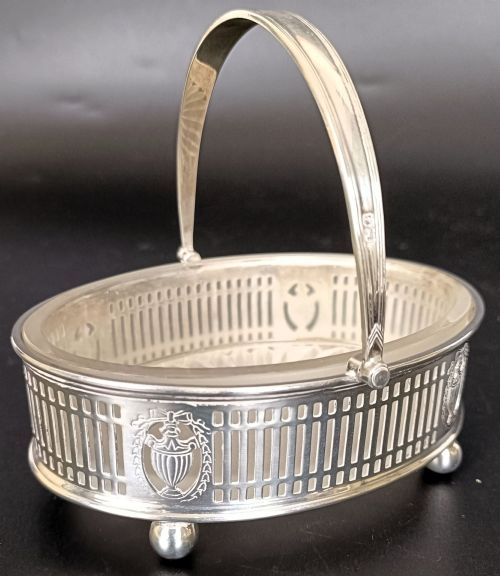
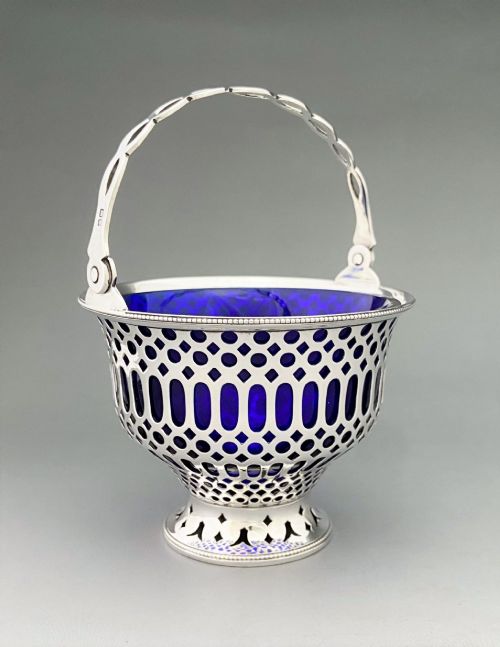
The form frequently incorporates swing handles, footed bases and pierced or wirework walls, sometimes paired with coloured glass inserts. While many date to the eighteenth and early nineteenth centuries, the selection also embraces later revivals and twentieth century silver.
Materials and construction
Silversmiths constructed these baskets using sterling silver, solid silver and Old Sheffield Plate, occasionally applying a gold wash interior. Techniques involved piercing, lattice work and wirework to create lightweight yet sturdy vessels.
Makers shaped oval and round bodies by hand, attaching swing handles and delicate feet to support the open bowls. Glass liners appear inside pierced frames to hold loose sugar or sweets safely.
Listings feature sterling silver, Old Sheffield Plate and copper, alongside glass and gold wash elements.
Assessing quality
Quality rests upon the crispness of the piercing, the weight of the metal and the balance of the swing handle. Finer pieces display precise hand-cut lattice work and crisp maker marks rather than cast shortcuts.
The harmony of proportion between foot, bowl and handle distinguishes superior examples. Preservation of original gilding and undamaged glass liners further elevates a piece.
Henry Chawner·Fenton·William Bond·George Fox·Walter Brind
The Georgian Silver Sugar Dish Glossary
- Old Sheffield Plate
- A method of fusing a thin sheet of silver to a thicker copper core, popular before modern electroplating. This technique produced durable tableware with a rich surface.
- Sweetmeat basket
- A small decorative container designed for serving confectioneries, nuts or dried fruits. These vessels typically feature swing handles and delicate pierced walls.
- Piercing
- A decorative technique where metal is cut away to form geometric, floral or lattice patterns. It lightened the appearance of heavy silver vessels.
- Swing handle
- An articulated handle attached to the rim of a basket or bowl, allowing it to drop to the sides. It enabled easy passing around the tea table.
- Silver gilt
- Silver covered with a thin layer of gold, often applied to the interior of sugar baskets. This protected the metal from the corrosive effects of moist sugars.
Georgian Silver Sugar Dish: Frequently Asked Questions
What was a sugar dish used for?
These vessels held lump or loose sugar for sweetening tea and coffee in formal domestic settings. Guests selected portions from the open basket using sugar tongs.
They also served sweetmeats, comfits and small dried fruits during the dessert course. Their decorative nature made them centrepieces on the tea table.
How do I care for silver sugar baskets?
Clean the silver gently with a soft cloth and approved polish to avoid wearing down fine piercing or engravings. Avoid harsh chemical dips, especially on pieces with Old Sheffield Plate or glass inserts.
Store them in dry environments away from direct sunlight and dampness. Handle swing handles with care to prevent straining the pivot pins.
Are all these dishes from the Georgian period?
The selection includes pieces from the eighteenth and nineteenth centuries, alongside Edwardian and interwar examples. Georgian styles were frequently revived in later decades.
Examining hallmarks, construction methods and stylistic details helps determine the actual date of manufacture. Makers often replicated earlier neoclassical designs long after the Georgian era ended.
Why do some baskets have glass liners?
Glass liners protected the silver framework from sticky sugar residues and moisture. Ruby glass and clear glass inserts added colour and contrast to pierced or wirework baskets.
Many surviving baskets retain their original fitted glass bowls, which sit securely inside the metal lattice.