

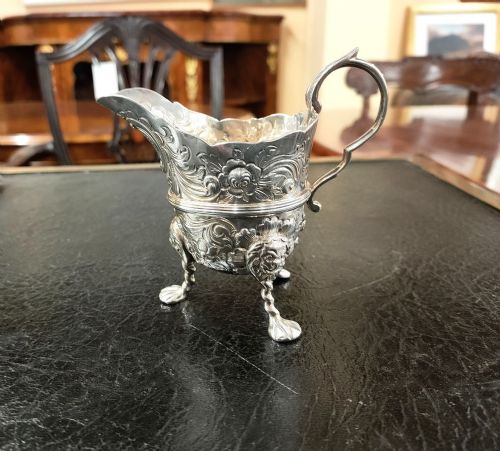
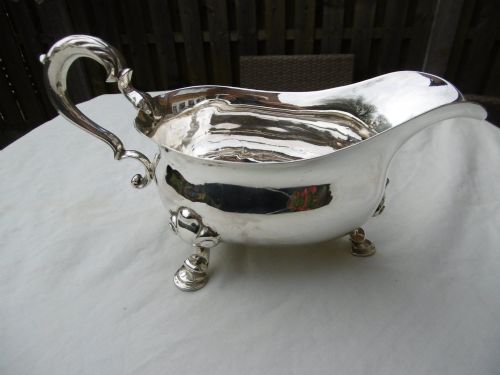
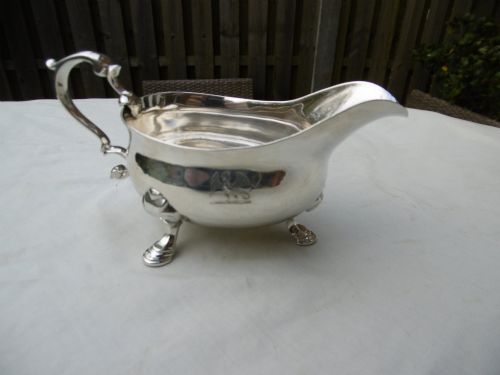
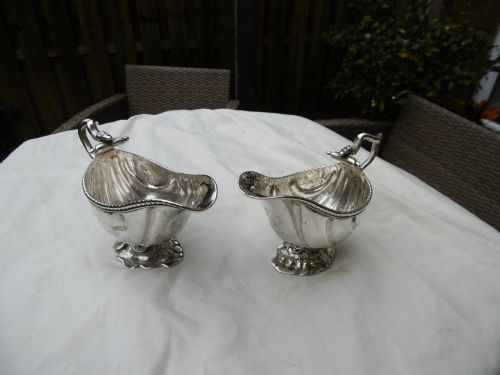


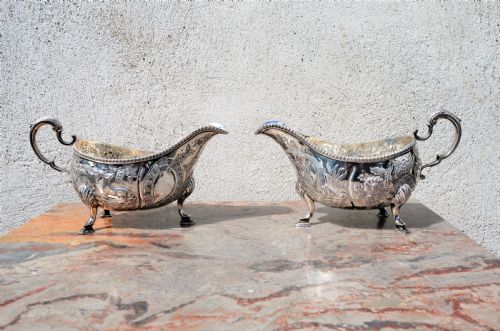


Georgian Silver Sauceboat
These georgian silver sauceboat examples bring eighteenth and nineteenth-century dining tables to life with solid sterling form and bright metal.
Georgian Silver Sauceboat
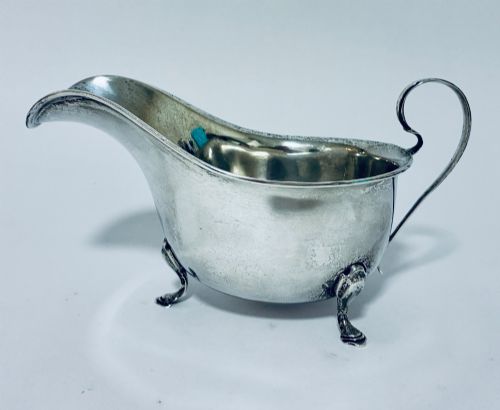
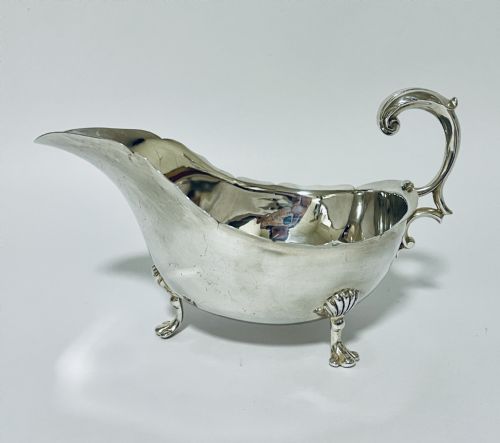
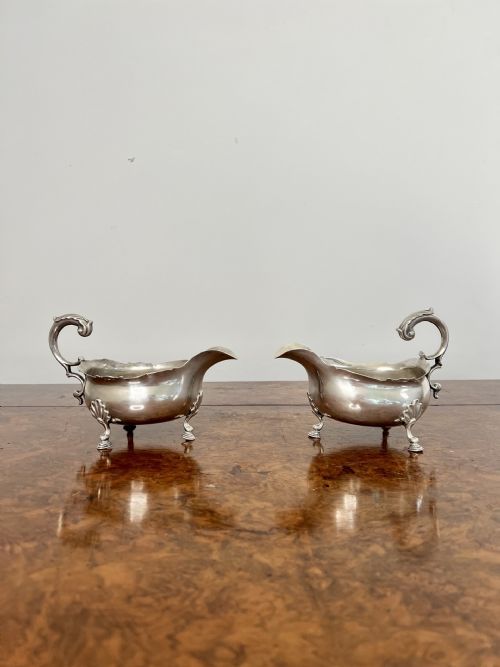
A georgian silver sauceboat is a small vessel designed for pouring gravies, sauces, or melted butter at the dining table, typically raised on three feet or a pedestal base. On this page, you will find items ranging from single vessels to matched pairs, spanning the Georgian era, the nineteenth century, and later revivals.
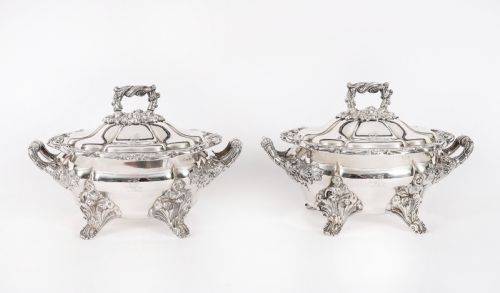
The forms vary from simple rounded bodies to embossed sterling silver sauce boats and lidded sauce tureens. Makers from London, Edinburgh, Dublin, and Sheffield produced these serveware pieces in sterling silver and silver plate.
How they were made
Silversmiths formed these vessels from sterling silver or copper covered in silver plate, employing techniques such as hammering, casting, and soldering. Handles were cast separately and attached securely to the body.
Decoration often included embossed motifs, chased details, and pedestal feet, reflecting styles from the George II and George III periods through to later Georgian revivals.
Georgian Silver Sauceboat Retail Price Guide 2026
Typical asking prices for georgian silver sauceboat among the pieces listed under this phrase on Sellingantiques today, from the lower quarter to the upper quarter. They describe what is for sale here now, not the wider market.
Some eighteenth-century sauce boats sit upon three tiny cast legs shaped like animal paws, standing ready to scuttle across the dining table.
What varies in quality
The distinction between average and exceptional pieces lies in the crispness of the chasing, the weight of the metal, and the harmony of the proportions. Early examples by known makers often display superior hand-craftsmanship in the formation of the rim and the handle.
Condition involves the preservation of original hallmarks, the integrity of the soldered joints, and the retention of the silver layer on plated items. Pairs that remain together from the eighteenth century command particular interest.
James Welch·WALKER AND HALL·Ambrose Boxwell·George Smith II·James Hewitt
The Georgian Silver Sauceboat Glossary
- Hallmark
- Official marks stamped on precious metals to guarantee the purity, origin, and year of manufacture. These symbols provide the primary evidence for dating a piece.
- Sterling silver
- An alloy containing a high proportion of pure silver combined with other metals for durability. Most quality sauce boats utilise this standard.
- Sauce boat
- A small pitcher or boat-shaped vessel used for serving table sauces. They usually feature a single handle and a shaped pouring lip.
- Pedestal base
- A footed support that elevates the body of the vessel off the table surface. Many Georgian examples employ this structural form.
- Chasing
- A metalworking technique where designs are hammered into the front surface of the metal from the outside. It creates raised ornamental patterns without removing material.
Georgian Silver Sauceboat: Frequently Asked Questions
What were sauce boats used for?
These vessels held liquid condiments, gravies, and melted butter to accompany formal meals at the dining table. Servants passed them to diners or placed them directly on the board.
Their open spouts and comfortable handles allowed for steady pouring during dining routines of the eighteenth and nineteenth centuries.
How do I identify a Georgian piece?
Examination of the stamped hallmarks reveals the assay office, maker's mark, and date letter. Reference books match these punches to specific years.
Stylistic cues such as cast feet, scroll handles, and hand-beaten surfaces also point toward the eighteenth-century manufacturing period.
Are pairs common?
Makers frequently produced these vessels in matching sets of two to balance the arrangement of the dining table. Surviving pairs from the eighteenth century are notably scarce.
Single vessels appear more often in the surviving record, reflecting the dispersal of original dining services over time.
How do I care for silver?
Regular washing in warm soapy water with a soft cloth removes everyday dust and grease. Avoid harsh abrasives that wear away thin silver layers.
Storing pieces in a dry environment helps slow down the natural tarnishing process of the metal.