


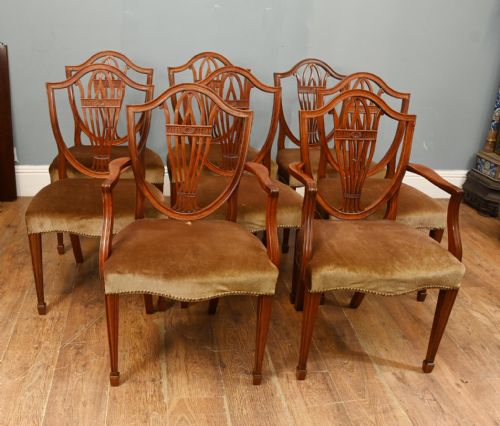

Georgian Shield Back Seats
Georgian shield back seats bring elegance to a room through carved timber frames and curved profiles.
Georgian Shield Back Seats
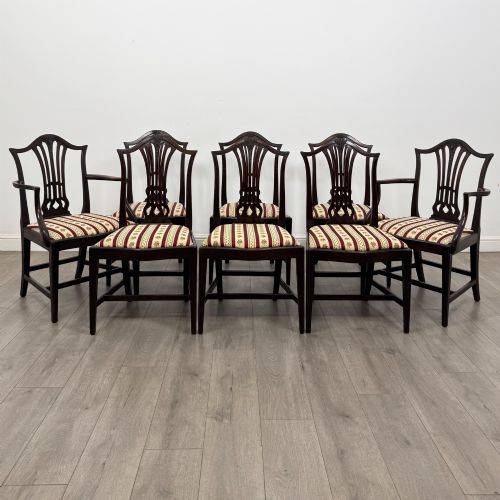
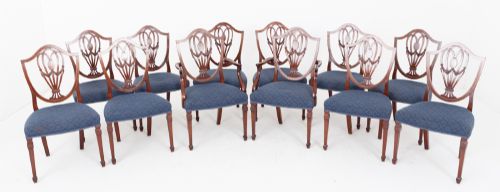
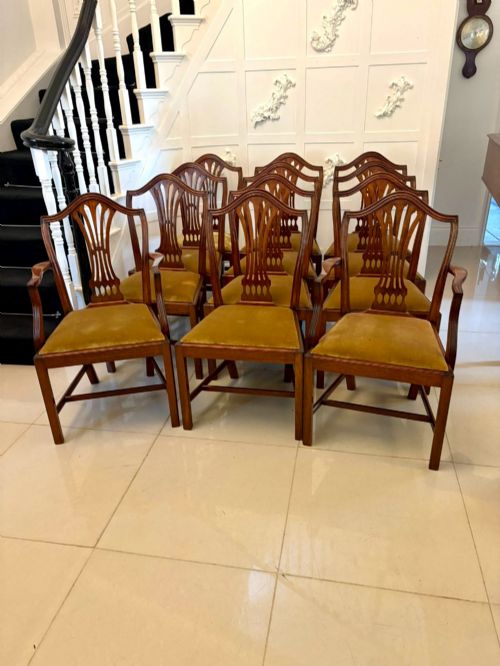
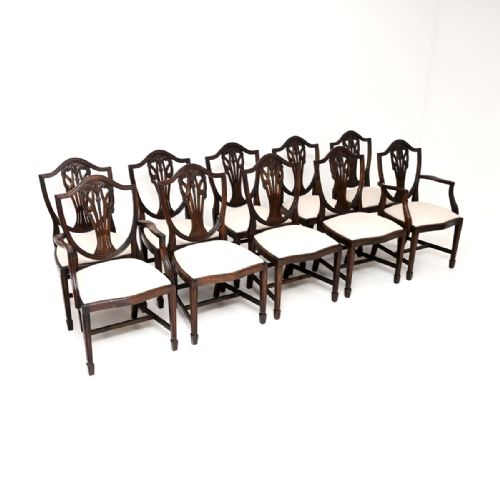
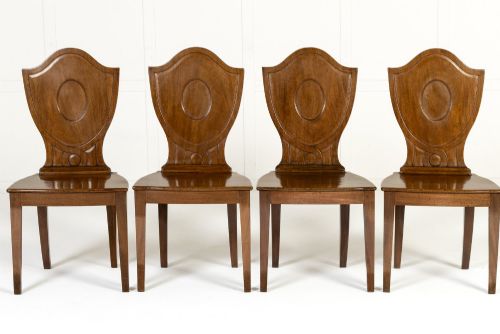
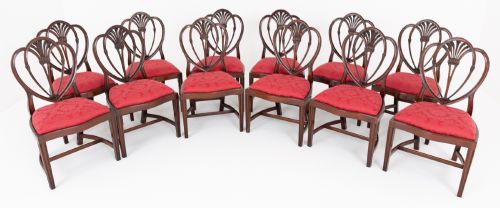
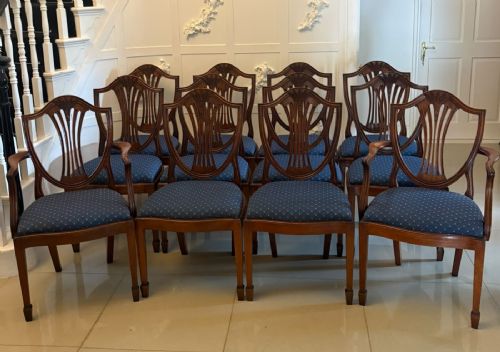
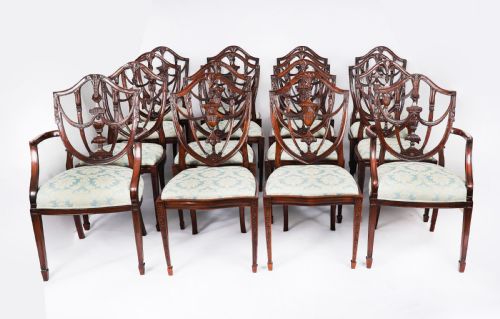
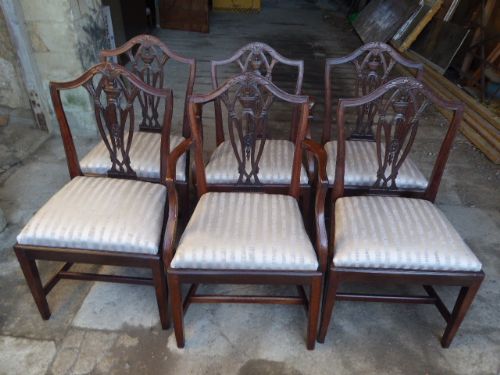
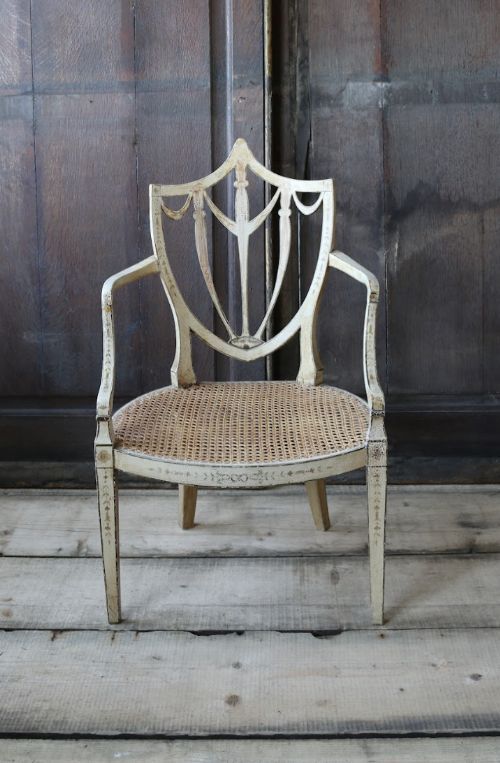
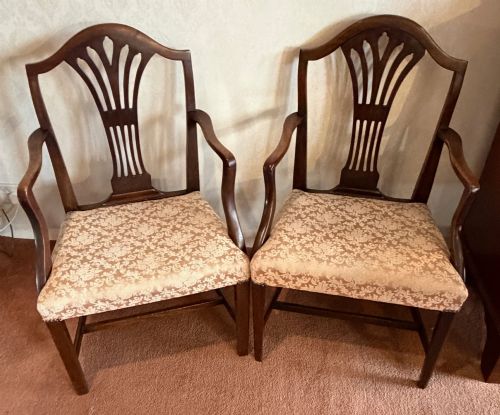
Georgian shield back seats encompass dining chairs, hall chairs, armchairs, and settees shaped with distinctive curved splats resembling a heraldic shield. Buyers searching for georgian shield back seats encounter single pieces, pairs, and large sets spanning the eighteenth century through later revival periods.
The material record shows dining chairs forming the largest group, often found in matched sets suitable for a dining table. Hall chairs and armchairs appear regularly, alongside occasional settees featuring triple chair back designs.
Origins stretch from original eighteenth-century pieces made during the Georgian and Regency eras to later revivals produced across the nineteenth and twentieth centuries, including Hepplewhite style and Federal revival examples.
Materials and Construction
Makers shaped these frames primarily from mahogany and oak, supplemented by fruitwood and painted timber surfaces. Timber selection determined the weight and rigidity of the carved shield splat.
Upholstered versions incorporate fabric, leather, velvet, and specialised upholstery fabric secured over padded foundations. Brass details occasionally appear on specific hall chairs and structural mounts.
Listings feature mahogany, oak, and fruitwood alongside upholstered surfaces in leather, velvet, and fabric.
Quality and Craftsmanship
The finesse of the pierced splat carving dictates much of the distinction between simpler seats and finer examples. Crisp detailing along the frame and arm supports separates standard production from superior work.
Original eighteenth-century timber surfaces display a depth of patina and grain developed over centuries, contrasting with the more uniform finishes found on twentieth-century revival pieces.
Gillows
The Georgian Shield Back Seats Glossary
- Shield back
- A chair back shaped like a heraldic shield, typically curving inward at the waist and tapering to a square or rounded seat frame. This form became popular in late eighteenth-century English furniture design.
- Carver
- An armchair designed to match a set of dining chairs, usually placed at the head of a dining table. These pieces often feature outward-curving arms attached to the sides of the shield back.
- Hall chair
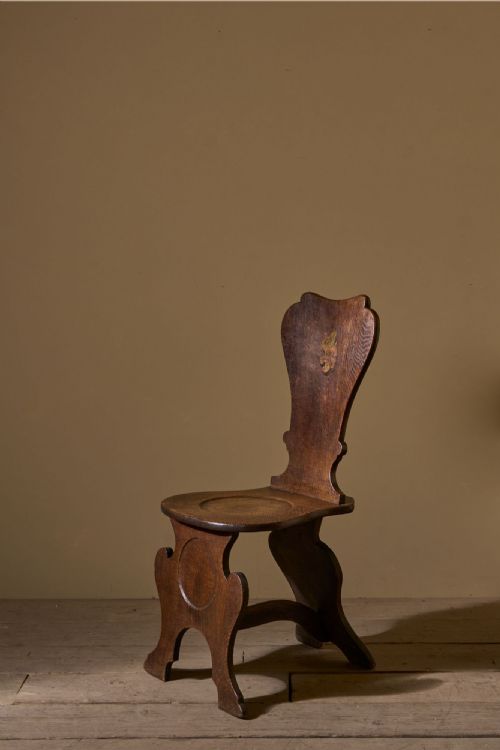
- A rigid wooden seat intended for a hallway or entrance space, often lacking upholstery and featuring a carved or painted wooden panel in the shield back. These pieces served a decorative and formal function.
- Settee
- A long bench seat with a continuous backrest incorporating multiple chair back sections joined together. Examples in this style often display two or three conjoined shield backs.
- Splat
- The vertical central strip of wood connecting the top rail of a chair back to the seat. In these designs, the splat is pierced and carved into the silhouette of a shield.
Georgian Shield Back Seats: Frequently Asked Questions
What is a shield back chair?
A shield back chair is a seating form where the wooden splat forms the outline of a shield. The design gained prominence in the late eighteenth century.
These pieces range from simple hall chairs to upholstered dining chairs and armchairs.
How do I date a Georgian chair?
Dating relies on timber characteristics, construction methods, and stylistic cues present in the frame. Eighteenth-century pieces show period joinery and natural patination.
Later revival pieces from the nineteenth and twentieth centuries often copy these earlier proportions using different manufacturing techniques.
Are these chairs comfortable for daily use?
Many dining chairs and armchairs feature upholstered drop-in seats or padded squabs covered in fabric or leather. This padding provides support for regular seating around a dining table.
Unupholstered hall chairs are firmer and serve well as accent pieces or occasional seating.
What is the difference between a carver and a side chair?
A carver includes armrests attached to the sides of the shield back and is traditionally used at the head of a table. Side chairs lack arms and fit neatly alongside the dining table.
Both forms appear together in matched dining sets.