
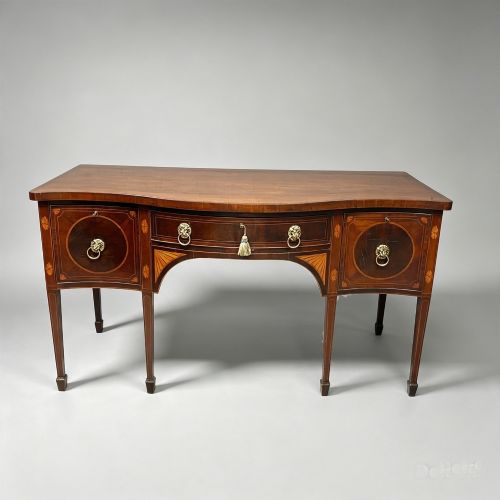
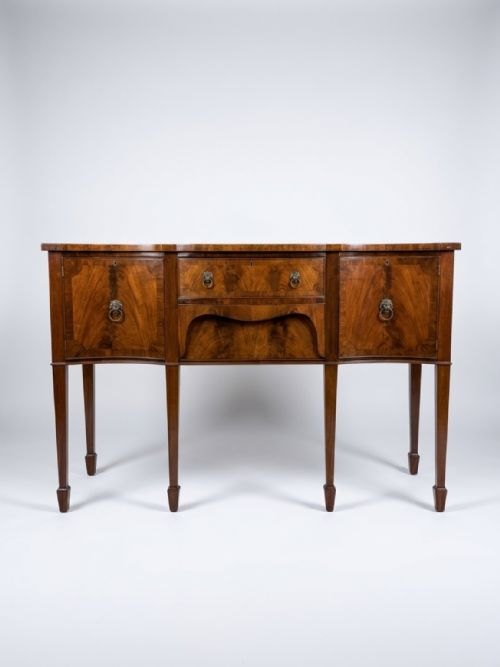
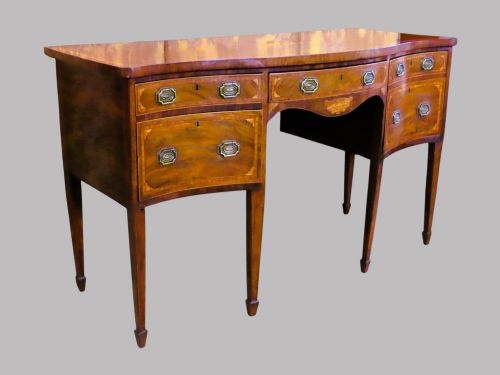


Georgian Serpentine Buffet Table
A georgian serpentine buffet table brings sweeping curves and rich timber into a dining room.
Georgian Serpentine Buffet Table
A georgian serpentine buffet table is a substantial serving piece designed for the dining room, featuring a distinctive undulating front curve. The pieces you encounter most frequently on this page date from the Georgian and George III periods, alongside later Edwardian and Sheraton Revival interpretations.
These forms serve primarily as sideboards, servers, and serving tables, constructed to display silver and hold dining paraphernalia. You will find them described variously as sideboards, console tables, and servers, reflecting their adaptable domestic utility.
The aesthetic bridges the eighteenth century and subsequent revival movements, drawing on Sheraton and Regency design idioms. Examples range from expansive eighteenth century originals to smaller nineteenth century and Edwardian adaptations.
What varies in quality
The distinction between ordinary and exceptional examples rests upon the choice of timber and the precision of the serpentine curve. Finer pieces display carefully matched flame mahogany veneers and crisp, deliberate inlay work rather than painted imitations.
Structural integrity of the curved framework and the preservation of original brass hardware elevate a piece significantly. Superior examples maintain crisp edge moulding and balanced proportions across the undulating facade.
Some tables hide secretive cellarette drawers designed specifically to keep wine bottles cool and secure.
Gillow
The Georgian Serpentine Buffet Table Glossary
- Serpentine front
- A furniture front characterised by a convex centre flanked by concave curves. This contour requires precise joinery to achieve the characteristic undulating silhouette.
- Inlay
- A technique where pieces of contrasting wood, such as boxwood or satinwood, are inserted into depressions in the primary timber. This creates decorative borders and geometric motifs.
- Serving table
- A long table designed for holding food and drink during meals, often predating or serving alongside the fully developed sideboard. Many feature the same serpentine shaping.
- Sheraton Revival
- A late nineteenth and early twentieth century style that reinterprets the lighter, neoclassical designs of Thomas Sheraton. Pieces from this movement often incorporate delicate inlay and refined proportions.
Georgian Serpentine Buffet Table: Frequently Asked Questions
What is a georgian serpentine buffet table used for?
These tables function as serving surfaces and storage units in formal dining spaces. They hold dining silver, linens, and serving dishes during meals.
Beyond utility, they serve as focal display pieces for decorative objects and silver service items within a room.
How do I spot a reproduction?
Examine the construction methods and timber characteristics closely to determine age. Eighteenth century examples show hand tool marks and period specific secondary woods beneath.
Revival pieces from the Edwardian era or later exhibit different internal construction methods and machine cut elements while still utilising period forms.
What is flame mahogany?
Flame mahogany is a highly decorative veneer derived from specific sections of the mahogany tree. The grain produces a distinctive pattern resembling flickering flames.
Cabinetmakers reserved this prized veneer for prominent drawer fronts and central panels on high status serving tables.
How do I care for my table?
Keep the timber away from direct heat sources and strong sunlight to prevent the mahogany veneer from drying out and cracking. Maintain a stable indoor humidity level.
Apply high quality beeswax periodically and buff gently with a soft cloth to nourish the wood and preserve the surface sheen.