
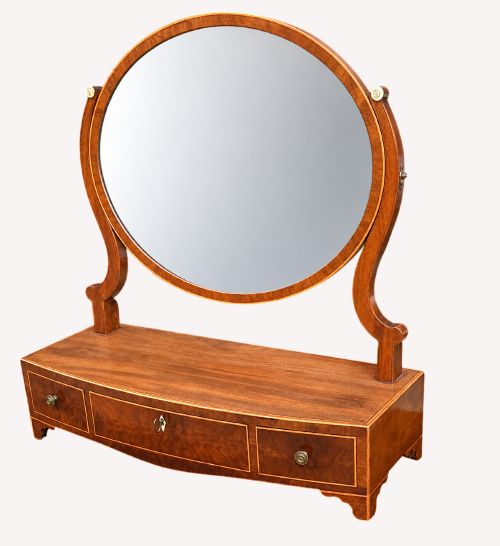
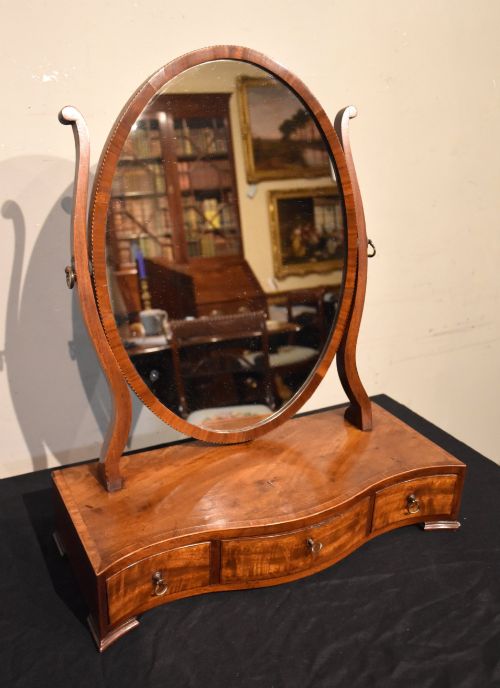
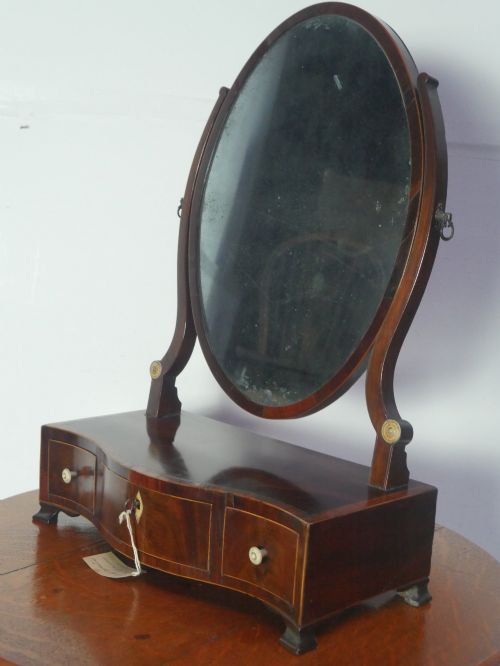
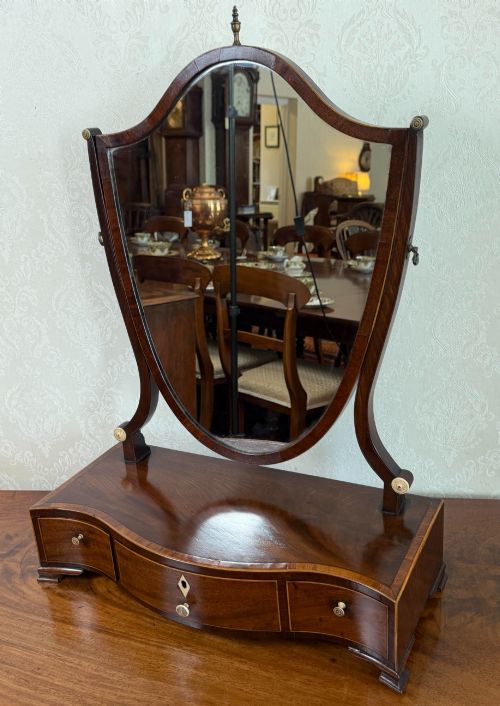


Georgian Serpentine Box Mirror
These georgian serpentine box mirror examples offer compact, elegant proportions combined with practical drawer storage, making them a sophisticated addition to any dressing table.
Georgian Serpentine Box Mirror
A georgian serpentine box mirror is a tabletop dressing glass designed for the bedroom or dressing room, combining an adjustable mirror frame with a compartmented base fitted with small drawers. These pieces sit on bracket feet or small ogee supports, elevating the box portion slightly from the surface below.
The dominant forms on this page date from the eighteenth and nineteenth centuries, spanning George II, George III, and Regency periods. Mahogany forms the primary carcass wood, frequently complemented by walnut, satinwood, and boxwood inlay.
Most examples feature either a rectangular or oval glass plate suspended between two upright arms, known as horn pivots, allowing the mirror to tilt. The serpentine front shapes the base drawers into a distinctive undulating contour that defines this specific grouping.
How they were made
Cabinetmakers constructed these frames using solid mahogany and walnut, shaping the curved box bases by hand to achieve the characteristic serpentine outline. Drawer fronts utilised fine timber veneers, often accented with boxwood stringing and delicate inlay work.
Brass hardware, including side screw knobs, hinges, and small drawer pulls, provided both functional adjustment and decorative contrast against the dark wood surfaces. Early examples incorporated subtle bone escutcheons around keyholes, adding durable detail to the working parts.
Listings span the eighteenth and nineteenth centuries, featuring walnut and mahogany timbers alongside boxwood inlay.
What varies in quality
The distinction between standard examples and top quality pieces rests in the sharpness of the serpentine carving and the precision of the boxwood inlay. Superior specimens display well-figured timber grain across the drawer fronts and harmonious proportions between the mirror frame and the base box.
Original brass fittings and unblemished mirror plates elevate a piece, while later replacements or clumsy repairs alter the visual integrity. The construction of the drawer dovetails and the weight of the timber indicate the standard of craftsmanship applied in the workshop.
The Georgian Serpentine Box Mirror Glossary
- Serpentine
- A curved line that undulates outward in the centre and recesses inward at the sides. This contour requires careful hand-shaping of the solid wood base.
- Toilet mirror
- A traditional period term for a dressing table mirror used for personal grooming. These items sat atop larger chests of drawers or dedicated tables.
- Boxwood inlay
- Narrow strips of pale yellowish boxwood inserted into grooves in darker woods like mahogany. It creates geometric borders and contrasting decorative lines.
- Horn pivots
- The adjustable metal or brass screws and plates connecting the mirror frame to the upright supports. They allow the glass to tilt at various angles.
- Bracket feet
- Simple corner supports extending downward from the base of the box. They lift the mirror assembly slightly off the tabletop.
Georgian Serpentine Box Mirror: Frequently Asked Questions
What is a serpentine box mirror?
A serpentine box mirror is a tabletop dressing glass featuring a curved, undulating drawer base beneath an adjustable mirror frame. These pieces date primarily from the eighteenth and nineteenth centuries.
They were designed for personal grooming and placement on top of dressing tables or chests of drawers in period bedchambers.
How were these mirrors used?
These mirrors served as functional dressing aids where users could adjust the glass angle for shaving or styling hair. The small drawers provided secure storage for cosmetics, pins, and small valuables.
Over time, they evolved from purely practical furnishings into decorative antiques valued for their fine cabinetwork.
What woods are most common?
Mahogany is the predominant timber found across these listings, alongside walnut in earlier examples. Cabinetmakers also utilised satinwood and boxwood for decorative inlay.
Secondary woods like pine or oak frequently appear inside the concealed drawer linings and back panels.
How do I date a piece?
Dating relies on examining the timber species, construction methods such as hand-cut dovetails, and stylistic markers associated with specific reigns. George II and George III pieces exhibit distinct proportions and decorative vocabulary compared to later nineteenth-century items.
Hardware style and the presence of original brass pivots also offer reliable clues to the period of manufacture.
Where do I place one?
These mirrors fit comfortably on modern dressing tables, chests of drawers, or sideboards where their compact footprint works well. Their warm mahogany tones pair naturally with both traditional and contemporary interior schemes.
Ensure the placement protects the antique glass and polished wood surfaces from direct, harsh sunlight.