



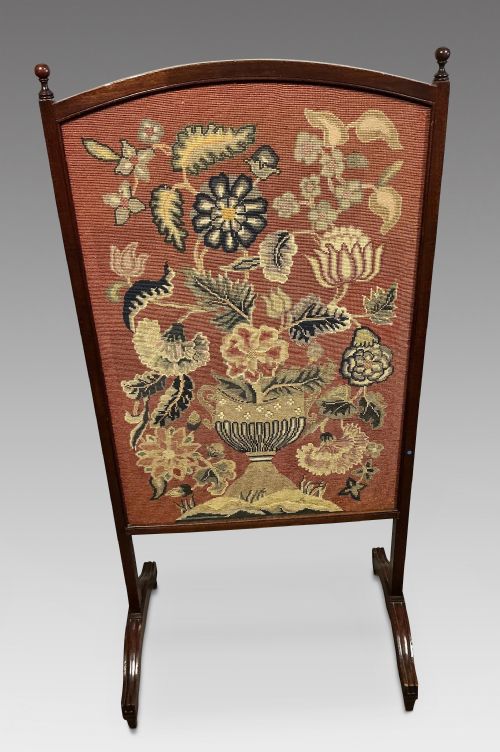


Georgian Screen
A georgian screen is a domestic shield against hearth heat or a partition of folding panels, sought for period proportion and hand-worked detail.
Georgian Screen
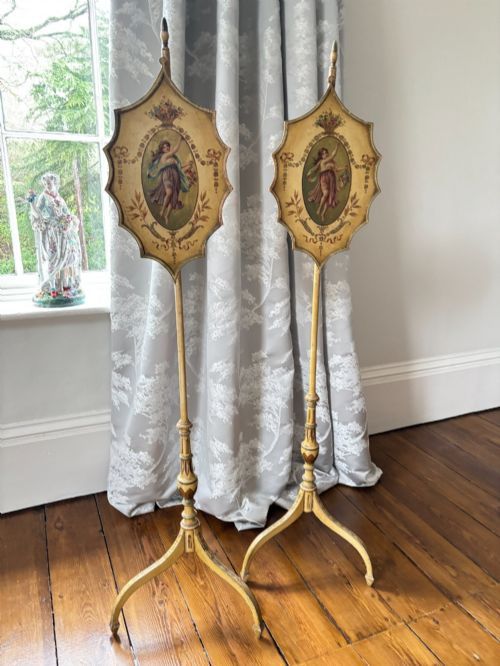
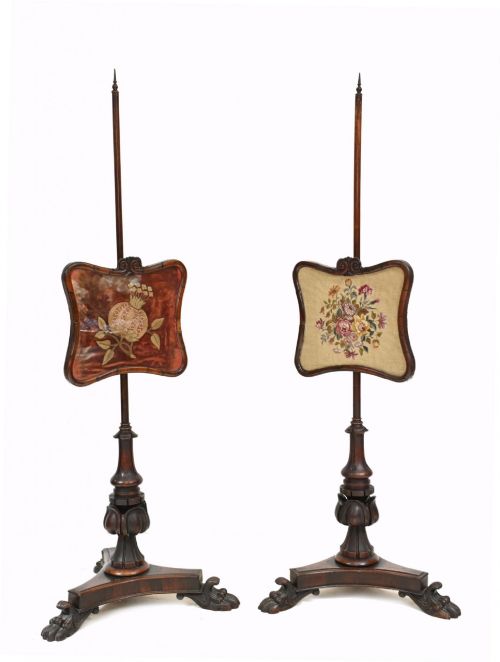
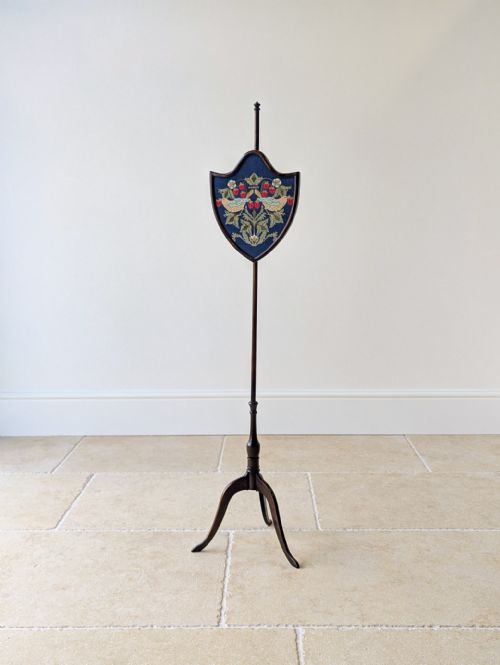
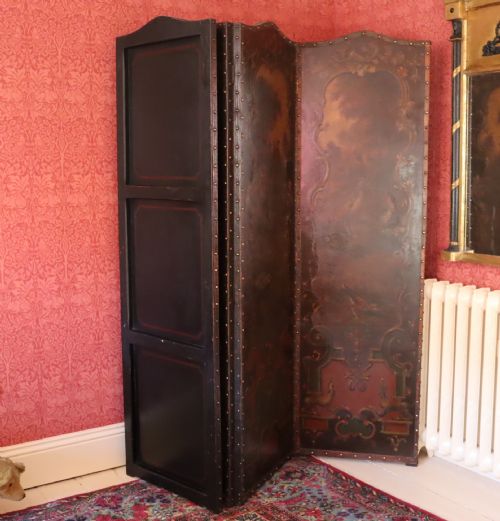
A georgian screen primarily takes the form of a pole screen standing on a tripod base with an adjustable vertical panel, or a multi-fold room divider providing privacy. These pieces originate across the eighteenth and nineteenth centuries, spanning Georgian, Regency, and Victorian periods.
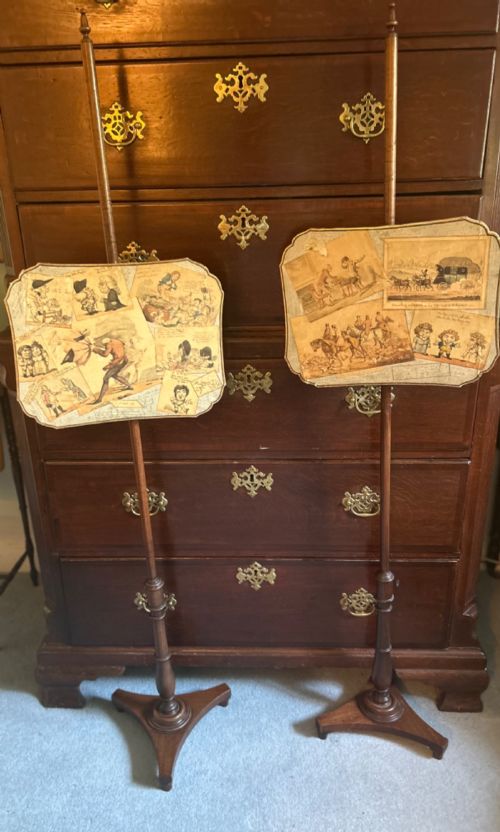
The single-panel pole screen dominates the selection, designed to sit directly before an open fireplace to deflect excessive heat from a lady's face. Multi-fold screens appear in larger formats, using painted or textile panels to divide interior spaces.
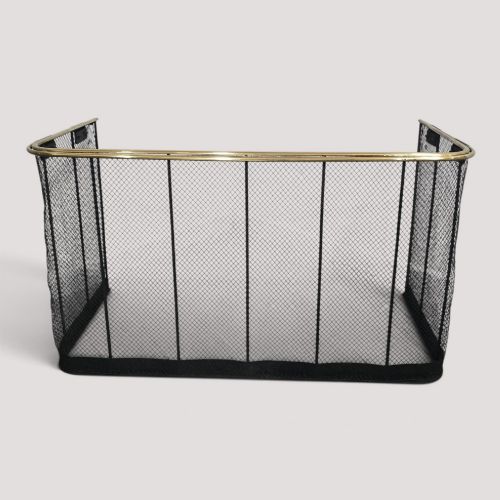
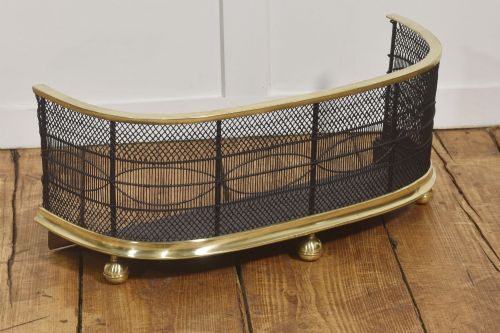
Makers also adapted the form into specialised furniture, combining writing desks and sofa tables with sliding or hinged screen attachments. The inventory reflects this variety, moving from simple brass nursery fire guards to elaborate giltwood and mahogany designs.
Materials and construction
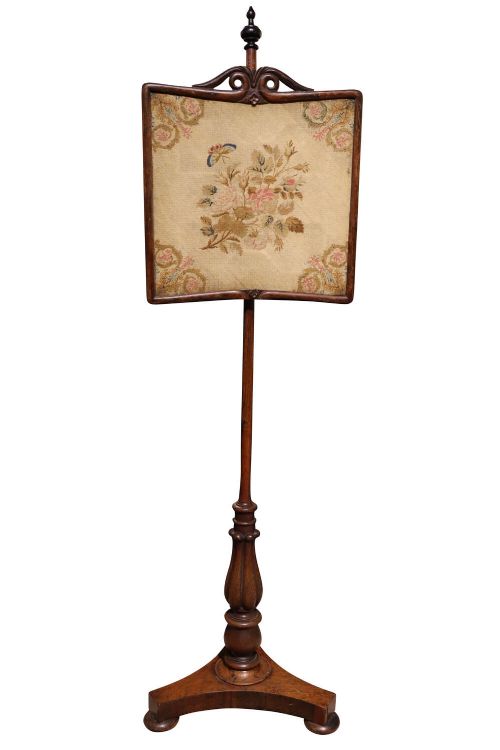
Cabinetmakers built the frames of a georgian screen from dense timbers such as mahogany, rosewood, and satinwood, frequently supporting them on slender tripod bases with spade feet. Turnery and hand-carving define the structural poles, whilst giltwood appears on high-status frames.
The functional face of a pole screen typically holds a needlepoint tapestry, wool embroidery, or satirical print stretched within a wooden or brass frame. Multi-fold versions rely on painted canvas or textiles hinged together to allow smooth articulation.
Georgian Screen Retail Price Guide 2026
Typical asking prices for georgian screen among the pieces listed under this phrase on Sellingantiques today, from the lower quarter to the upper quarter. They describe what is for sale here now, not the wider market.
The inventory spans the Georgian, Regency, and Victorian periods, including multi-fold room dividers and compact writing tables.
Judging quality and execution
Quality in a georgian screen rests upon the crispness of the timber carving and the stability of the adjusting mechanism on pole models. Fine examples exhibit tight joinery on the tripod base and well-balanced proportions that prevent tipping.
The execution of the needlework panel or painted surface dictates the overall standard of the piece. Finely stitched petit-point tapestries and hand-painted or poker-work details elevate the work far above utilitarian room divisions.
The Georgian Screen Glossary
- Pole screen
- A vertical wooden stand holding an adjustable sliding panel used to block radiant heat from a fireplace. The screen moves up and down on a brass or wooden stem.
- Needlepoint
- A form of canvas work embroidery executed with wool or silk yarn, frequently mounted as the central display panel of a screen. It provides both colour and texture to the piece.
- Tripod base
- A three-legged support structure commonly found beneath pole screens, often terminating in pad or spade feet. This design ensures stability on uneven floorboards.
- Dummy board
- A life-sized painted wooden figure cut out to represent a person or animal, historically placed near hearths or in empty rooms. They offer an eccentric variation on the traditional room divider.
Georgian Screen: Frequently Asked Questions
What is a pole screen used for?
A pole screen stood near the hearth to protect a person's face from the intense glare and heat of an open coal or wood fire. The adjustable panel could be raised or angled as needed.
Over time, these pieces also functioned as decorative furniture accents within the principal reception rooms of a house, displaying fine needlework.
How do I adjust the height?
Most pole screens feature a small brass thumb screw, friction collar, or internal weighted mechanism located behind the sliding panel. Loosening this allows the screen to move vertically along the turned wooden pole.
Care should be taken when adjusting older mechanisms to avoid straining the delicate timber or brass fittings holding the panel in place.
Are multi-fold screens freestanding?
Multi-fold room dividers use metal hinges joining three or more panels together, allowing the structure to stand in a zig-zag configuration without wall support. This design provides privacy or blocks draughts in larger spaces.
The weight of the timber frame and heavy textile or painted panels keeps the entire screen stable on a flat floor.
How do I date these pieces?
Dating relies upon observing the timber species, carving styles, and the method of construction used in the frame. Early examples often feature mahogany and distinct Georgian leg forms, while later nineteenth-century pieces introduce rosewood and heavier upholstery.
The style of the needlework or painted decoration also provides strong clues regarding the period of manufacture.