



Georgian Satirical Artwork
Georgian satirical artwork captures the biting political and social commentary of the era through prints and sketches housed in period frames.
Georgian Satirical Artwork
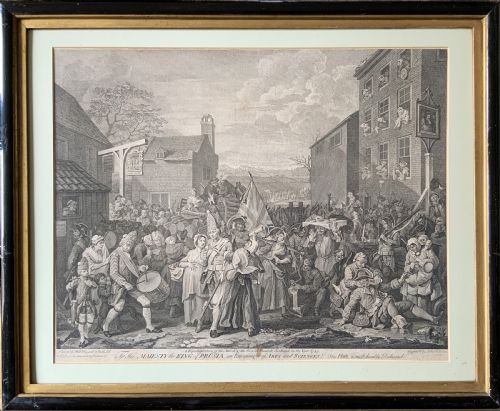
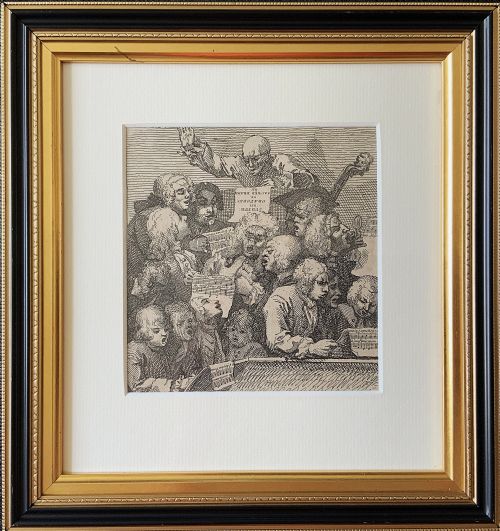
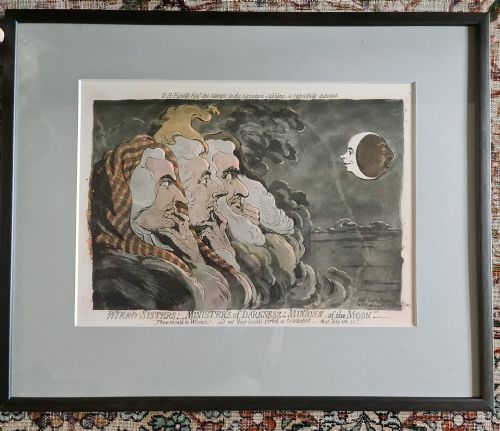
When you search for georgian satirical artwork, you find framed prints, engravings, and original ink works that poke fun at eighteenth and nineteenth-century society, music, politics, and daily life. The pieces on this page span the eighteenth and nineteenth centuries, including items framed in maple and executed as copperplate engravings or watercolours.
You are most likely to encounter framed prints and antique engravings originating from the Georgian and Regency periods. These works capture social critique through distinct visual narratives, often presented in period frames ready for the wall.
Materials and Techniques
The works rely primarily on paper sheets marked with ink, pen, wash, and watercolour, utilising copperplate engraving and etching techniques to produce sharp, detailed lines. Many carry hand-coloured details applied over the printed ink to add visual depth to the social commentary.
Framing materials include maple and other woods paired with glass to protect the delicate paper, ink, and watercolour surfaces from environmental damage.
Georgian Satirical Artwork Retail Price Guide 2026
Typical asking prices for georgian satirical artwork among the pieces listed under this phrase on Sellingantiques today, from the lower quarter to the upper quarter. They describe what is for sale here now, not the wider market.
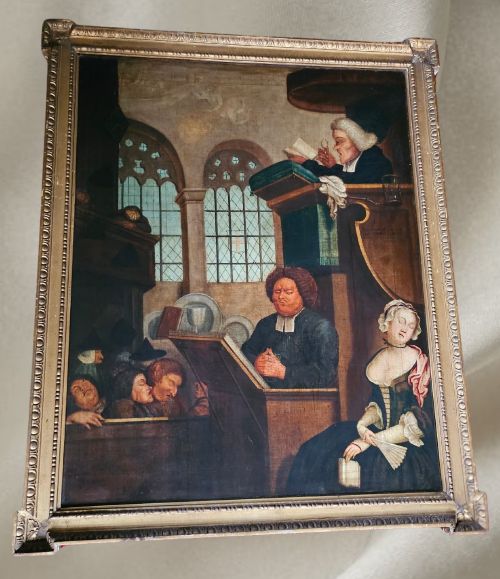
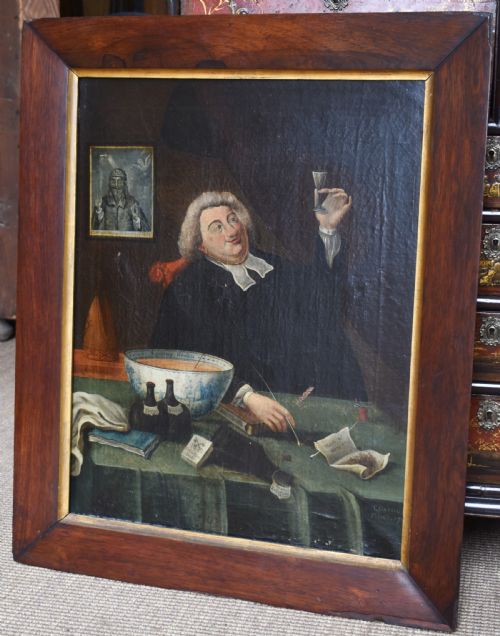
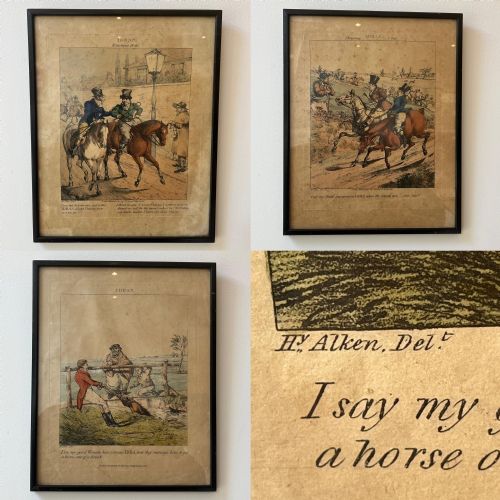
Ministers of darkness and jumping in sacks share wall space with periwigs.
Assessing Quality
Quality rests upon the crispness of the impression left by the engraving or etching plate and the precision of any hand-applied watercolour. Early strikes from copperplates retain fine details that later impressions lose as the metal wears.
The choice of framing material, such as figured maple, and the survival of the original paper surface without excessive fading or staining elevate the standing of an individual piece.
William Hogarth·Luke Sullivan·Gilray·Riepenhausen·Thomas Rowlandson·William Bunbury
The Georgian Satirical Artwork Glossary
- Engraving
- A printmaking method where an artist cuts lines directly into a metal plate with a burin. This technique produces crisp, durable lines capable of holding intricate detail.
- Etching
- A process where acid bites into lines drawn through a protective ground on a metal plate. It allows for free, fluid strokes that mimic pen sketches.
- Stipple engraving
- A method of creating tonal gradations using dots rather than continuous lines. It produces soft shadows and subtle textures, particularly popular for portraits and genre scenes.
- Copperplate
- A flat sheet of copper used as the matrix for engraving or etching. The metal accepts fine incisions which transfer cleanly to paper under a press.
- Watercolour wash
- A thin, transparent layer of pigment applied with water to add colour and shade to a line drawing. It brings immediacy and warmth to satirical sketches.
Georgian Satirical Artwork: Frequently Asked Questions
What is georgian satirical artwork?
These works are historical prints and drawings that use humour, caricature, and irony to critique politics, fashion, and human behaviour during the eighteenth and nineteenth centuries.
Created by notable artists and printmakers of the era, they offer a direct window into the social attitudes and daily concerns of Georgian society.
How were these prints displayed originally?
Many of these satirical prints were published individually or collected into bound volumes before being framed later in wood, such as maple, for wall display.
Collectors and enthusiasts mounted them in domestic spaces to spark conversation and amusement among guests who understood the political and social references.
How do I care for antique paper art?
Protect paper, ink, and watercolour pieces from direct sunlight and high humidity to prevent the colours from fading and the paper from yellowing. Keeping them behind glass in stable indoor environments preserves the delicate media.
Avoid hanging them in damp rooms or areas subject to drastic temperature shifts that could warp the wood frames and damage the paper.
How can I tell an etching from an engraving?
Engravings show clean, V-shaped lines cut with sharp tools into the metal plate, resulting in precise and uniform strokes. Etchings feature lines with slightly rounded edges created by acid biting into the metal.
Under magnification, etched lines often display subtle irregular borders where the acid worked beneath the protective ground layer.