


Georgian Satirical Art
Georgian satirical art takes aim at politics, fashion, and social folly through biting caricatures and detailed prints.
Georgian Satirical Art
When you search for georgian satirical art, you encounter a sharp visual commentary on eighteenth and nineteenth-century life, politics, and human absurdity. These pieces take the form of copperplate engravings, etchings, stipple engravings, and occasional ink sketches or watercolours, framed in wood or maple.
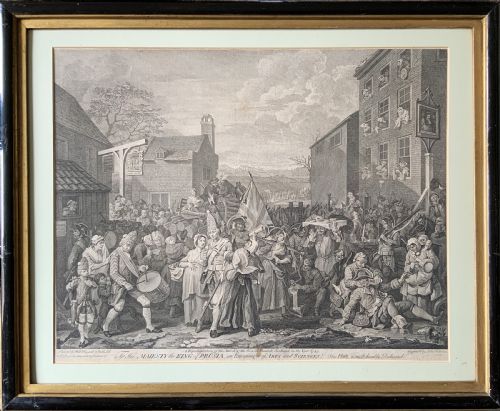
The selections on this page centre heavily on social and political satires, moral progressions, and theatrical caricatures issued across the eighteenth and nineteenth centuries. You will find complete portfolios of copper engravings alongside individual framed prints, scrapbook pages, and period restrikes.
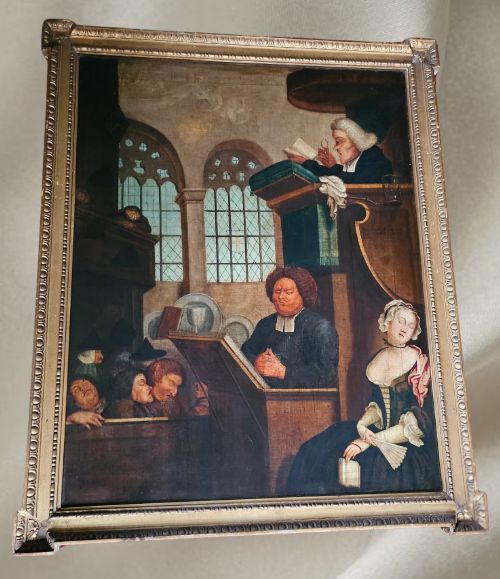
The subject matter ranges from urban debauchery and political corruption to sporting scenes and theatrical follies, capturing the robust humour of the era. These works document the manners, dress, and vices of Georgian society with uncompromising wit.
How they were made
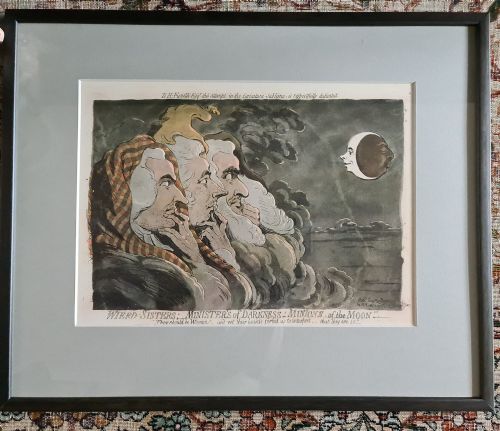
These works rely fundamentally on paper, ink, and copper plates, utilising techniques such as engraving, etching, and stipple work to transfer intricate designs. Many prints receive delicate hand colouring applied directly over the ink lines to enhance specific details in costume and setting.
Framing materials typically consist of wood and maple, often housing the paper prints behind protective glass to preserve the delicate medium. The underlying sketches utilise pen and ink on paper, sometimes developing into fully realised watercolours or portfolio plates.
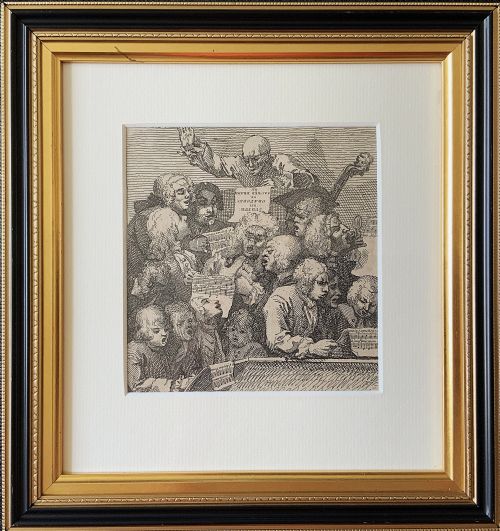
Georgian satirists spared nobody, mocking everything from bad singing and scientific lectures to jumping in sacks.
What varies in quality
Quality rests significantly upon the directness of the engraving and the historical proximity of the impression to the original plate. Early eighteenth-century impressions and original copperplate engravings display sharper lines and deeper contrasts than nineteenth-century restrikes or later copies.
The condition of the paper, the presence and subtlety of original hand colouring, and the integrity of the period framing contribute substantially to the standing of each piece. Complete portfolios and genuine period impressions command greater interest than later restrikes or decorative copies.
William Hogarth·Luke Sullivan·E.L. Riepenhausen·Thomas Rowlandson·Henry William Bunbury
The Georgian Satirical Art Glossary
- Engraving
- A printmaking technique where an artist cuts lines directly into a metal plate with a sharp tool called a burin. This method produces crisp, precise lines that hold up well across multiple impressions.
- Etching
- A process where acid bites the lines into a metal plate through a protective wax ground. It allows for a freer, more painterly line compared to direct engraving.
- Stipple engraving
- A method of creating tonal gradations and images using tiny dots rather than continuous lines. This technique creates softer shadows and skin tones, popular in late eighteenth-century portraiture and caricature.
- Restrike
- An impression taken from an existing metal plate at a date later than the original printing. These later editions often show softer lines as the plate wears down.
Georgian Satirical Art: Frequently Asked Questions
Are these prints original eighteenth-century issues?
The listings include both original eighteenth-century engravings and nineteenth-century restrikes or copies after major artists. Examining the paper quality and the crispness of the plate marks helps distinguish the period of printing.
Descriptions often note whether a piece is an original impression or a later framed copy, allowing you to gauge the historical depth of the item.
How should I hang and light these framed pieces?
Paper and ink from this era are sensitive to ultraviolet light, so placement away from direct sunlight is essential for preservation. Consistent indoor humidity also prevents the paper from buckling within its frame.
Using conservation-grade glass helps protect the delicate ink and any hand colouring from fading over time while displayed on your wall.
What is the difference between a portfolio and a single sheet?
Portfolios contain a connected series of plates, such as moral progressions or social commentaries published together. Single sheets are isolated prints that may have been removed from books or sold independently.
Complete portfolios offer a narrative sequence of social satire, whereas single sheets focus on a specific comedic or political moment.
How do I identify hand-coloured prints?
Hand-coloured engravings feature pigment applied with a brush over the printed ink lines rather than printed colour. Close inspection reveals brushstrokes and slight variations where the tinting meets the etched boundaries.
This manual application adds distinct character to the print, often highlighting costumes, architectural details, or satirical focal points.