


Hogarth Print
A hogarth print brings sharp satirical wit and finely worked 18th-century social commentary onto your wall.
Hogarth Print
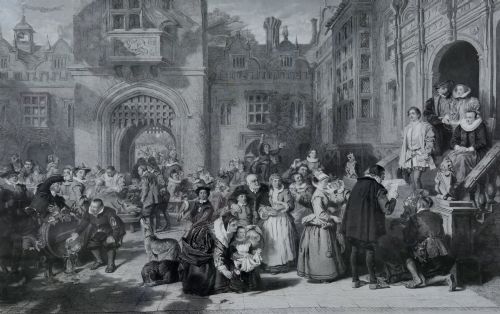
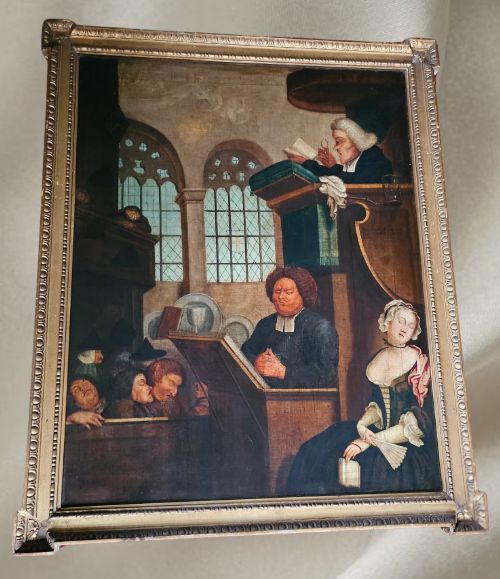
When you search for a hogarth print, you are looking at engraved works originating from William Hogarth and the artistic traditions surrounding him. These pieces encompass original 18th-century plates alongside later 19th-century and Regency restrikes and portfolios.
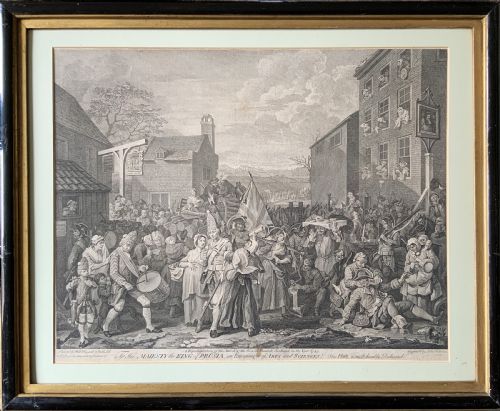
You will most frequently meet framed engravings on paper, often preserved within distinctive dark moulded wood frames that share the artist's name. The subjects range from sprawling moral narratives like The Rake's Progress to bustling London street scenes and theatrical satires.
The material origins span from Georgian copperplate engravings to Victorian framed art prints and mid-century copies. Whether presented singly or in complete portfolios, these works capture the biting humour of Georgian life through detailed graphic art.
How they were made
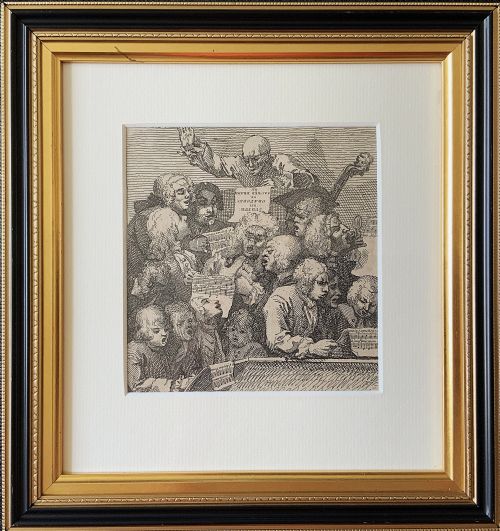
These works rely on ink transferred from copperplate engravings or etchings onto quality paper, sometimes finished with hand-colouring. The printing process allows for minute cross-hatching and fine linework that defines faces, architecture and textiles in crowded interior scenes.
The presentation relies heavily on timber and glass, specifically utilising wooden frames - including maple and gilt wood - to protect the fragile paper beneath. Many period examples are housed within original stepped or profile mouldings finished in dark lacquer or gilt.
Listings feature paper prints using ink, oil and watercolour, housed within wood, glass, and gilt wood frames across Georgian and Victorian periods.
What varies in quality
The distinction between standard and superior examples lies in the crispness of the ink impression and the depth of the plate mark on the paper. Early impressions taken directly from copperplates retain sharp details in the background figures, whereas later restrikes can soften the lines.
The integrity of the framing also shapes the piece, with original period wood frames and untouched glass holding far more historical weight than modern reglazing. Complete portfolios and matching sets demonstrate a higher level of preservation than isolated, trimmed sheets.
The Hogarth Print Glossary
- Copperplate engraving
- A printmaking technique where an artist cuts lines directly into a copper sheet with a burin. Ink is forced into the grooves and transferred to damp paper under pressure.
- Hogarth frame
- A distinctive narrow wooden picture frame with a stepped or ogee profile, typically dark-finished with a gilt inner edge. It is traditionally associated with framing 18th-century satirical prints.
- Restrike
- A subsequent printing from an original engraved plate made long after the artist's lifetime. These prints can still carry immense historical and visual value depending on the wear of the metal.
- Stipple engraving
- A method of dotting the printing plate rather than cutting continuous lines to create soft tonal gradations. It was frequently utilised for reproducing paintings in the late 18th and 19th centuries.
- Portfolio
- A collected suite or series of related prints kept together as a unified set. These groupings often document complete narrative sequences like moral progress stories.
Hogarth Print: Frequently Asked Questions
Are these prints from the eighteenth century?
The evidence shows a mix of original 18th-century engravings alongside later 19th-century restrikes and Georgian revival portfolios. Each listing specifies the exact period of the print itself.
Dates range from the original working years of William Hogarth through Regency restrikes up to mid-century copies. Reading the individual title clarifies whether you are viewing a contemporary plate or a later edition.
What is a hogarth frame?
A hogarth frame is a narrow, dark wooden picture frame characterised by its stepped or sloping profile and inner gilt slip. This framing style became synonymous with displaying satirical and moral engravings.
While many period prints retain their original frames, others have been reframed over the centuries. Surviving frames add distinct period character to the artwork.
How should I hang these prints at home?
Because these works utilise paper, ink and glass, they require placement away from direct, harsh sunlight to prevent fading. Wall placement in a hallway, study or living room allows the detailed narrative scenes to be viewed up close.
Grouping sets together, such as social satires or complete progress series, maintains their original visual context. Ensure they are hung securely using fixings appropriate for the weight of the timber frame and glass.
What subjects do these prints show?
The subjects focus heavily on social satire, moral progress narratives, and bustling Georgian street life. Scenes include political gatherings, theatrical performances, and detailed domestic interiors.
Beyond moral tales, the selection encompasses sporting scenes, horse racing events, and topographical views. The common thread is a sharp observation of human behaviour and contemporary society.